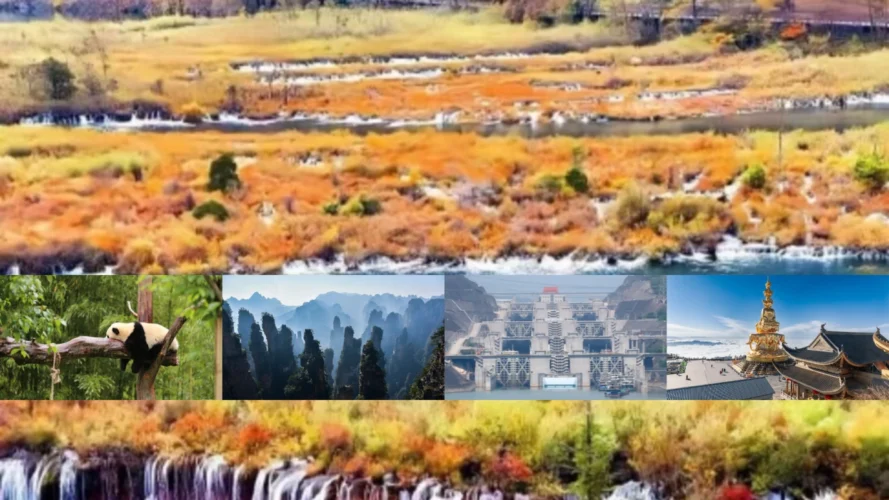
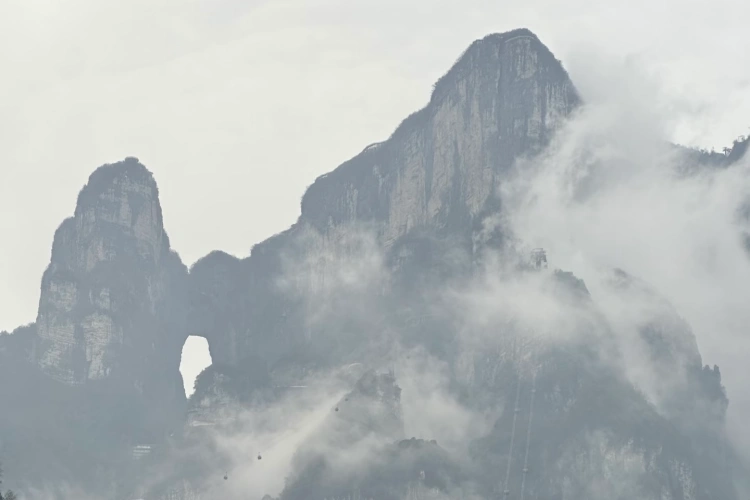
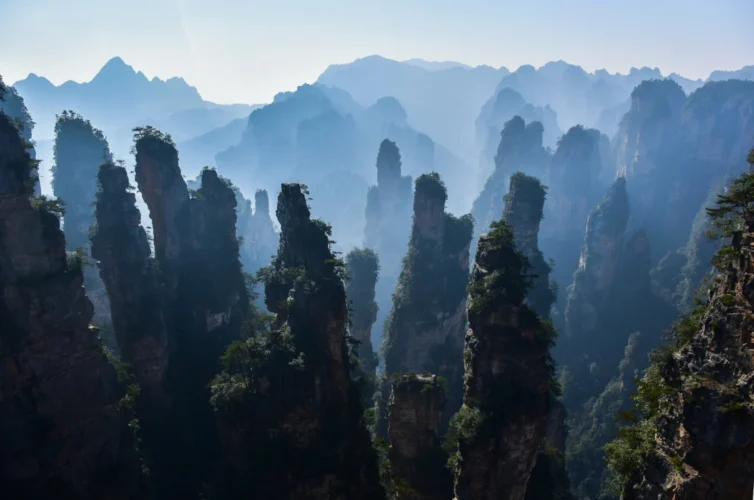
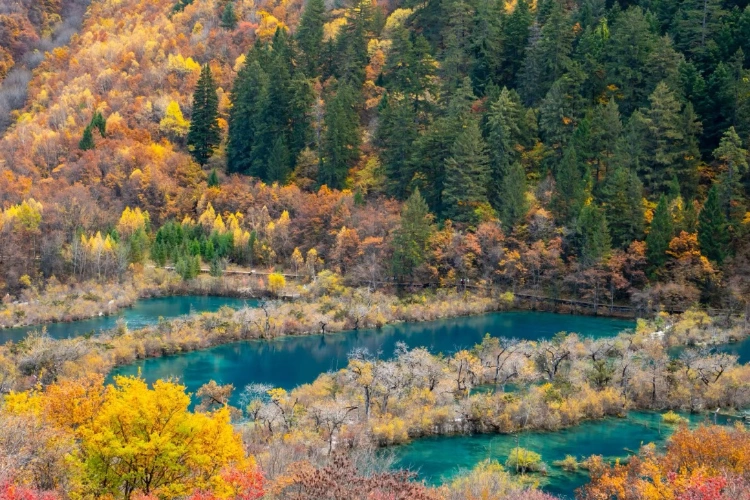
If Jiuzhaigou is defined by the horizontal serenity of water, Zhangjiajie is defined by the vertical drama of stone. Determining the best time to visit Zhangjiajie is an art form, as these 3,000 sandstone pillars spend much of the year playing hide-and-seek behind a veil of humidity. While the peak seasons of spring (April–May) and autumn (September–October) offer the most comfortable temperatures and iconic “floating mountain” aesthetics, the experience hinges entirely on visibility and crowd management.
In 2026, the calendar is particularly treacherous due to a rare alignment of domestic holidays that can turn a peaceful skywalk into a bottleneck of 40,000 people. To find the “Quiet,” you must time your visit with the precision of a mountain goat. Whether you are chasing the misty “Avatar” fairytale or crisp autumnal clarity, understanding these shifting weather patterns is the secret to seeing the pillars, rather than a literal wall of white fog.
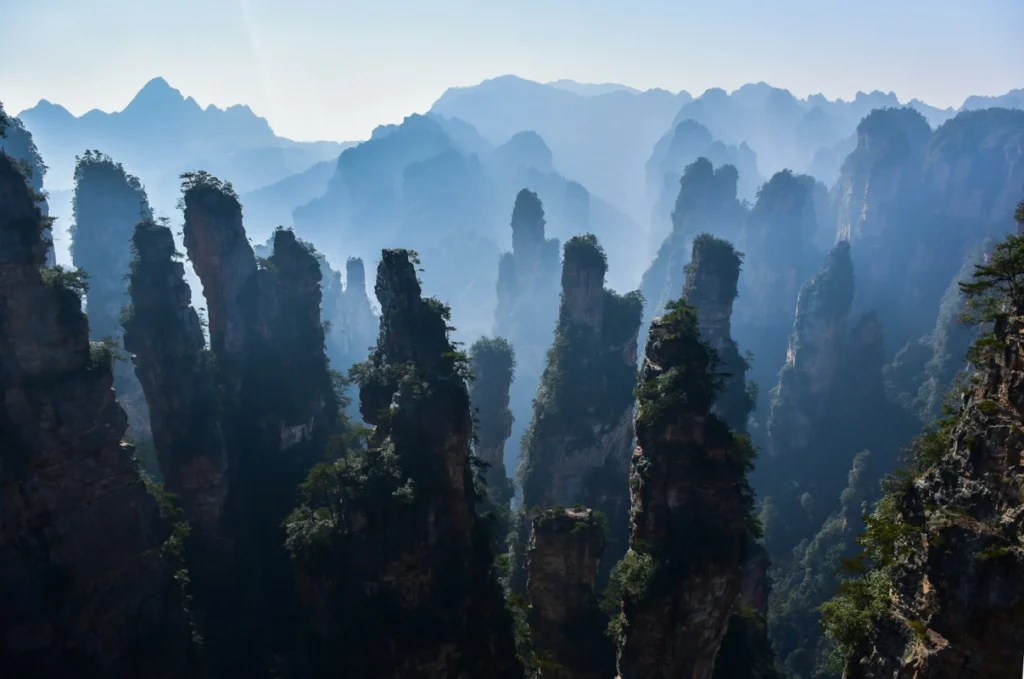
Best Time to Visit Zhangjiajie Overview
Zhangjiajie’s micro-climate is driven by one thing: Humidity. The very moisture that creates the “Floating Mountain” effect can also be your worst enemy. Check the overview to plan your Zhangjiajie tour better.
Best Overall Balance: April, May, September, and October
These windows offer the highest probability of comfortable hiking temperatures and the clear mountain views you see in professional photography.
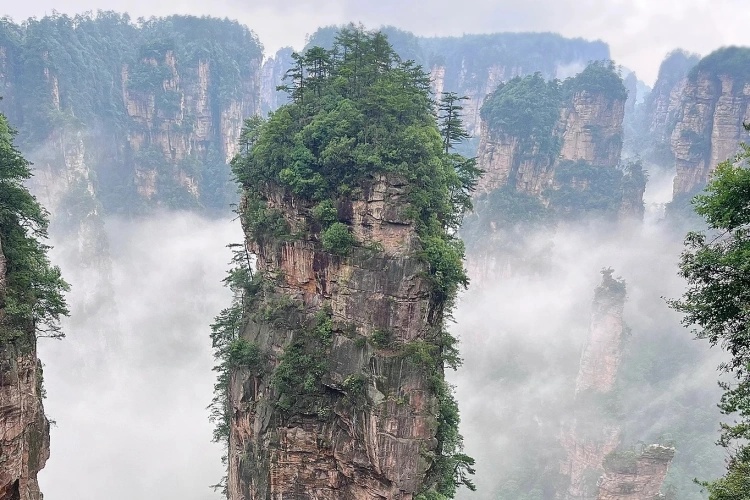
Best for the “Avatar” Atmosphere: April and May
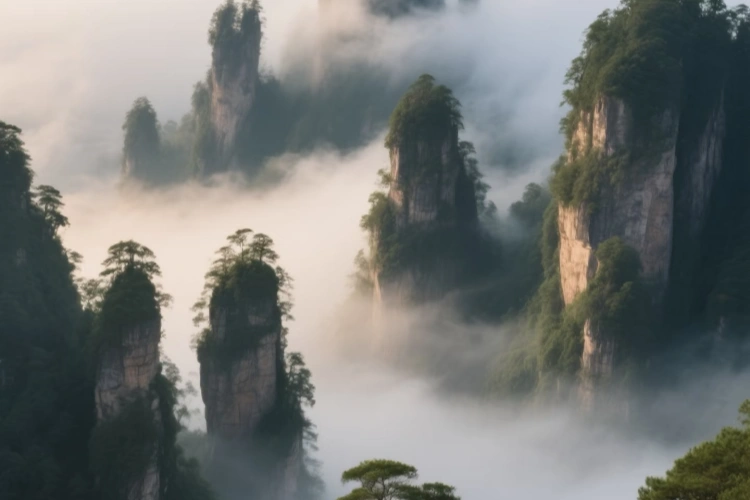
The spring humidity creates the legendary “Sea of Clouds” that makes the pillars appear to float. This is when the mountains look most like the Avatar film.
The Visibility Rule: In April, it rains an average of 19 days. However, the best views occur immediately after a rainstorm. If the sun breaks through the clouds at 10:00 AM after a morning drizzle, the mist will “lift” and swirl around the pillars.
2026 Alert: Avoid May 1–5 (Labor Day).
The Quiet Strategy: Late March to mid-April. You’ll catch the wildflowers in the Golden Whip Stream before the summer heat takes hold.
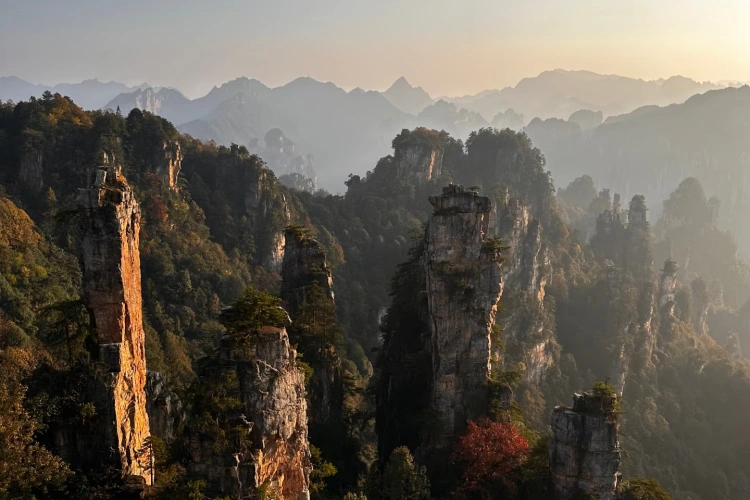
Best for Autumn Scenery: September to October
This is the champion of seasons, especially the latter half of October, when the forests turn into a tapestry of gold and burnt orange against the grey stone. The air is crisp, the humidity drops, and visibility often exceeds 20km.
The Vibe: Golden maple leaves against grey-white quartz pillars.
2026 Alert: Avoid September 25 – October 7. In 2026, the Mid-Autumn Festival and National Day Golden Week are only three days apart. This will create a 12-day “Mega-Peak” during which hotel prices will triple and queue times for the Bailong Elevator can reach 4 hours.
The Quiet Strategy: Target October 10 – 25. The “holiday hangover” means empty trails, perfect autumn colors, and cool 20°C (68°F) hiking weather.
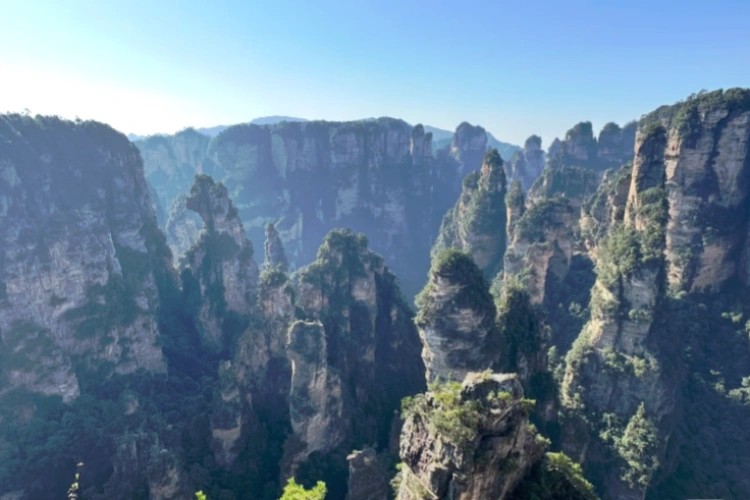
Best for Avoiding Crowds: March and November
These “shoulder” months are the secret to having the forest trails mostly to yourself while the weather remains stable.
November: It is the most stable month of the autumn-to-winter transition, offering the highest probability of clear, panoramic visibility. You trade a bit of warmth for total solitude.
March: It offers a similar escape from the crowds but with the fresh energy of spring. It is the bridge between the winter chill and the humid April mists.
Logistics: In 2026, all primary infrastructure, including the Bailong Elevator and the Tianzi Mountain cable cars, remains fully operational.
The Reward: You can photograph the “Hallelujah Mountain” summit without a single selfie stick in your frame. It is the only time the park feels like the private sanctuary it was meant to be.
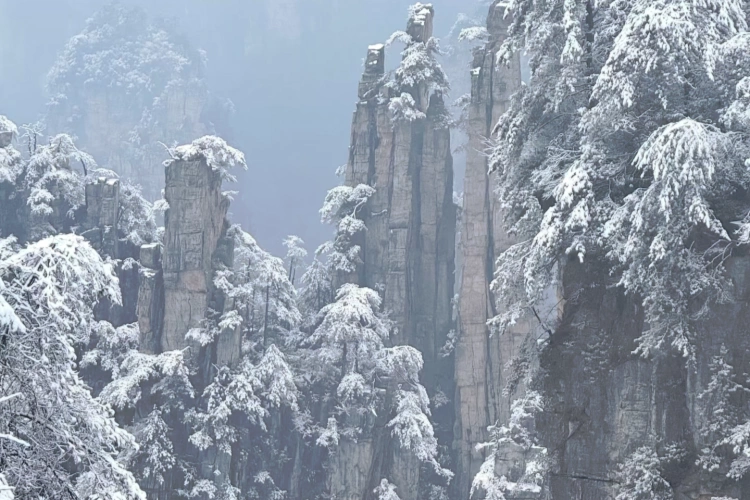
Best for Snow Landscapes: January and February
For those who don’t mind the chill, this is the only time to see the pillars dusted in white, a rare, silent spectacle with zero queues.
The Vibe: A hushed, crystalline wonderland. The “Hallelujah Mountain” appears in its most exclusive state: monochromatic, sharp, and perfectly still.
2026 Alert: Avoid the week of the Chinese New Year (Mid-February), as domestic travel spikes even in the cold. Additionally, be aware that heavy icing can occasionally close specific high-risk zones, such as the Tianmen Mountain Glass Skywalks or certain summit escalators, for safety.
The Quiet Strategy: Target early January. It is the absolute low season on the 2026 calendar. You trade the lush greens for zero queues and significantly lower hotel rates. While temperatures sit between 3°C and 10°C (37°F–50°F), the low humidity makes the chill feel dry and manageable as long as you are moving.
Also Good for The “Avatar” Scenery: June to August
Summer is lush, green, and vibrant, but it is also the season of the “Plum Rains.”
The Risk: Heavy, persistent downpours can wash out visibility for 48 hours straight.
The Quiet Strategy: If you visit in summer, stay in Yangjiajie or Qingyanqiao. These “back-door” entrances allow you to enter the park while the massive tour groups are still bottlenecked at the East Gate.
Zhangjiajie Weather by Month: The 2026 Visibility Forecast
In Zhangjiajie, the weather is the architect of the landscape. Because the primary scenic areas sit at an altitude of 1,000 meters, the temperature is consistently 3–5°C cooler than in the city center.
Here is the monthly breakdown of what you’ll actually see (and feel) on the trails.
| Month | Avg Temp | Weather | Visibility | Travel Notes |
|---|---|---|---|---|
| January | 3–8°C | Cold, occasional snow | Medium | Quiet season with possible snow scenery. Some icy trails may close temporarily. |
| February | 4–10°C | Cold, sometimes snowy | Medium | Peaceful overall, but avoid Chinese New Year crowds if dates overlap. |
| March | 8–15°C | Cool, early spring rain | Medium | Early greenery appears. Fewer tourists and good for relaxed hiking. |
| April | 12–20°C | Mild, misty, occasional rain | Medium–Low | Frequent fog creates dramatic floating mountain views, though clear panoramas can be limited. |
| May | 16–24°C | Warm with increasing rain | Medium | Beautiful landscapes and comfortable temperatures. Avoid Labor Day holiday crowds. |
| June | 20–28°C | Warm, humid, rainy | Low | Beginning of rainy season. Lush scenery but fog and clouds often block distant views. |
| July | 24–32°C | Hot, humid, frequent showers | Low | Dense greenery and waterfalls, but high humidity and peak crowds. |
| August | 24–31°C | Hot and humid | Low–Medium | Similar to July, though visibility improves slightly late in the month. |
| September | 20–28°C | Pleasant and drier | High | One of the best months for clear mountain views and hiking. |
| October | 15–23°C | Cool with clearer skies | High | Excellent visibility and autumn colors. Avoid Golden Week (Oct 1–7) crowds. |
| November | 10–18°C | Cool and relatively dry | High | Quiet travel month with good panoramic visibility. |
| December | 5–12°C | Cold, occasional frost | Medium–High | Calm winter atmosphere. Clear days can offer impressive views. |
Quick takeaway:
- Best visibility: September–November
- Best Misty “Avatar mountain” atmosphere: April–June
- Lowest visibility: Summer rainy season (June–August)
Is There a Rainy Season in Zhangjiajie?
In short: Yes.
Zhangjiajie follows a subtropical monsoon pattern, with a defined rainy season peaking from April to August.
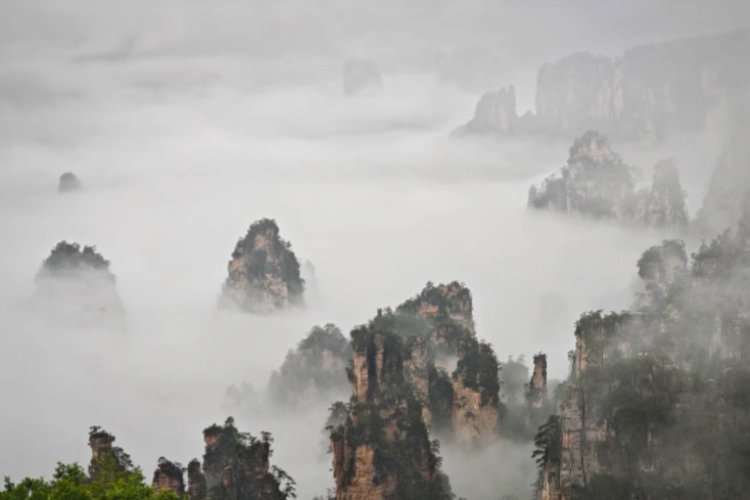
However, for the QuietRoutes traveler, rain is often a prerequisite for the best views. Without moisture, the “Floating Mountain” effect simply doesn’t exist.
What to Expect
The “Avatar” Mist: High humidity creates the legendary “Sea of Clouds.” Photographers often wait specifically for the one-hour window after a storm, when the mist sits low in the valleys, but the pillars are clear.
Flash Storms: Summer rain is usually heavy but brief. You’ll often experience a 30-minute downpour followed by a dramatic “lifting” of the clouds as the sun breaks through.
The Crowd Filter: Rain is the ultimate natural filter. While casual tourists retreat to hotels or the Yellow Dragon Cave, the trails become remarkably silent, offering rare solitude at the primary lookouts.
How Many Days is Enough for Zhangjiajie?
We are often asked: “Is Zhangjiajie a weekend trip?” The answer is no.
2 Days: You only see the “greatest hits” (Tianmen Mountain and Yuanjiajie). You will be rushed and exhausted.
3–4 Days (The QuietRoutes Choice): This allows you to explore the park properly. You can spend one full day in the National Forest Park (Yuanjiajie/Tianzi), one day at Tianmen Mountain, and one day at the Grand Canyon Glass Bridge or Yellow Dragon Cave.
5+ Days: For those who want to include Fenghuang Ancient Town (the “Phoenix City”) or the stunning Furong Waterfall Village.
Final Verdict: When Should You Visit Zhangjiajie?
Zhangjiajie doesn’t have a “perfect” time; it has a “perfect for you” time.
Want the Floating Mountains? Choose April/May.
Want the Best Visibility? Choose October.
Want Total Silence? Choose November/January.
For different travel styles:
- First-time travelers: April or October
- Photographers: October or early spring mist season
- Fewer crowds: March or November
- Snow scenery: January or February
Ultimately, Zhangjiajie is impressive year-round. Even fog, rain, and snow can transform the landscape into something magical.
Planning the “Avatar” Loop?
We specialize in timing your 2026 Zhangjiajie entry to miss the 9:00 AM rush. Whether you’re coming from Chengdu, Shanghai, or Beijing, we can sync your mountain permits with the best visibility forecasts.
Check our handpicked Zhangjiajie travel packages below directly, or contact us for customization.