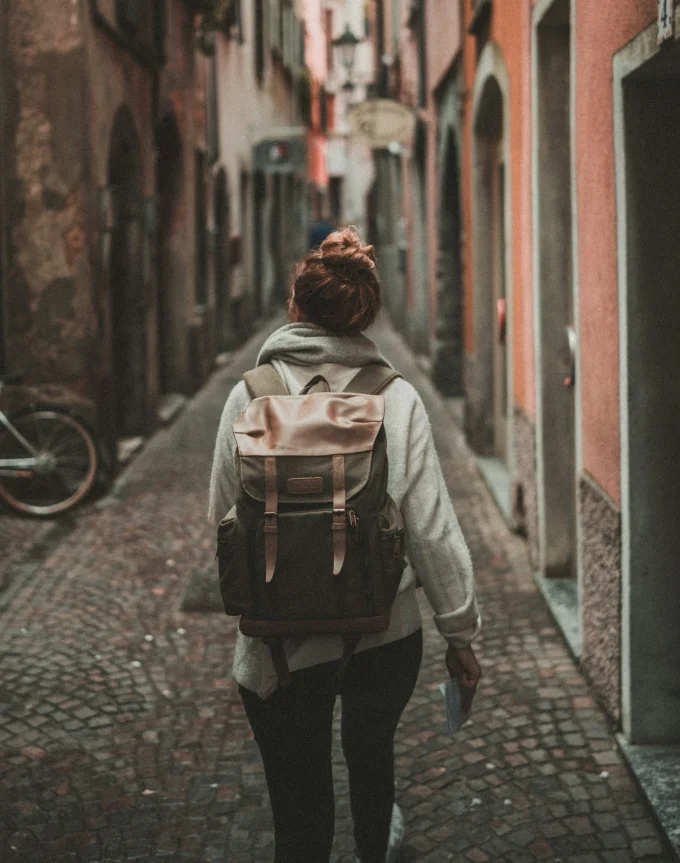
If you are planning a trip to China in 2027, you’ve likely encountered two names that dominate every “must-visit” list: Jiuzhaigou and Zhangjiajie. Both are UNESCO World Heritage sites, both offer landscapes that look unreal, and both have seen massive infrastructure upgrades in the last year.
But here is the reality: they are not interchangeable. Choosing between them isn’t about which is “better”. It’s about which one matches your physical travel style and aesthetic soul.
This guide is designed to help you decide, with clear comparisons based on scenery, accessibility, walking difficulty, seasonality, crowds, and overall travel experience, etc.
By the end, you’ll know exactly which one fits your style of travel.
Quick Comparison: Jiuzhaigou vs. Zhangjiajie
| Category | Jiuzhaigou | Zhangjiajie |
|---|---|---|
| Landscape Type | Alpine lakes & waterfalls | Sandstone pillar mountains |
| Visual Style | Calm, colorful, reflective | Dramatic, vertical, cinematic |
| Altitude | 2,000–3,100 m | 200–1,200 m |
| Walking Difficulty | Moderate | Moderate to high |
| Internal Transport | Shuttle bus system | Cable cars, elevators, buses |
| Best Season | Autumn (Oct) | Spring & Autumn |
| Ideal Stay | 2 days | 2–3 days |
| Overall Feel | Peaceful natural valley | Epic mountain fantasy world |
Choose Jiuzhaigou if: You want a tranquil, horizontal “Fairy Tale” experience. It’s about multi-colored alpine lakes, travertine waterfalls, and Tibetan cultural immersion.
Choose Zhangjiajie if: You want a vertical, adrenaline-pumping “Avatar” experience. It’s about quartzite sandstone pillars, glass bridges, and prehistoric-feeling mountain skyscrapers.
Now, let’s compare Jiuzhaigou and Zhangjiajie in detail.
Alpine Lakes vs Avatar Mountains
Jiuzhaigou: A Valley of Color
Located in northern Sichuan Province, Jiuzhaigou is a high-altitude alpine valley known for its breathtaking lakes, waterfalls, forests, and snow-capped mountains.
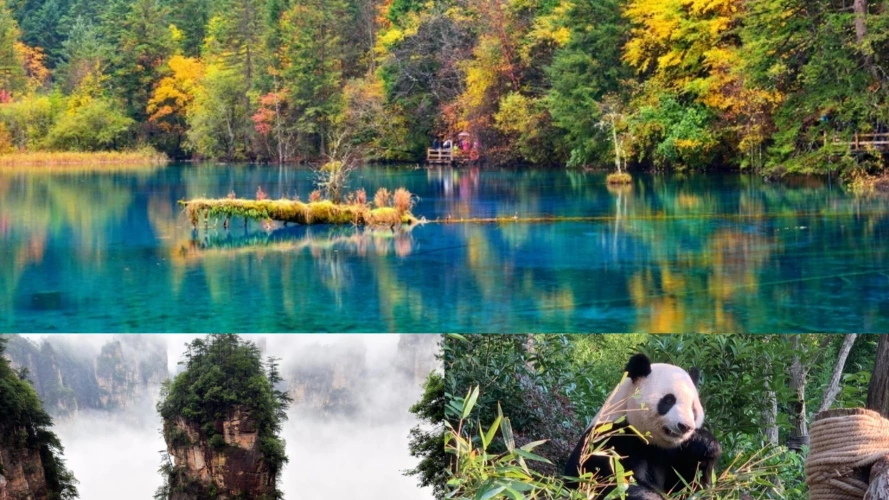
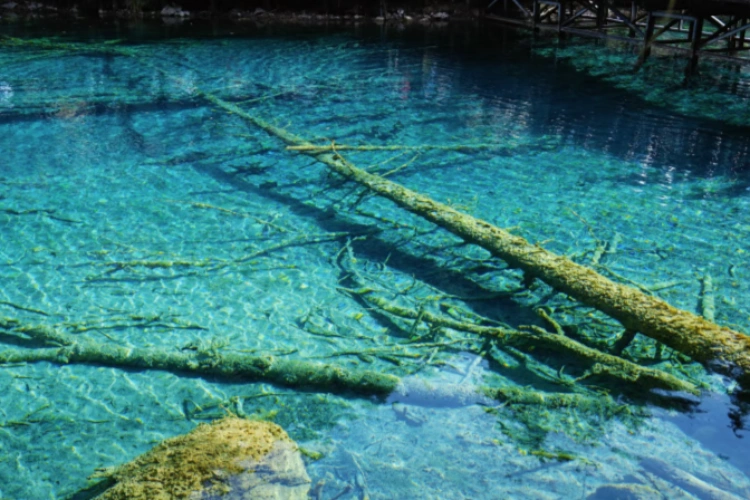
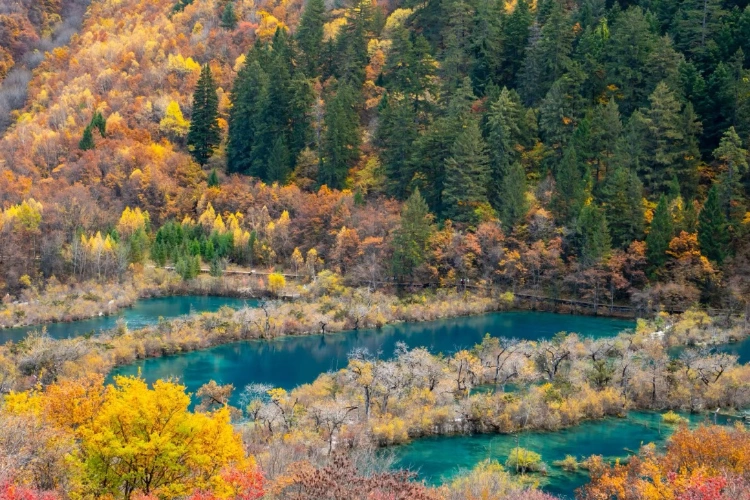
The heart of Jiuzhaigou is its water. Lakes such as Mirror Lake and Five-Color Pond are famous for their crystal-clear turquoise and blue-green colors, created by minerals and natural formations over thousands of years. On a calm day, the reflections of the surrounding forests and mountains make the lakes look almost unreal.
Unlike mountain destinations that focus on dramatic peaks and elevation, Jiuzhaigou is about harmony and details. Wooden walkways, peaceful forests, colorful lakes, and cascading waterfalls are connected through three main valleys, with sightseeing buses making it easy to explore at a comfortable pace.
The beauty of Jiuzhaigou is not about standing above the world. It is about slowing down and taking in the changing colors of nature.
Zhangjiajie: Vertical Drama
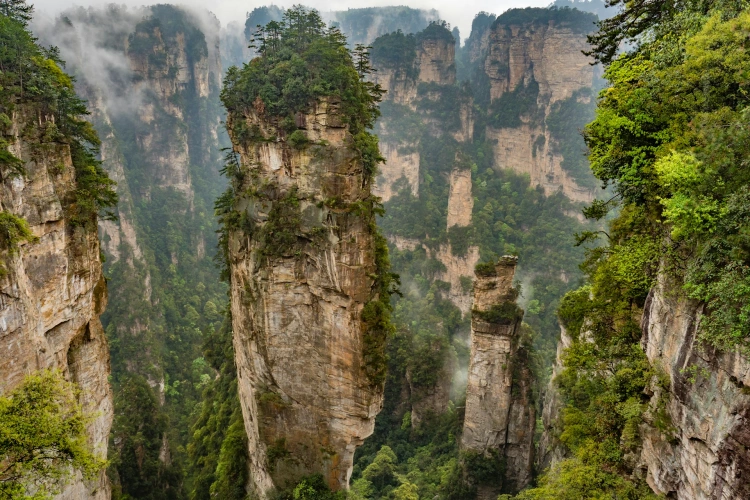
Located in Hunan Province, Zhangjiajie is famous for its towering quartz sandstone pillars — the dramatic formations that inspired the floating mountains in the movie Avatar.
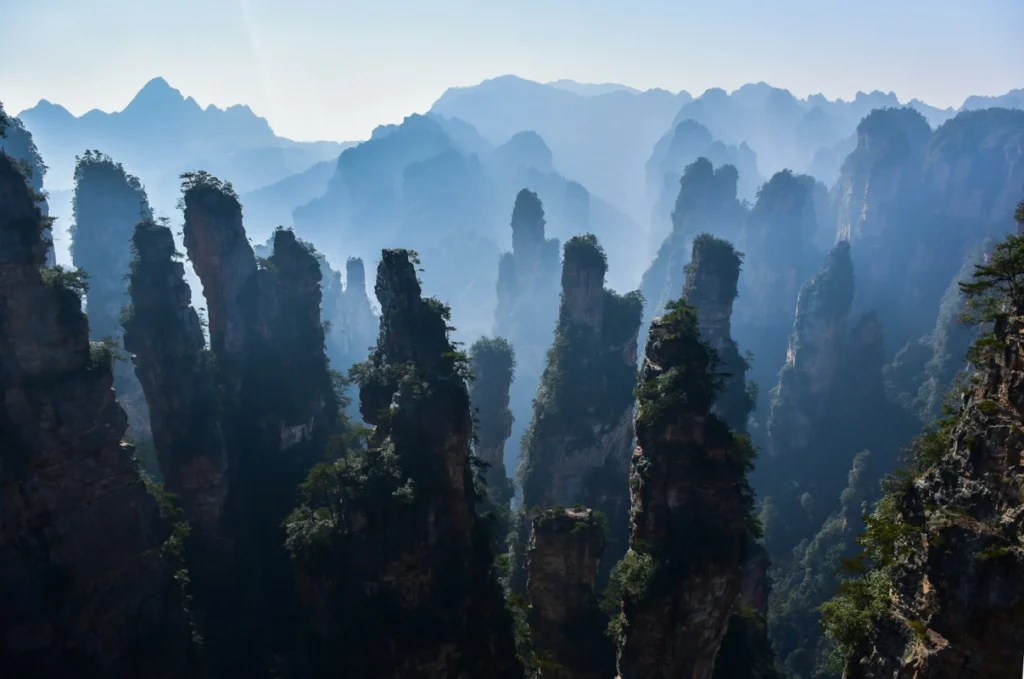
The landscape here is all about height and scale. Thousands of narrow rock spires rise from deep green forests, creating a scene unlike anywhere else in China. Visitors can explore cliffside walkways, glass bridges, mountain viewpoints, and sky platforms that offer breathtaking views over the valleys below.
Compared with Jiuzhaigou’s calm lakes and colorful forests, Zhangjiajie feels more adventurous and dramatic. The cliffs are steep, the viewpoints are high, and many attractions involve more stairs and walking.
This is nature at its most powerful, a destination built around towering peaks, dramatic views, and the feeling of standing above the clouds.
Neither Jiuzhaigou nor Zhangjiajie is objectively “better.” They simply deliver different emotional responses.
How to Get to Jiuzhaigou and Zhangjiajie
Getting to both Jiuzhaigou and Zhangjiajie has become much easier in recent years. However, the travel experience is still quite different. Here’s what the journey to each destination actually looks like on the ground.
Get to Jiuzhaigou
Reaching Jiuzhaigou still feels like a true mountain expedition. Most travelers use Chengdu as their base camp. There are typically 3 ways to travel from Chengdu to Jiuzhaigou:
By High-Speed Train
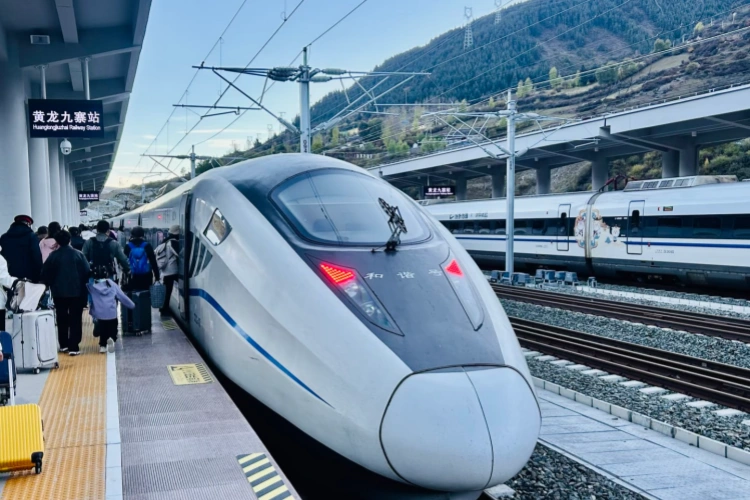
You can take the high-speed train from Chengdu East Railway Station to Huanglongjiuzhai Station, with the journey taking around 1.5–2 hours. However, the train station is not directly at Jiuzhaigou Valley. It is still about 90+ km from the park entrance, so you’ll need an additional 1.5–2 hours’ transfer either by shuttle bus or private car.
Flight
A flight from Chengdu to Jiuzhai Huanglong Airport (JZH) takes just about an hour, making it the quickest option. Keep in mind that the airport is located at 3,448 meters (11,312 ft) above sea level. Some visitors notice mild altitude symptoms, such as headaches or fatigue, after landing. What’s more, from the airport, it’s still about a 1.5-hour drive to hotels near Jiuzhaigou Valley.
Road Trip: By Bus or Private Car
The opening of the G8513 expressway has significantly reduced the driving time from Chengdu to Jiuzhaigou, shortening the journey from around 8–10 hours to approximately 6–8 hours. However, traveling by road is still the longest option compared with taking a train or flight.
For travelers who prefer flexibility, a private car or transfer can be a comfortable choice, allowing stops along the way at scenic spots and Tibetan villages that are difficult to visit by public transportation.
Get to Zhangjiajie
Compared with Jiuzhaigou, Zhangjiajie is easier to reach and requires fewer transfers, making it a more convenient option for many travelers.
By Air
Zhangjiajie Hehua International Airport (DYG) is located just outside the city, making flying to Zhangjiajie more time-efficient. After landing, it takes only about 35–50 minutes to reach hotels in the Wulingyuan Scenic Area.
By High-Speed Train
Zhangjiajie West Railway Station offers direct high-speed rail connections to major cities such as Changsha (around 2 hours), Chengdu (around 4 hours), Chongqing (around 2.5 hours), Shanghai, Hong Kong, and several other destinations across China, reducing the need for additional transfers.
QuietRoutes Tip: If you’re short on time or prefer a smoother journey with fewer connections, Zhangjiajie has the advantage. Jiuzhaigou is now much easier to reach than it was a few years ago, but getting there still usually involves an extra transfer after arriving by train or plane.

The Physical Demands: Altitude vs. Stairs
Although both parks have improved their transportation systems in recent years, the biggest difference is still how you experience them on foot.
Jiuzhaigou: Easy Walking at High Altitude
Walking in Jiuzhaigou is relatively easy. The park is connected by well-maintained wooden boardwalks that follow the lakes and valleys, and most routes are flat or gently downhill.
Thanks to the park’s Y-shaped sightseeing bus system, you can choose how much you want to walk. Most visitors cover around 8–15 km (5–9 miles) in a day, but the walking itself is generally comfortable.
However, the real challenge is the altitude rather than the terrain. Most of Jiuzhaigou sits between 2,000 and 3,100 meters (6,560–10,170 ft) above sea level, so even an easy walk may feel more tiring than expected. Taking your time, staying hydrated, and using the shuttle buses when needed will help you enjoy the park comfortably.

Zhangjiajie: A More Vertical Challenge
Zhangjiajie is built around towering sandstone pillars, so changes in elevation are part of the experience. Compared with Jiuzhaigou, you’ll spend much more time climbing stairs and moving between different levels of the park.
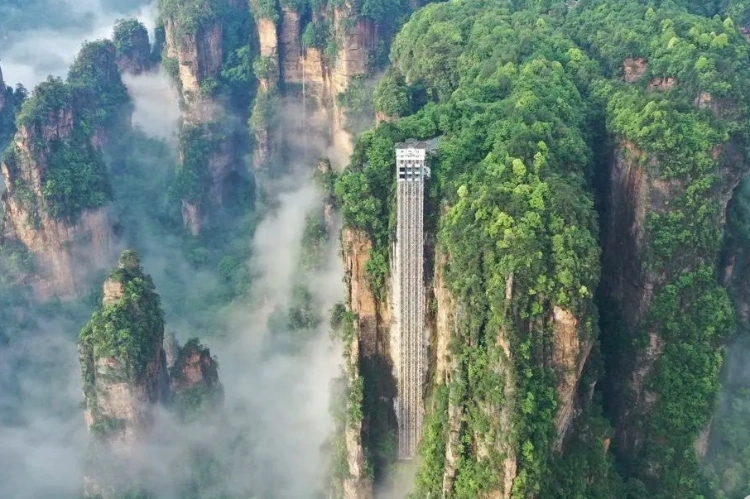
Even with the famous Bailong Elevator, cable cars, and shuttle buses, reaching many viewpoints still involves steep stone stairways and uphill walks. Most visitors cover around 10–18 km (6–11 miles) in a day, with considerably more climbing than in Jiuzhaigou.
The biggest challenge is the number of stairs rather than the distance. If you have knee problems, limited mobility, or simply prefer gentler walks, Zhangjiajie can feel physically demanding. On the other hand, if you enjoy hiking and dramatic mountain scenery, the effort is rewarded with spectacular panoramic views.

Crowds and Travel Experience
Both parks attract huge numbers of visitors, but the way they manage those crowds is very different. Understanding these patterns can make a big difference to your experience.
Jiuzhaigou: A Well-Managed Flow
Despite its popularity, Jiuzhaigou often feels less crowded than Zhangjiajie.
The park’s high-frequency shuttle bus network keeps visitors moving efficiently between the three main valleys, making it easier to spread people across the scenic area.
Thanks to its vast size and mostly open valleys, Jiuzhaigou rarely feels overcrowded, even with the daily visitor limit of 41,000. Once you walk a few hundred meters away from a major shuttle stop, the tour groups quickly thin out, leaving you with the sounds of waterfalls, birds, and the wind through the forest.
QuietRoutes Tip: Start your day in the upper section of Rize Valley. Many tour groups stop at the lower lakes first, so arriving early gives you a better chance to enjoy the upper boardwalks in a much quieter atmosphere.

Zhangjiajie: More Crowds at Key Attractions
Zhangjiajie’s dramatic landscape makes crowd management more challenging than in Jiuzhaigou.
Many routes depend on elevators, cable cars, and narrow mountain paths, creating natural bottlenecks where visitors often gather.
Popular viewpoints, such as the Hallelujah Mountain viewing platform, can become very crowded, especially between 10:00 AM and 2:00 PM. During summer and major public holidays, waits for the Bailong Elevator can still reach 60–90 minutes.
QuietRoutes Tip: If you’re looking for a quieter experience, avoid the Bailong Elevator first thing in the morning. Instead, take the Tianzi Mountain Cableway to the top and explore the trails from there. Many tour groups follow the same main routes, while the less-traveled paths tend to be much more peaceful.
Best Time to Visit Jiuzhaigou and Zhangjiajie
Both Jiuzhaigou and Zhangjiajie are open year-round, but each season offers a very different experience. The best time to visit depends on the scenery you want to see and the type of trip you prefer.
Jiuzhaigou: Best for Autumn Colors
Autumn, mid-October to early November, is widely considered the best time to visit Jiuzhaigou. The forests turn brilliant shades of gold, orange, and red, creating stunning reflections in the park’s turquoise lakes. It’s also the busiest season, so expect larger crowds and higher demand for hotels.
Winter, December to February, brings a completely different landscape. Snow-covered mountains, frozen waterfalls, and fewer visitors create a peaceful atmosphere. Temperatures often stay below freezing, but the park remains open, and many of its famous lakes retain their vivid blue color.
QuietRoutes Tip: For a quieter visit with pleasant weather, consider late March through May. Spring brings fresh greenery, flowing waterfalls, and far fewer visitors than the autumn peak season.
Zhangjiajie: Best for Misty Mountain Scenery
Spring and Autumn (April to June & September to November) are generally considered the best seasons to visit Zhangjiajie, with comfortable temperatures and beautiful mountain scenery.
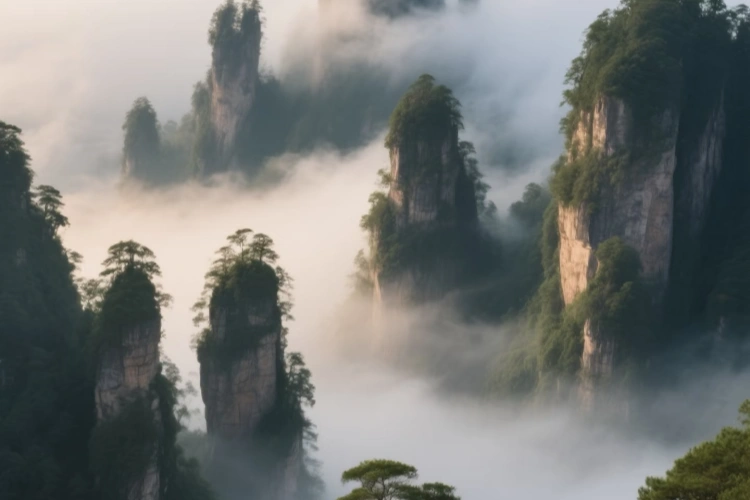
Unlike Jiuzhaigou, which is at its best on clear, sunny days, Zhangjiajie often looks even more dramatic when light mist drifts through the sandstone pillars. Late spring is especially known for creating the “floating mountain” scenery that inspired the landscapes in Avatar.
Winter (December to February) brings fewer visitors and occasional snow, giving the park a peaceful atmosphere. However, heavy fog can sometimes reduce visibility, and on some days the famous sandstone pillars may be hidden completely.
QuietRoutes Tip: Early September is an excellent time to visit. The intense summer heat and humidity have eased, schools have reopened, and visitor numbers are generally lower than during the National Day holiday in October.
Please Note: If possible, avoid visiting either park during China’s National Day holiday (October 1–7), Labor Day holiday (May 1–5), and Chinese New Year. These are the busiest travel periods of the year, with larger crowds, longer queues, and higher hotel prices. Even the best itinerary can’t completely avoid the holiday rush.
Photography Comparison: Color vs. Atmosphere
For photographers, choosing between Jiuzhaigou and Zhangjiajie isn’t about which destination is more beautiful. It’s about the type of images you want to create. Each park offers a completely different photographic experience.
Jiuzhaigou: A Paradise for Color Photography
If you enjoy photographing vibrant landscapes, Jiuzhaigou is hard to beat. Its crystal-clear lakes, colorful forests, waterfalls, and snow-capped mountains provide endless opportunities for striking images.
The Signature shot
Mirror Lake on a calm morning, when the surrounding mountains and forests are perfectly reflected on the water.
Jiuzhaigou is known for its rich colors and clean compositions. In autumn, the contrast between the turquoise lakes and the golden and red forests creates some of the most iconic landscapes in China.
Photography Tip: A circular polarizing (CPL) filter is one of the most useful accessories to bring. It helps reduce reflections on the water, revealing the submerged tree trunks and the remarkable clarity of Jiuzhaigou’s lakes.

Zhangjiajie: A Master of Scale
If you enjoy dramatic landscapes, atmospheric scenes, and images that capture the feeling of vastness, Zhangjiajie offers a completely different photography experience from Jiuzhaigou.
The Signature Shot
Layers of sandstone pillars disappearing into mist, creating a sense of depth and mystery.
Zhangjiajie is all about scale and perspective. Cliffside viewpoints, towering peaks, and deep valleys allow photographers to capture the incredible height and vertical nature of the landscape. The sandstone formations can look almost like a natural city of skyscrapers rising from the forest.
Photography Tip: A telephoto lens (70–200mm) can be especially useful here. While wide-angle lenses are great for showing the overall landscape, zooming in helps compress the layers of peaks and create the “floating mountain” effect that makes Zhangjiajie so recognizable.
Jiuzhaigou and Zhangjiajie Itinerary Recommendation
Both Jiuzhaigou and Zhangjiajie are large scenic areas, but the way you explore them is quite different. The number of days you need depends on how much time you want to spend walking, taking photos, and enjoying the scenery at a relaxed pace.
Jiuzhaigou: The Ideal 2-Day Visit
Thanks to its efficient Y-shaped layout and frequent shuttle buses, two days is the ideal amount of time for most travelers to explore Jiuzhaigou.
Day 1: Explore the Main Highlights
Take the shuttle bus system to explore the three main valleys: Rize Valley, Zechawa Valley, and Shuzheng Valley. Focus on the park’s most iconic scenery, including Five-Flower Lake, Pearl Shoal Waterfall, Long Lake, Five-Color Pond, and the Shuzheng Lakes area. This first day gives you a complete overview of Jiuzhaigou and helps you discover which places you enjoy most.
Day 2: Return to Your Favorite Spots
Use your second day to revisit the landscapes that impressed you the most. You may want to spend more time photographing a particular lake, walking a quieter boardwalk section, or simply enjoying the scenery at a slower pace. A second visit often reveals details that are easy to miss on the first day.
QuietRoutes Tip: It is possible to see Jiuzhaigou’s main highlights in one long day, but two days creates a much more relaxed experience. The park is not just about checking off viewpoints. It is about taking time to appreciate the colors, reflections, and changing light.
Zhangjiajie: The Ideal 3-Day Visit
Compared with Jiuzhaigou, Zhangjiajie’s attractions are more spread out across different scenic areas, with more time needed for transfers, cable cars, elevators, and walking between viewpoints. We recommend 2–3 days for a more comfortable experience.
Day 1: Explore Yuanjiajie and the Avatar Mountains
Start with the famous sandstone pillars of Yuanjiajie, including the viewpoints that inspired the landscapes in Avatar. The Bailong Elevator is also part of this route, offering a unique way to reach the upper mountain area.
Day 2: Discover Tianzi Mountain
Visit Tianzi Mountain for its wide panoramic views, misty peaks, and the famous “Imperial Brush Peaks.” This area is especially beautiful when clouds and fog create layers around the mountains.
Day 3: Choose an Additional Experience
Spend your third day exploring another highlight, such as the Zhangjiajie Grand Canyon Glass Bridge or Tianmen Mountain, known for its dramatic cliff views, the 999-step staircase, and the famous Tianmen Cave.
QuietRoutes Tip: While it is possible to visit Zhangjiajie in two days, three days allows you to explore at a more relaxed pace and reduces the stress of transfers, queues, and long walking days.
Which Is Better: Jiuzhaigou or Zhangjiajie?
There isn’t a single “better” destination, only the one that suits your travel style best.
Choose Jiuzhaigou If You…
- Prefer peaceful, colorful landscapes.
- Love alpine lakes, waterfalls, and forests.
- Want to experience China’s famous autumn scenery.
- Are traveling with family or prefer a slower pace.
- Like convenient shuttle transport and easier walking routes.
Choose Zhangjiajie If You…
- Want dramatic mountain scenery and spectacular viewpoints.
- Enjoy heights, cliffs, and panoramic views.
- Don’t mind stairs and more physical activity.
- Are fascinated by unique sandstone formations.
- Want to see the landscapes that inspired Avatar.
Can You Visit Both in One Trip?
Short answer: yes.
It is possible to include both Jiuzhaigou and Zhangjiajie in one China itinerary. However, they are located in different provinces — Sichuan and Hunan — so combining them requires careful planning and a dedicated transfer day.
The Logistics
In 2027, there is still no direct train connecting Jiuzhaigou and Zhangjiajie. Most travelers will need to make the connection through Chengdu.
High-Speed Train
Take the high-speed train from Huanglongjiuzhai Station back to Chengdu East Railway Station (around 1.5–2 hours). From Chengdu, take direct high-speed trains to Zhangjiajie West Railway Station (approximately 4–5.5 hours).
Flight
There are usually no direct flights between Jiuzhai Huanglong Airport (JZH) and Zhangjiajie Hehua Airport (DYG). The most practical option is flying via Chengdu, then taking a connecting flight to Zhangjiajie.
Realistic Travel Time
Allow a full day for the transfer between the two destinations.
How Many Days Do You Need?
To enjoy both destinations without rushing, we recommend at least 8–9 days.
Days 1–4: Chengdu & Jiuzhaigou — The Water Landscape
Day 5: Transfer Day — Chengdu Connection via flights or high-speed train
Days 6–9: Zhangjiajie & Tianmen Mountain — The Mountain Landscape
QuietRoutes Tip: If you only have 5–6 days in China, choosing one destination will give you a more relaxed experience. But with around 10 days, combining Jiuzhaigou and Zhangjiajie creates a wonderful contrast.
Final Verdict
If you want dramatic landscapes, towering peaks, and the feeling of exploring a world from a sci-fi movie, and you don’t mind more stairs and physical activity, Zhangjiajie may be the better choice.
If you prefer colorful lakes, peaceful forests, and a slower journey where you can take in the details of nature at your own pace, Jiuzhaigou may be the place that speaks to you more.
If you have more time in China, consider visiting both.
There is no universal winner between Jiuzhaigou and Zhangjiajie. The right choice depends on the kind of scenery you love, the way you like to travel, and the experience you want to remember.