For decades, the answer to “how many days do I need for Jiuzhaigou?” was dictated by the grueling 10-hour bus ride from Chengdu. You needed a minimum of three days just to survive the logistics.
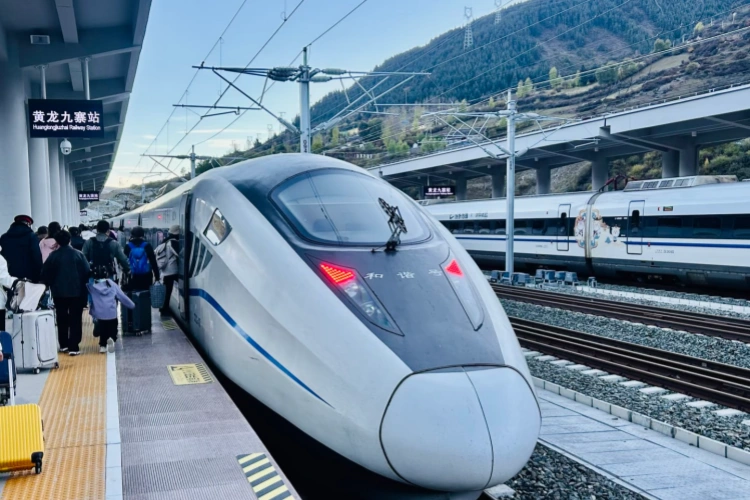
In 2026, the landscape has shifted. The Sichuan-Qinghai High-Speed Railway now whisks travelers from Chengdu to Huanglong-Jiuzhai Station in just about 1 hour and 40 minutes. This technological leap has turned a rugged expedition into an accessible mountain escape. But while you can get there faster, the question remains: how long should you stay to actually see it?
Whether you are a “time-is-money” traveler or a “Quiet” seeker looking to escape the 41,000-person daily crowds, here is how to choose your timeline.

The Quick Answer: How Many Days Do You Really Need?
1 Day: Possible for high-speed rail “sprinters” but extremely rushed.
2 Days: The Ideal Minimum. This allows one full day for Jiuzhaigou and a half-day for the nearby Huanglong travertine pools.
3 Days: The “Quiet” Choice. This permits a deep dive into the park’s hiking trails and a visit to a local Tibetan village without the pressure of a train schedule.
4+ Days: The “Explorer” Pace. Fully relaxed travel with time for deeper hikes, quiet moments, and nearby cultural visits.
Final recommendation:
For most first-time visitors, 2 days in Jiuzhaigou is the sweet spot: enough to see the entire park without rushing.
Why Trip Length Matters in Jiuzhaigou
Jiuzhaigou isn’t just a park; it’s a massive “Y” shaped valley system made of three distinct branches: Rize, Zechawa, and Shuzheng.
The scale here is often underestimated. To see it properly, you need to understand the “ground rules”:
No Private Cars: You are entirely dependent on the internal eco-bus system.
The “Bus + Boardwalk” Flow: The best views aren’t at the bus stops; they are on the walking trails between them.
The Crowd Factor: With a 41,000-person daily limit, logistics can slow down during peak hours.
The Bottom Line:
If you don’t plan enough time, your visit can feel rushed, just moving from one bus stop to another. But with enough time, you can slow down and truly enjoy the peaceful beauty Jiuzhaigou is known for.
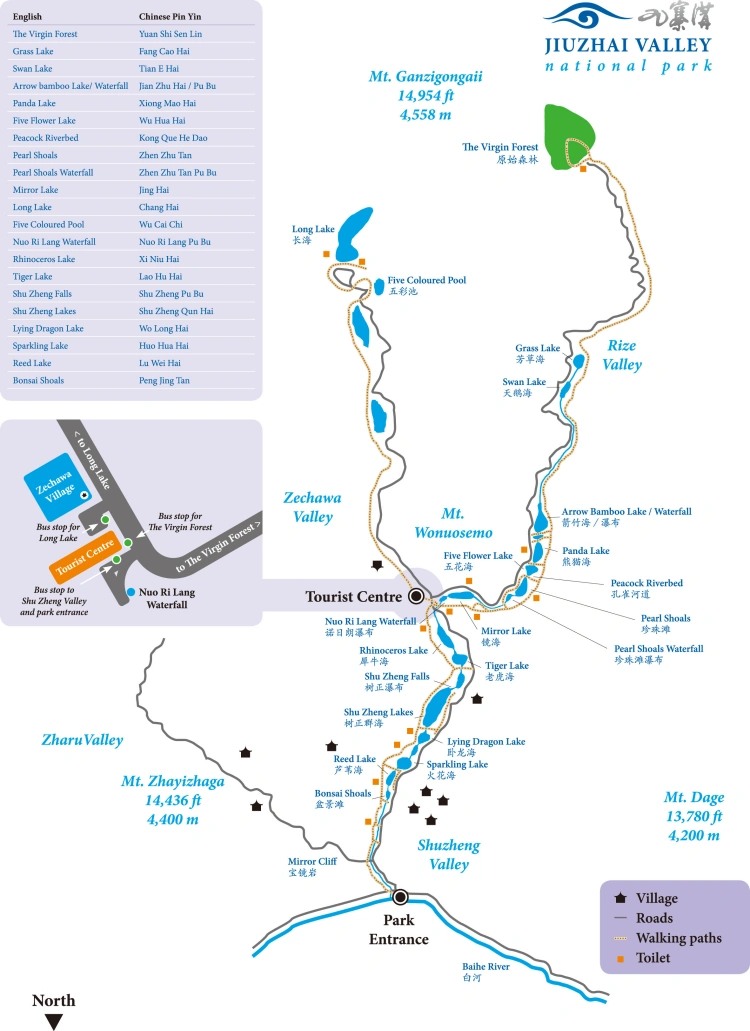
Now let’s see the popular Jiuzhaigou itineraries with more details.
1-Day Jiuzhaigou Itinerary
Thanks to the 6:45 AM “Panda Express” train from Chengdu East, you can now technically visit Jiuzhaigou in a single day. You arrive at the station by 8:30 AM, transfer to the park by 10:30 AM, and have roughly 6 to 7 hours inside the gates before catching a late-evening train back.
Best for: Travelers on a tight business schedule or those adding a mountain “side-quest” to a Chengdu stay.
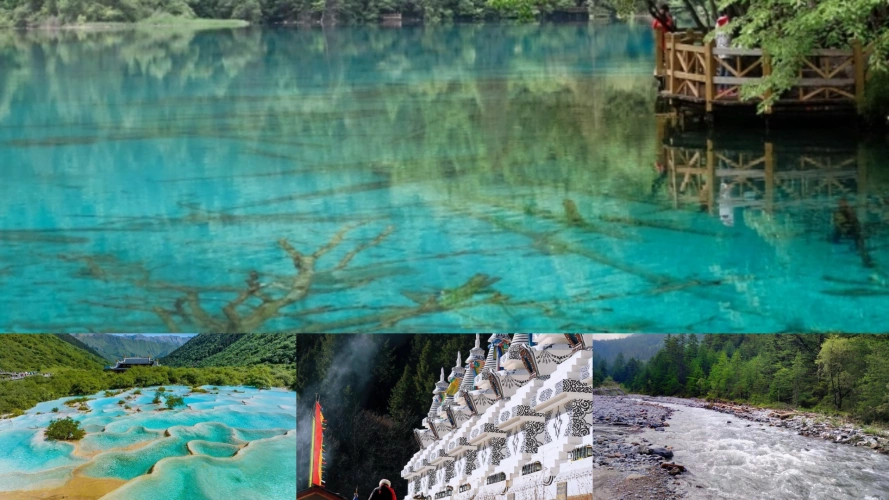
The Strategy: Focus on the “Y”: You won’t have time to walk. You must utilize the internal eco-buses to hit the “Big Five”: Five Flower Lake, Pearl Shoal Waterfall, Nuorilang Waterfall, Long Lake, and Five-Color Pond.
The Sacrifice: You will likely skip the Shuzheng Valley (the lower branch) and miss the peaceful boardwalk sections where the crowds thin out.
2-Day Jiuzhaigou Huanglong Itinerary
This is the most balanced way to experience the region. By staying one night in Zhangzha Town (at the park gates), you avoid the stress of arrival-day logistics.
Best for: Most international travelers and first-time visitors.
Day 1: Chengdu to Huanglong (by high-speed train)
Arrive at Huanglong Scenic Area around noon. After lunch, spend the afternoon exploring the famous Five-Color Ponds (3,500m). Take the cable car up and walk down to ease into the altitude before the next day’s hike.
- Highlight: The golden “calcified” pools that look like a dragon’s scales.
Day 2: Full-Day Jiuzhaigou Deep Dive
Being at the gates at 7:30 AM is the only way to beat the massive tour groups.
Route: The bus will take you to the top of either right or left branch. Then you explore down to the center.
Afternoon: Visit the Zechawa Valley (the left branch) for the massive Long Lake, then spend your final hours walking the boardwalks of the Shuzheng Valley.
3-Day Jiuzhaigou & Nearby Itinerary
If you have three days, you can step off the “tourist conveyor belt.” This is the only way to experience the Zharu Valley, Jiuzhaigou’s designated ecotourism zone.
Best for: Photographers, hikers, and those wanting a spiritual connection to the land.
Tibetan Culture: A visit to the Zharu Monastery, where you can hear the monks chanting without the hum of eco-buses in the background.
Photography: In the 3-day itinerary, you can spend hours at Mirror Lake waiting for the perfect 8:00 AM reflection, rather than rushing to the next bus stop.
4+ Days Jiuzhaigou Itineraries
If you have more than four days, the conversation shifts from “seeing a park” to “crossing a landscape.”
Here are the best ways to spend your extra time:
Option 1: Chengdu + Jiuzhaigou
Rather than rushing to a second province, use your extra days to explore the “Land of Abundance” surrounding Chengdu.
The Highlights: Add a day for the Leshan Giant Buddha (just 1 hour from Chengdu) or a hike up Mount Emei.
The Perk: This itinerary is much more relaxed. You can spend an extra morning at the Chengdu Panda Base or enjoy an evening of “Face-Changing” Sichuan Opera without checking your watch for the next train.
Option 2: Jiuzhaigou + Western Sichuan
For those craving raw, high-altitude scenery, head west from the Jiuzhai-Huanglong corridor.
The Route: Travel from Jiuzhaigou toward the Zoige Grasslands or the Muni Valley.
The Experience: This is where the forest gives way to the vast, nomadic Tibetan plateau. You’ll see yurts, prayer flags, and rolling hills that feel like the edge of the world. It’s the “Quiet” alternative for travelers who find the main parks a bit too polished.
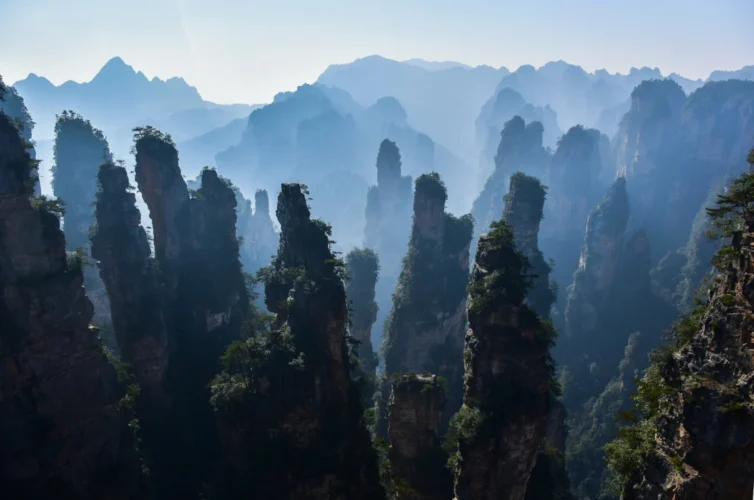
Option 3: Jiuzhaigou + Zhangjiajie
This combination is the ultimate “nature duo.” While many travelers are still comparing Jiuzhaigou with Zhangjiajie, you can combine them easily thanks to the high-speed train network.
After completing your 2-day immersion in Jiuzhaigou’s crystalline lakes, you can catch a direct high-speed train from Chengdu East to Zhangjiajie West in as little as 3 hours and 58 minutes.
Expert Tips: How to Ensure Your Jiuzhaigou Tour Efficiency
1. The “Real-Name” Booking Rule
As of 2026, Jiuzhaigou remains strictly pre-book only. Tickets are released 15 days in advance on official WeChat mini-programs and platforms like Trip.com.
- Pro Tip: Your passport is your ticket. There are no paper tickets. Ensure the name on your booking matches your passport exactly, or the facial recognition turnstiles will reject you.
2. Daily Capacity Caps
The park limits visitors to 41,000 per day in peak season (April–November). During the “Golden Week” of October, tickets often sell out within minutes of being released. If you plan to visit in autumn, your “number of days” may be dictated by ticket availability.
3. Weather vs. Visibility
The “Best Time” to visit for photography is October 20 to November 5 for autumn colors. However, this is also the most crowded.
- The 2026 “Quiet” Recommendation: Visit in late September or early November. The colors are 80% as good, but the “people-to-tree” ratio is much more pleasant.
4. Altitude Awareness
While Jiuzhaigou (2,000m–3,100m) is generally safe for most, Huanglong is a different beast.
- Health Check: If you have respiratory or heart issues, consult a doctor before attempting the Huanglong portion of the trip. Portable oxygen canisters are sold at every station and hotel in 2026 for around 20-35 RMB (US$3-5).

Final Verdict: Finding Your Fairytale Pace
Choosing how many days to spend in Jiuzhaigou isn’t about how much you can fit in. It’s about how much you’re willing to leave behind. In 2026, the high-speed rail has made the “1-Day Sprint” a reality, but it remains a compromise.
For the “Best of” Highlights: Choose 2 days (Jiuzhaigou + Huanglong).
For the “Quiet” Experience: Choose 3+ days. This allows you to trade the bus for the boardwalks and explore the hidden Zharu Valley.
Ready to leave the crowds behind?
Whether you need a 2026 rail-optimized itinerary or a “Quiet” boutique stay near Jiuzhaigou Valley, we’re here to help you navigate the mountains. Just leave us a message, we’ll handle the rest.