If you ask locals what makes Chengdu special, they won’t point to major landmarks. They’ll point to a neighborhood teahouse, a hidden noodle stall, or a lively game of mahjong in the park. The true magic of this city happens at a slower pace, and the best way to experience it is through a Chengdu walking tour.
Unlike sprawling megacities, Chengdu’s historic alleys, vibrant food streets, and serene parks are highly walkable. Exploring on foot lets you experience the city beyond the famous giant pandas. You’ll catch the scent of jasmine tea from open-air courtyards and discover tiny, generational restaurants hidden behind modern skyscrapers.
Whether you have a quick layover or a few days to explore, this guide covers the best self-guided walking routes, local food spots, and hidden gems. Read on to discover how to navigate Chengdu like a local, at the city’s signature relaxed pace.
Why Chengdu Is One of China’s Best Walking Cities
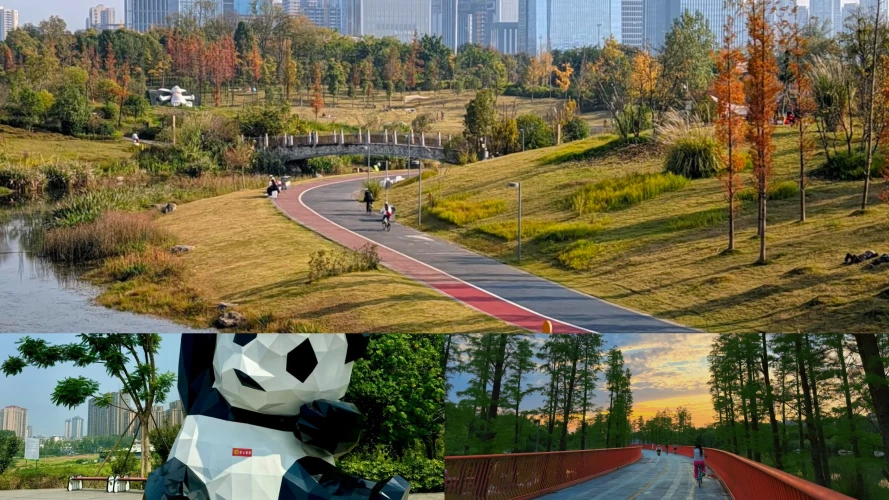
Many first-time visitors are surprised by how comfortable Chengdu feels to explore on foot. Wide sidewalks, shaded boulevards, riverside greenways, and well-connected public spaces make walking an enjoyable part of the travel experience rather than simply a way to get from one attraction to another.
Here are the reasons why we recommend a walking tour in Chengdu.
Experience the city’s slower pace of life. Walking offers a genuine glimpse into local life that you simply can’t appreciate from the window of a taxi, such as chatting over tea for hours, taking evening strolls after dinner, and dancing in the parks, etc.
Visit old and new within a short walk. You might move from centuries-old temples and traditional courtyards to stylish cafés, designer boutiques, and contemporary art spaces just on foot. No need to drive miles outside the city center.
Excellent public transportation. Many visitors combine a short metro ride with several leisurely walks throughout the day, allowing them to cover different parts of the city without feeling exhausted.
For food lovers, walking is almost essential. Some of the city’s best flavors are found in family-run restaurants, hidden streets, or at late-night spots, which are tucked away from the main tourist areas. Exploring on foot gives you the freedom to stop whenever something catches your eye or your appetite.
These are the experiences that don’t appear on most itineraries, yet they often become the moments people remember long after their trip has ended.
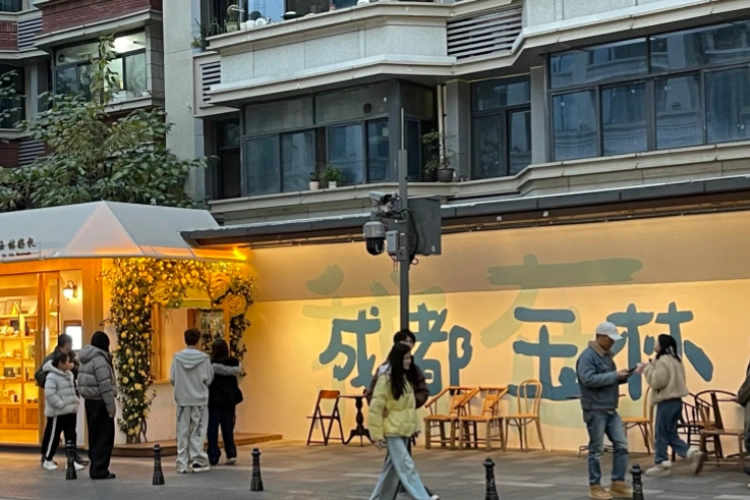
Best Chengdu Walking Tours
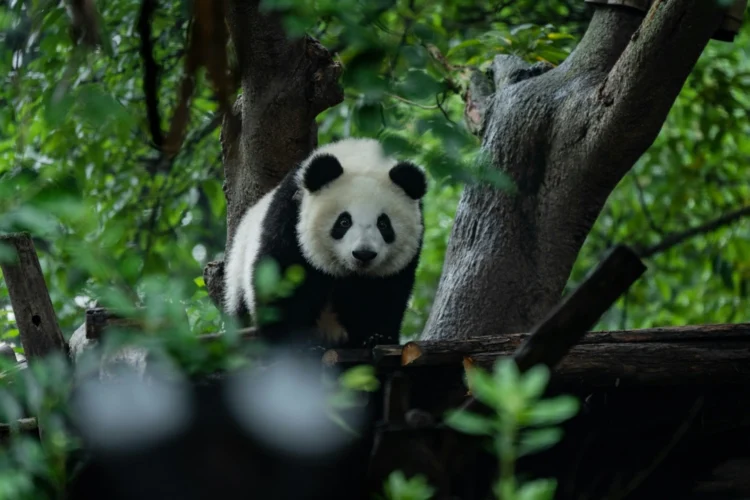
Walking won’t take you to every attraction in Chengdu, like the Panda Base, Sanxingdui Museum, and Dujiangyan Irrigation System, which are best reached by vehicle or metro. However, it remains the most rewarding way to experience the city’s culture, everyday life, and distinctive rhythm.
So, we’ve mapped out the following free walking routes. Whether you want to trace the city’s ancient roots, dive into its legendary street food scene, or discover its modern architectural greenways, you’ll find your way.
1. The Ultimate Old Chengdu Heritages Walking Tour
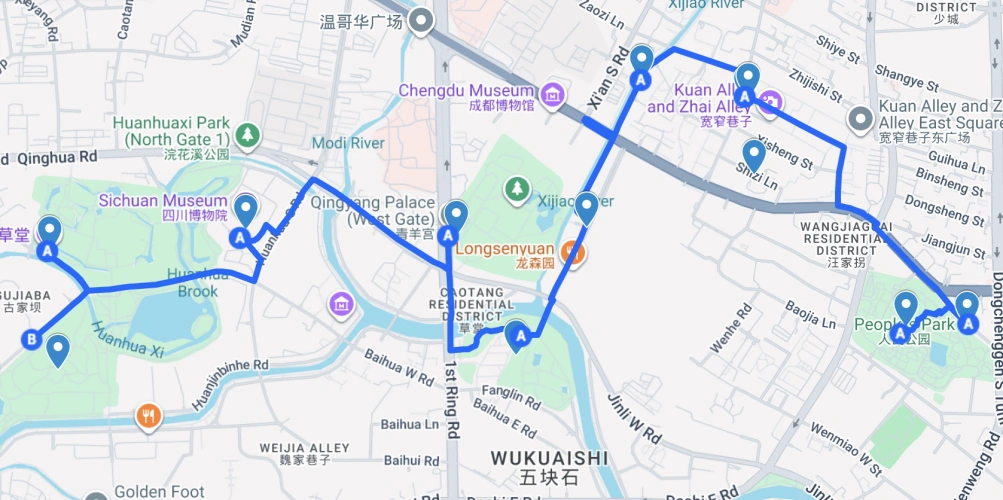
The Route: People’s Park → Citang Street → Xiatongren Street → Shizi Lane → Kuanzhai Alleys → Tonghuimen Road → Qintai Road → Baihuatan Park → Qingyang Palace → Qingyangshang Street → Sichuan Museum → Du Fu Thatched Cottage → Huanhuaxi Park
Distance: ~8.7 km
Best For: First-time visitors looking for a deep dive into Chengdu’s historic architecture, parks, and cultural heritages.
Why Take This Route: It captures the classic, timeless soul of western Chengdu. You’ll move seamlessly from lively public parks to preserved Qing Dynasty alleys and sacred Taoist temples, finishing in the serene green space that inspired China’s most famous poets.
What Not to Miss:
- People’s Park: The epic center of Chengdu’s slow life. Grab a bamboo chair at the historic open-air Heming Teahouse to sip green tea and listen to the clack of mahjong tiles.
- Kuanzhai Alleys: Beautifully restored Qing Dynasty courtyard streets blending traditional architecture with boutique shops and local snacks.
- Qingyang Palace: One of China’s oldest and most important Taoist temples, offering a remarkably quiet, spiritual escape right in the city center.
2. The Emerald River & Classic Bamboo Walking Tour
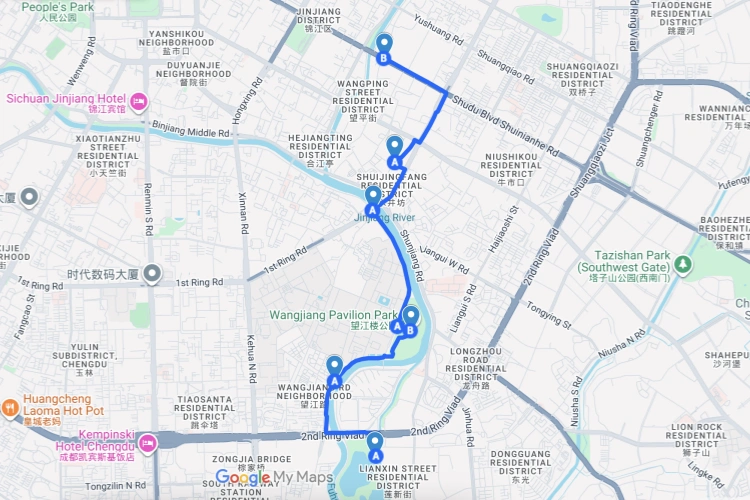
The Route: Donghu Park → Hebin Road → Wangjiang Road → Wangjianglou Park → Jiuyanqiao (Shuijingfang Museum Area) → Tianxianqiao North Road → Wangping Street
Distance: ~7.5 km
Best For: Travelers who love peaceful waterside strolls, historic parks, and a smooth transition from quiet nature to vibrant evening neighborhoods.
Why Take This Route: This path tracks the scenic Jinjiang River. It highlights Chengdu’s unique connection to nature and poetry, taking you through lush, bamboo-filled landscapes before leading you into the city’s historic distillery roots and modern riverside hangouts.
What Not to Miss:
- Wangjianglou Park: A gorgeous, tranquil park dedicated to Tang Dynasty poet Xue Tao, featuring over 150 varieties of stunning bamboo groves.
- Shuijingfang Museum: The site of the world’s oldest continuous baijiu distillery, showcasing traditional Chinese liquor-making heritage dating back over 600 years.
- Wangping Street: A lively riverside corridor perfectly blending old neighborhood residential charm with hipster coffee shops and trendy local bistros.
3. The Yulin Local Food & Neighborhood Discovery Tour
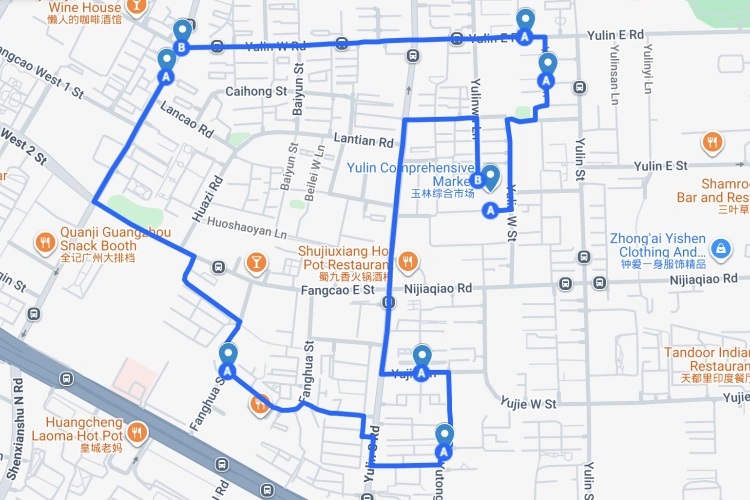
The Route: Fangcao Street → Fanghua Heng Street → Fanghua Street → Yutong Lane → Yujie Lane → Yulin Market → Yulin 4th Lane → Yulin East Road → Yulin West Road
Distance: ~6.5 km
Best For: Hardcore foodies and cultural explorers who want to experience the city’s authentic slow life and legendary culinary scene.
Why Take This Route: Yulin is the true capital of Chengdu’s residential street food and casual neighborhood culture. Moving through these tree-lined lanes reveals a raw, sensory side of the city that tourist maps miss.
What Not to Miss:
- Yulin Market: A bustling, aromatic local wet market where residents buy fresh Sichuan peppercorns and where you can sample authentic local snacks like crispy guokui.
- Yulin West Road Alleys: The heart of Chengdu’s fly restaurants and atmospheric night spots, famously romanticized in folk music.
4. The Local Life & Hidden Alleys Walking Tour
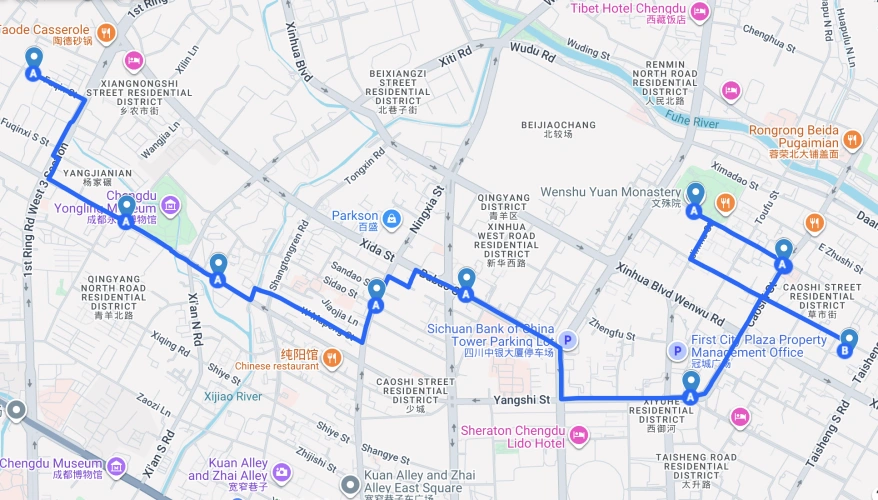
The Route: Fuqin Street → Yongling Road → Yongling Park → Huaishu Street → Changshun Xia Street → Babao Street → Yudai Bridge Street → Luoguo Alley → Caoshi Street → Wenshu Monastery → Yuquan Street → Beishuyuan Street
Distance: ~6.8 km
Best For: Slow-travelers and history buffs looking to find quiet residential spaces, ancient city layout remnants, and spiritual sanctuaries hidden in plain sight.
Why Take This Route: This route cuts right through the residential heart of old northern and central Chengdu. It avoids the commercial tourist paths, focusing instead on local street dynamics, pocket parks, and community history.
What Not to Miss:
- Yongling Park: The peaceful burial site of a 10th-century emperor, now serving as a serene community park where you can watch locals practice tai chi under heavy tree canopies.
- Wenshu Monastery: A remarkably well-preserved Buddhist temple complex. The surrounding alleys are filled with traditional vegetarian restaurants, incense shops, and quiet, courtyard teahouses that feel a world away from the modern metropolis.
5. The Industrial Retro & Creative Arts Walking Tour
The Route: Eastern Suburbs Memory (Dongjiao Jiyi) → Jinchuang Road → Jianshe Road
Distance: ~4.0 km
Best For: Photographers, vintage culture lovers, and anyone hunting for late-night university food stalls.
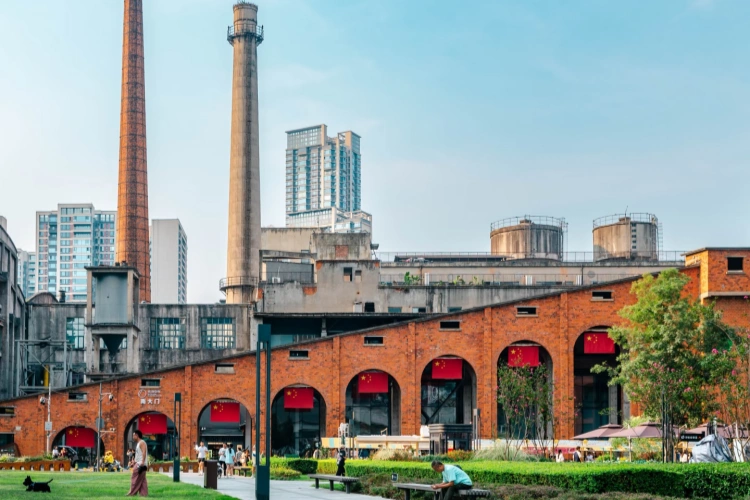
Why Take This Route: This walk showcases Chengdu’s industrial past, turned into a creative future. You’ll explore massive repurposed factories before walking down to one of the city’s most legendary, budget-friendly evening street food zones.
What Not to Miss:
- Eastern Suburbs Memory: A former 1950s electronics factory transformed into a sprawling creative park filled with red-brick art spaces, graffiti, retro trains, and indie cafés.
- Jianshe Road: A legendary food street that comes alive at night, packed with hungry students queuing for iconic snacks like sweet tangyouguozi (fried rice cakes) and spicy meat skewers.
6. The Modern Chengdu City Walking Tour
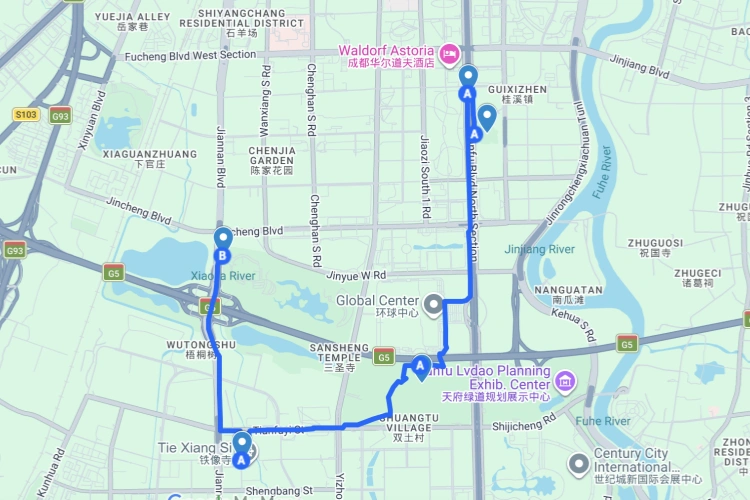
The Route: Jiaozi Park → Jiaozi Financial Museum → Chengdu SKP → Guixi Ecological Park → Tiexiangsi Water Street → Jincheng Park
Distance: ~8.7 km
Best For: Architecture enthusiasts and travelers curious to see how Chengdu is reinventing itself as a futuristic, sustainable “Park City.”
Why Take This Route: Located in the Southern High-Tech Zone, this route showcases modern Chengdu’s booming financial district, integrated into massive urban wetlands and open-air luxury spaces.
What Not to Miss:
- Chengdu SKP: A masterpiece of subterranean architecture, featuring a luxury sunken shopping mall topped with parklands, cascading waterfalls, and futuristic light installations.
- Tiexiangsi Water Street: A brilliant modern recreation of a traditional Sichuan water town, combining chic, contemporary tea bars and bridges built over scenic canals.
7. The Night Chengdu Stroll Tour
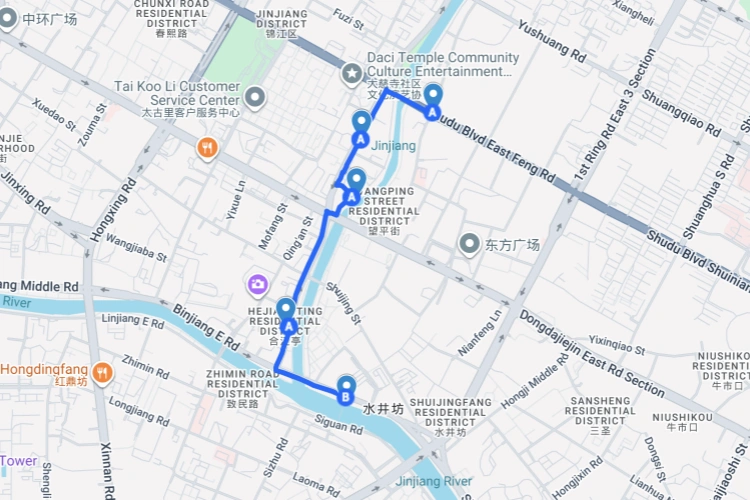
The Route: Wangping Street → Tianxianqiao North Road → Dongmen Matou (East Gate Wharf) → Shuijing Bridge → Hejiangting Pavilion → Music Square (Yinyue Guangchang) → Anshun Langqiao (Anshun Bridge)
Distance: ~4.5 km
Best For: Couples, night owls, and photographers looking to capture Chengdu’s glittering, romantic nightlife.
Why Take This Route: Chengdu is a city that truly wakes up after dark. Walking along the illuminated river banks takes you past vibrant street musicians, ancient pavilions, and dazzling neon bridges.
What Not to Miss:
- Dongmen Matou: A historic wharf where you can watch traditional wooden boats pass under glowing lights, accompanied by mist and digital light art projections.
- Anshun Langqiao: The iconic covered bridge that spans the river, beautifully lit up at night and home to a fantastic array of upscale restaurants and jazz bars overlooking the water.
- Experience the Night Cruise on the Jinjiang River: Instead of just watching from the banks, board a traditional lighted awning boat from the wharf. Floating down the river for a 30-minute cruise offers the absolute best angles for photographing the city’s glowing ancient-meets-modern skyline.
Self-Guided vs. Private Guided Chengdu Walking Tour
All the walking tour routes above can be explored independently, as long as you’re confident with using the Chinese apps like Gaode Map, Alipay, WeChat Pay, or Didi.
However, because so much of Chengdu’s charm lies hidden behind modern facades or tucked away in residential alleys without English signage, having a local by your side completely changes the depth of your experience. A guide provides the cultural context, historical stories, and neighborhood access that maps and translation apps simply can’t replicate.
| Feature | Self-Guided Walk | Private Tour with a Local |
|---|---|---|
| Flexible Schedule | YES. Go entirely at your own leisure | YES. Tailored to your preferred start time |
| Historical Stories & Context | NO. Limited to guidebook blurbs | YES. Deep cultural insight and local legends |
| Finding Hidden Alleys | NO. Hit-or-miss using digital maps | YES. Direct access to quiet, non-touristy lanes |
| Authentic Food Discoveries | NO. Limited to popular or English-menu spots | YES. Confidently ordering at hidden "fly restaurants" |
| Language & Translation Support | NO. Relying on translation apps | YES. Seamless communication with neighborhood locals |
| Customized Walking Pace | YES. Change your mind on the fly | YES. Itinerary adapts to your energy level |
| Photography & Logistics Help | NO. Navigating while trying to take photos | YES. Someone to grab great shots and handle directions |
Our Private Chengdu Walking Tours
We don’t believe in rigid itineraries. Chengdu is a city to be felt, not rushed through. Our private walking experiences are crafted to feel less like a formal excursion and more like a day out with a knowledgeable local friend.
We provide:
- Fully customized routes;
- Flexible half-day or full-day options;
- Curated experience focus;
- Convenient, flexible meeting points;
- English-speaking local guides (other languages also supported while required);
- Easily fit into extended Chengdu itineraries
Prefer to explore Chengdu alongside a local friend? Just feel free to contact us below. We’ll take you down the quiet side streets, hidden courtyards, and local food spots most travelers completely miss.
More Chengdu One-Day Trip Packages
Want to discover Chengdu’s more iconic attractions? Find a Chengdu day trip package that matches your interests.
FAQ
Is Chengdu easy to walk around?
Yes, Chengdu is incredibly flat and pedestrian-friendly compared to many other Chinese megacities. The central districts feature wide, tree-lined sidewalks, expansive public parks, and riverside greenways designed specifically for foot traffic.
Can I visit Chengdu without speaking Chinese?
You can absolutely navigate Chengdu using English translation and map apps. Major signs and metro stations have English translations. However, ordering food at authentic, neighborhood “fly restaurants” or chatting with local teahouse owners can be challenging without a Mandarin speaker.
How many days should I spend in Chengdu?
To capture the true essence of the city without rushing, we recommend spending 3 to 4 days. This gives you ample time to dedicate a day to out-of-town highlights (like the Panda Base or Sanxingdui), leaving 2 or 3 full days to slowly wander the historic, culinary, and modern neighborhoods at a relaxed pace. Please check the guide: How Many Days in Chengdu? Best 1-7 Days Itineraries Guide
Is Chengdu safe at night?
Chengdu is exceptionally safe, even late into the night. Popular districts, food streets, and riverside walks are well-lit and bustling with locals, families, and young professionals well past midnight. Standard travel awareness applies, but violent crime is incredibly rare.
What should I wear for a walking tour?
Comfortable, broken-in walking shoes are an absolute must, as even our shorter routes cover several kilometers. We recommend breathable, layered clothing, as weather can shift. Bringing a lightweight umbrella or rain jacket is smart year-round, as Chengdu is prone to overcast skies and sudden light drizzle.
Can I combine pandas with a walking tour?
Absolutely. Because the major panda centers are located outside the immediate city center, the most popular option is to spend a morning visiting the giant pandas and return to the urban core by midday for a relaxed afternoon walking tour through historic neighborhoods or teahouses.
Which area is best to stay in for walking?
For the best walkability and access to independent exploration, look for accommodations near People’s Park, Wenshu Monastery, or the Taikoo Li / Chunxi Road area. These hubs put you within walking distance of historic alleys, parks, and diverse food options, while keeping you right on major metro lines.
Are Chengdu walking tours suitable for children?
Yes, because the city is flat and features numerous parks (like People’s Park and Huanhuaxi), walking tours can easily be adapted for families. A private tour allows us to adjust the pace, schedule frequent snack breaks, and include interactive elements like watching street performance art or visiting a neighborhood market to keep kids engaged.
What's the best season for a walking tour?
Spring (March to May) and Autumn (September to November) offer the most pleasant weather for walking, with comfortable temperatures and beautiful seasonal foliage. Summers can get quite hot and humid, while winters are chilly and overcast, though walking during these seasons is still highly enjoyable if you dress appropriately and plan for plenty of cozy teahouse breaks.