For many international travelers, Jiuzhaigou National Park can seem difficult to visit independently. The remote location, long journey from Chengdu, ticket booking system, and language barrier make some travelers wonder whether they need to join a tour.
The answer is: yes, you can visit Jiuzhaigou without a tour. Independent travel is possible in 2026, especially with the new Chengdu-Jiuzhaigou High-Speed Railway and improved online booking systems.
Traveling independently gives you more flexibility. You can spend more time at your favorite lakes, choose your own pace inside the park, and avoid the fixed schedules of organized groups.
In this guide, we explain how to get to Jiuzhaigou, how to buy tickets, how to explore the park, and when booking a tour may actually be a better choice.
What You Need to Know about Entry Rules
Before planning your independent trip, it is important to understand how Jiuzhaigou’s ticket system works.
- Foreign travelers can visit Jiuzhaigou independently without joining a tour group.
- A guide is not mandatory, and there is no requirement to join an organized tour.
- You must book an entrance ticket in advance.
- A passport is required for ticket purchase and entry.
- Daily visitor numbers are controlled (up to 4,1000 visitors per day), especially in autumn.
- The entrance ticket includes the required sightseeing shuttle bus inside the park. Private vehicles are not allowed inside the scenic area.
QuietRoutes Tip: The park is well-organized, with shuttle buses, marked walking paths, and multilingual signs. Most travelers who are comfortable using mobile apps can explore the park on their own. A guide is more helpful if you want cultural explanations, photography advice, or assistance combining Jiuzhaigou with nearby destinations such as Huanglong, Songpan, or Mount Siguniang.
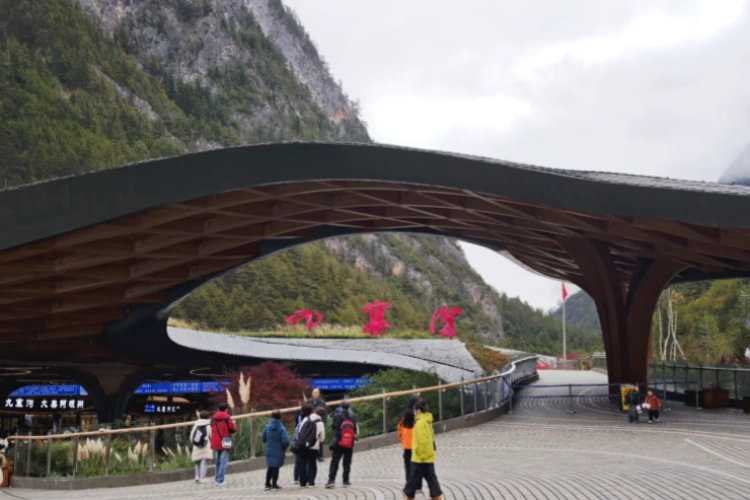
3 Ways to Get to Jiuzhaigou Independently
If you’re planning to visit Jiuzhaigou, Chengdu is undoubtedly the best transportation hub. From Chengdu, you have 3 typical options to travel to Jiuzhaigou, depending on your budget and your schedule.
Option A: By High-Speed Train
The opening of the Chengdu–Qinghai high-speed railway has made train travel the most convenient option for many independent travelers.
The Stations: Chengdu East Railway Station, Huanglongjiuzhai Railway Station.
Why Choose It: The train is usually more reliable than flights, which can be affected by mountain weather, and it avoids the long driving time on mountain roads.
QuietRoutes Tip: Although the Huanglongjiuzhai Railway Station is much closer to Jiuzhaigou than before, it is still about 100 km (62 miles) from the park entrance. You’ll need to continue by tourist shuttle bus, shared car, or private transfer. The journey takes around 2 hours.

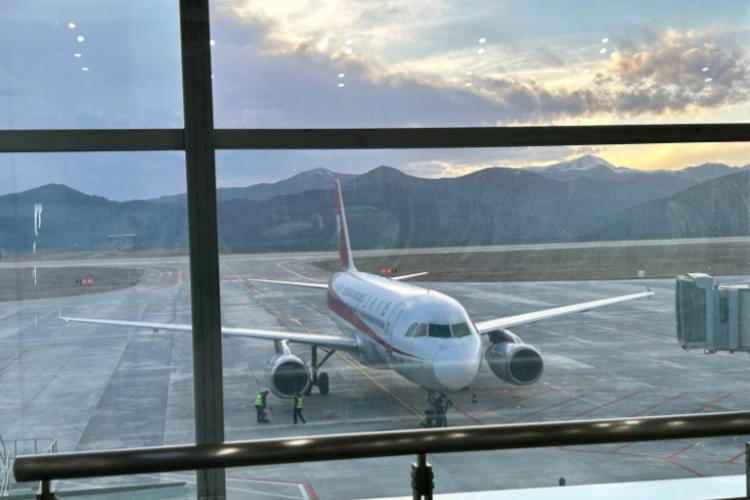
Option B: Flying to Jiuzhai Huanglong Airport
If you are coming from outside Sichuan (such as Beijing, Shanghai, or abroad) or are short on time, flights to Jiuzhai Huanglong Airport (JZH) can save you much time.
The Airports: Most flights depart from Chengdu Tianfu International Airport (TFU), though some still fly from Shuangliu International Airport (CTU).
The flight takes about 40–60 minutes, followed by a transfer of approximately 88 km (55 miles) from Jiuzhai Huanglong Airport to Jiuzhaigou National Park. Depending on traffic, the drive usually takes 1.5–2 hours.
In addition, Jiuzhai Huanglong Airport sits at 3,448 meters (11,312 feet) above sea level. Because you reach this altitude in less than an hour, some travelers may be more likely to experience mild altitude sickness than those who travel by train or road.
QuietRoutes Tip: JZH airport is famous for delays. Always book a morning flight to minimize the chance of cancellation.
Option C: By Long-Distance Bus
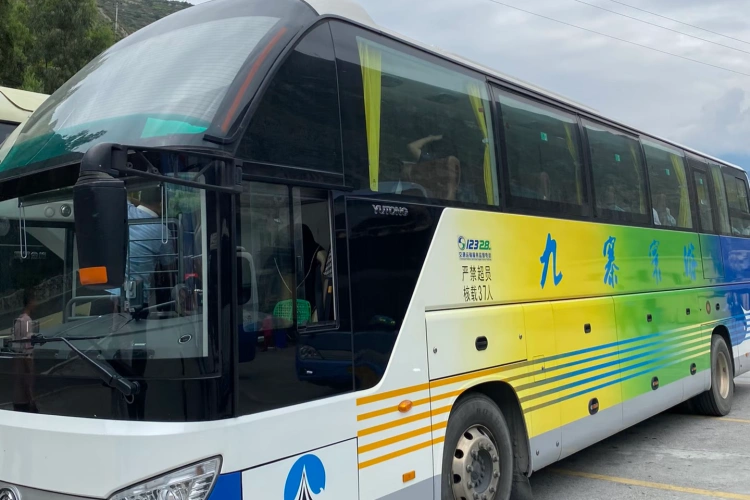
This option is less common now because of improved train connections, but it remains available for budget travelers, backpackers, and travelers who prefer sightseeing on the road.
The Bus Stations: Chengdu Chadianzi Bus Station, Xinnanmen Tourist Bus Center, and Chengdu East Railway Bus Terminal.
Time: Expect an 8- to 10-hour drive.
Chengdu to Jiuzhaigou bus is the cheapest way to travel (approx. US$22-30), and the drive through the Min River Valley is stunning. However, it is physically draining and eats up an entire day of your itinerary.
Can you drive from Chengdu to Jiuzhaigou?
Yes, self-driving from Chengdu to Jiuzhaigou is possible. In fact, it is one of the most popular ways for locals to get to Jiuzhaigou from Chengdu.
However, international visitors should consider the challenges: the Chinese driver’s license, Chinese navigation apps, mountain roads, changing weather, and parking arrangements near the park.
If you want the flexibility of a road trip without driving yourself, a private car with a local driver is a better option.
How to Buy Jiuzhaigou Tickets Without a Tour
Jiuzhaigou uses a real-name ticket system, so independent travelers need to book their tickets before arrival.
How to Book
Tickets are released for booking about 15 days in advance. During October and other peak periods, booking as early as possible is strongly recommended.
Foreign travelers can use the official Aba Tourism platform or mini program in WeChat to make a reservation. It’s also possible to book via some OTA platforms, like Trip.com.
When booking, enter your passport number exactly. On the day of your visit, you don’t need a paper ticket. You simply scan your physical passport or show it to the worker at the turnstile to enter.
QuietRoutes Tip: When you book your entrance ticket, the sightseeing shuttle bus is included and mandatory for all visitors.
How to Explore Jiuzhaigou’s Y-Shaped Valley Independently
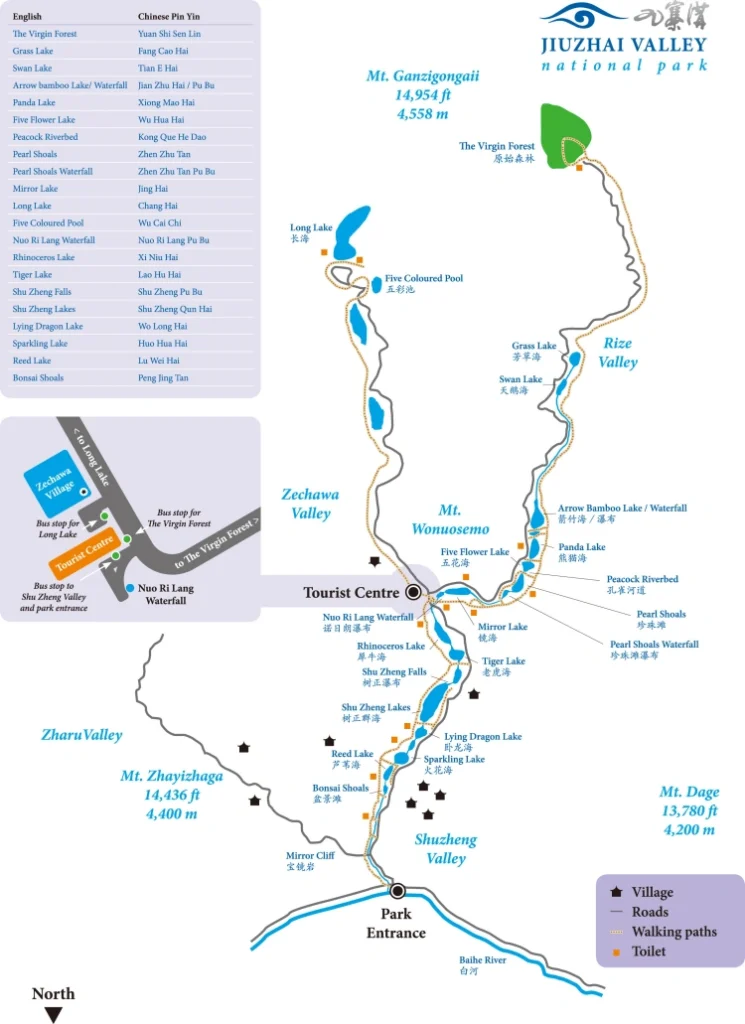
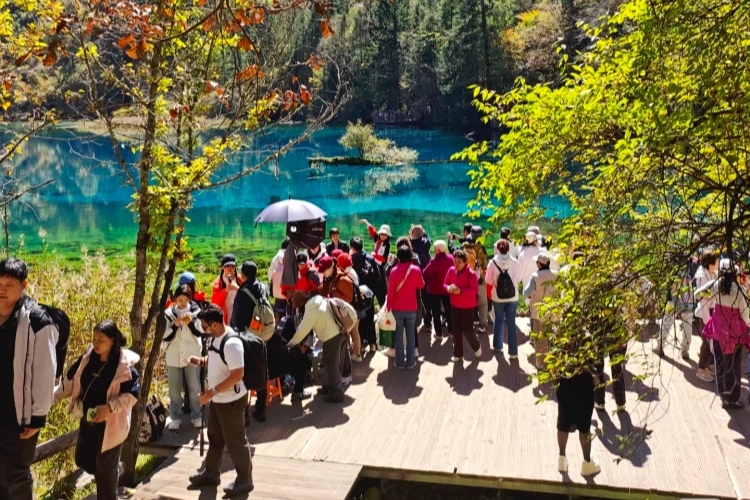
Jiuzhaigou National Park is laid out in the shape of a giant “Y.” Once you enter the park, sightseeing shuttle buses take visitors to different parts of the valley, while boardwalks connect the main scenic spots.
Depending on park operations and visitor flow, your shuttle may head to either branch first. Don’t worry. Both routes eventually connect at Nuorilang Tourist Center, so you’ll still be able to visit the park’s major attractions in one day.
Rize Valley (The Right Branch)
This is some of Jiuzhaigou’s most iconic sights. If your bus heads here, get off at the top (Primitive Forest) and walk down to Five Flower Lake and Pearl Shoal Waterfall.
Zechawa Valley (The Left Branch)
This branch is longer but has fewer stops. It is home to the massive Long Lake and the tiny but vibrant Five-Color Pond.
Nuorilang (The Intersection)
The center of the “Y” is Nuorilang Tourist Center. This is the only place in the park to get a hot meal. It also serves as the main transfer hub where you can switch buses to head down the “stem” of the Y (Shuzheng Valley) toward the exit.
Language Barriers
Many international visitors worry about the language barrier before visiting Jiuzhaigou. Fortunately, getting around the park is much easier than many people expect.
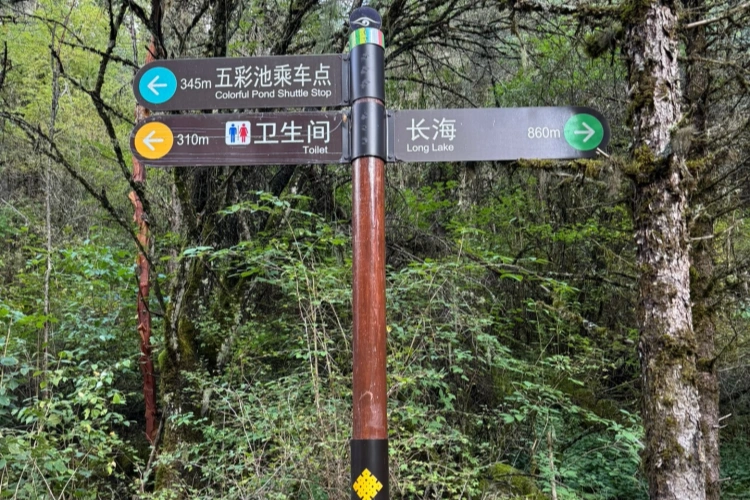
Almost all directional signs, bus stop announcements, and safety warnings inside the park are in Mandarin, English, Tibetan, and sometimes Japanese or Korean.
If you’re unsure where to go, you can show a photo or the Chinese name of your destination to park staff. They regularly assist international visitors.
In addition, we also recommend downloading an offline translation app, such as WeChat, before arriving, as mobile signal can be inconsistent in some mountain areas.
Safety and Altitude Concerns
Although Jiuzhaigou isn’t considered extremely high altitude, some areas are above 3,000 meters. It’s a good idea to take it easy on your first day and stay well hydrated.
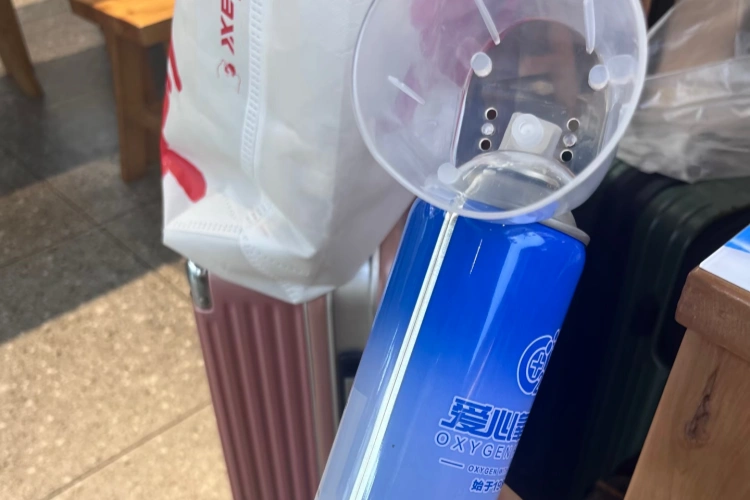
Portable oxygen canisters are widely available in Zhangzha Town and inside the park. While they may help some visitors feel more comfortable, they shouldn’t replace proper rest if you develop altitude sickness symptoms.
Besides, it’s better to prepare for the changing weather. Even in summer, a sunny morning can turn into a freezing afternoon rainstorm. So, always carry a lightweight, waterproof shell.
Can You Visit Jiuzhaigou as a Day Trip?
Yes, a day trip from Chengdu is technically possible thanks to the high-speed railway. However, we generally recommend staying at least one night near Jiuzhaigou.
If you want to visit Jiuzhaigou from Chengdu in one day, you would spend 4 hours on trains and 4 hours in station and Jiuzhaigou entrance transfers, leaving you only 3-4 hours to explore in the park. You would miss some of the highlights and have to leave to catch the train back to Chengdu.
If you’ve visited Jiuzhaigou before and only want to revisit a few favorite spots, a day trip can still be worthwhile. However, for first-time visitors, we don’t recommend it.
We suggest spending at least 2 days for your trip, with 3-4 days being ideal. This gives you enough time to enjoy the scenery without rushing from one place to another.
Read More: How Many Days in Jiuzhaigou?
When Independent Travel Works Best
Independent travel is a great choice if you enjoy planning your own trip and exploring at your own pace.
Independent travel is ideal if you:
- enjoy photography
- like flexible schedules
- are comfortable booking transportation and tickets online
- prefer spending longer at places you really enjoy
When Joining a Tour Makes More Sense
Although independent travel is easier than ever, a group tour or private tour may still be the better option if you:
- are traveling with young children or elderly family members
- plan to combine Jiuzhaigou with Huanglong, Mount Siguniang, Daocheng Yading, or other destinations in
western Sichuan - miss the train booking window or find that park tickets are sold out during peak season
In these situations, a tour can take much of the stress out of planning. A private tour, in particular, can help with transportation, ticket bookings, hotel arrangements, and a flexible itinerary tailored to your travel pace. Instead of worrying about logistics, you can focus on enjoying the journey.
Read More: Chengdu to Jiuzhaigou Tour vs Independent Travel Guide

Useful Apps for Independent Travelers
Below are the apps that will be very useful when planning and going independently to Jiuzhaigou.
- Alipay
- WeChat Pay
- 12306
- Amap
- Translation app
Estimated Costs: Independent vs. Guided Tour
Prices are estimates and vary depending on travel season, hotel category, and transportation choice.
| Expense Category | Independent Travel | Small-Group / Organized Tour |
|---|---|---|
| Round-trip Transport (from Chengdu) | $120–$220 (flight) or $70–$120 (bus) | Included |
| Airport/Bus Transfers | $15–$40 | Included |
| Park Entrance + Shuttle Bus | $24–$41 (seasonal) | Usually included |
| 1–2 Nights Hotel (near park) | $60–$200 (season dependent) | Included (mid-range standard) |
| Meals | $15–$30 per day | Some meals included |
| Local Coordination / Booking Fees | Self-managed | Included |
| Estimated Total (2D/1N trip) | $180–$400+ | $350–$600 |
Why Travel with QuietRoutes?
At QuietRoutes, we believe every traveler should experience Jiuzhaigou in the way that suits them best. If you’re happy planning everything yourself, we hope this guide helps you travel with confidence.
If you’d rather spend less time organizing trains, transfers, hotels, and tickets, we’re here to help. As a local Sichuan travel specialist, we design flexible private tours rather than fixed group itineraries. Whether you need a private driver from Chengdu, help booking train tickets, or a customized itinerary including Huanglong and other destinations, we’ll tailor the trip around your interests and travel pace.
Our goal isn’t to rush you through a checklist of attractions. It’s to help you enjoy western Sichuan comfortably and at your own pace.
Final Thoughts
So, can you visit Jiuzhaigou without a tour?
Absolutely. Independent travel is easier than ever thanks to the high-speed railway, online ticket booking, and the park’s well-organized shuttle system. With a little preparation, most travelers can explore Jiuzhaigou on their own.
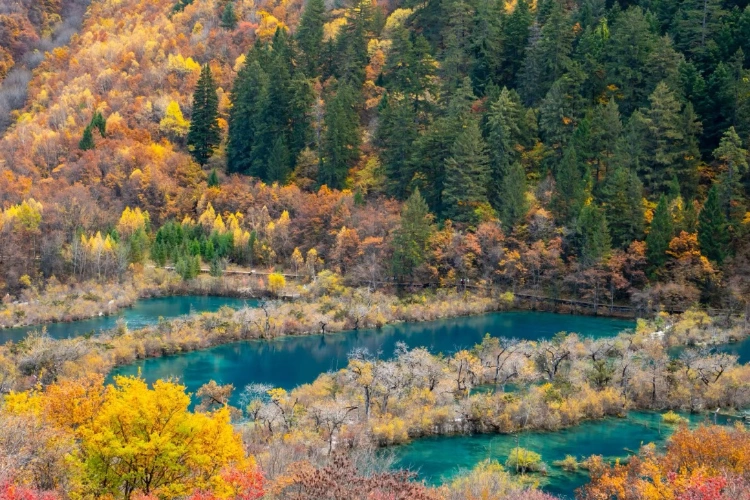
Whether you choose to travel independently or join a private tour, the reward is the same: one of China’s most spectacular national parks, with turquoise lakes, waterfalls, and mountain scenery that make the journey worthwhile.