For many travelers, Chengdu is synonymous with a single image: a Giant Panda chewing on a bamboo shoot. While the pandas are a national treasure, treating Chengdu as a mere “day trip” destination is the most common mistake travelers make when planning a trip to Western China.
Chengdu has evolved into more than just a tourist stop. It is a sophisticated, strategic “travel base.” Whether you are chasing the fairytale waters of Jiuzhaigou, trekking the “Oriental Alps” of Mount Siguniang, or entering the spiritual heart of the Tibetan Plateau, Chengdu is the anchor that makes these rugged adventures possible, comfortable, and logistically sound.
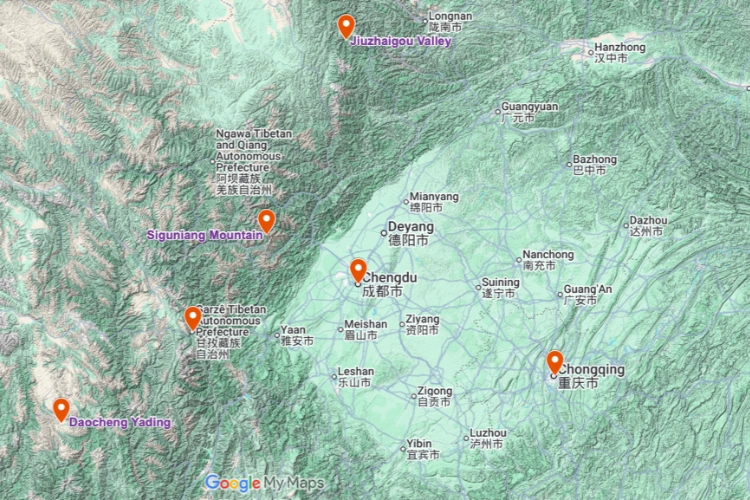
Understanding Sichuan’s Geography: Why a Base Matters
Before deciding where to stay, you need to understand Sichuan’s geography.
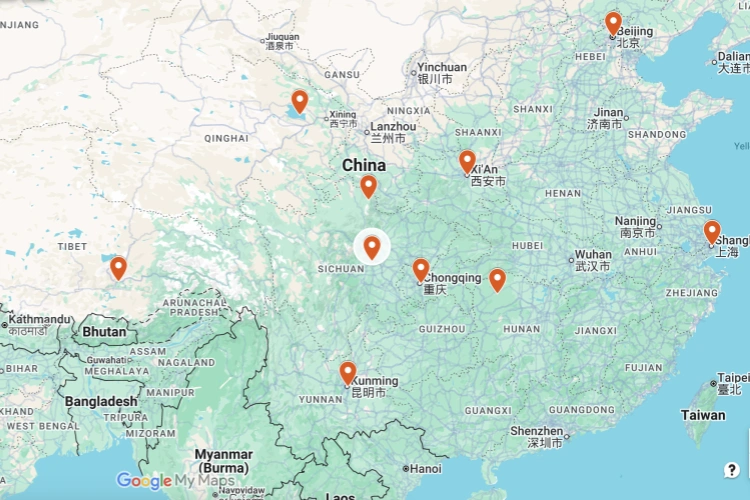
Sichuan is not a compact province. It is vast — larger than many European countries — and geographically divided into two dramatically different regions:
The Sichuan Basin (East): Low altitude (~500m), humid, densely populated, and home to Chengdu.
The Western Plateau (West): High altitude (3,000m – 5,000m+), rugged, home to the Hengduan Mountains and Tibetan culture.
The altitude difference alone is significant:
- Chengdu sits at around 500 meters (1,640 ft).
- Jiuzhaigou is around 2,000 meters.
- Kangding sits at 2,600 meters.
- Daocheng Yading reaches over 4,000 meters.
Distances are long. Mountain roads can be winding. Weather can shift quickly. Travel days require planning.
Without a well-positioned base, travelers often end up with constantly changing hotels, losing time to inefficient transfers, struggling with altitude adjustments, or feeling rushed and fatigued.
A good base city reduces these friction points. And Chengdu, geographically and logistically, sits at the crossroads between basin comfort and plateau adventure.
Chengdu’s Transport Advantage
The primary reason Chengdu is the undisputed base for the region is its infrastructure.
Dual International Airports
Chengdu is one of only three cities in mainland China (alongside Beijing and Shanghai) to operate two massive international airports:
Tianfu International (TFU): The primary hub for long-haul international flights (Europe, Middle East, SE Asia).
Shuangliu International (CTU): Closer to the city center and perfect for regional hops and domestic connections.
The High-Speed Rail (HSR) Revolution
The “Game Changer” is the Sichuan-Qinghai Railway.
Chengdu to Jiuzhaigou: What was once an 8-hour drive is now a 1.5 to 2.5-hour high-speed rail journey to Huanglong-Jiuzhai Station. This allows travelers to visit the world’s most beautiful alpine lakes as a comfortable 3-day “spoke” from Chengdu or 4 days including Huanglong.
Other Links: Chengdu East Station connects you to Leshan (1 hr), Emeishan (1.5 hrs), and Chongqing (1 hr) with the frequency of a subway.
Overland Access to Western Sichuan
For the “Quiet Routes” into the highlands, Chengdu remains the starting line:
Mount Siguniang: A 3-hour drive via the G350 “Panda Avenue.”
Kangding: The gateway to the Tibetan Plateau is now reachable in about 3.5 hours via the Yakang Expressway.
The Altitude Advantage: The Buffer Zone
This is perhaps the most critical—yet ignored—reason to use Chengdu as a base.
The leap from sea level to the Tibetan Plateau (often 3,500m+) can cause severe altitude sickness. At 500m, Chengdu provides the perfect “low-altitude anchor.”
The “QuietRoutes” Pacing Logic:
Days 1–2: Arrive in Chengdu. Hydrate, enjoy the humid air, and let your body recover from jet lag at a low altitude.
Day 3: Take a “Spoke Trip” to an intermediate altitude (e.g., Mount Siguniang or Jiuzhaigou at 2,500m).
Return: After your high-altitude trek, returning to Chengdu’s thick, oxygen-rich air allows for immediate physical recovery that you simply won’t get if you keep moving further into the plateau.
Comfort, Food & Urban Ease
Western Sichuan is beautiful, but it is rugged. After four days of eating yak butter tea and hiking through thin air, the soul craves the “Chengdu Lifestyle.”
Recovery Comfort: Chengdu boasts the highest density of 5-star international hotels in Western China. A post-trek spa day at the Niccolo or Waldorf Astoria is the ultimate reward.
UNESCO Gastronomy: While remote villages offer authentic local fare, Chengdu is a UNESCO City of Gastronomy. It’s where you find the flagship Mapo Tofu, world-class hotpot, and a burgeoning third-wave coffee scene.
Visa-Friendly Infrastructure: In 2026, the 30-day visa-free policy (for 48 countries) and the 240-hour transit options are easiest to navigate in Chengdu, where local police and tourism bureaus are highly experienced with international visitors.
Chengdu vs. Chongqing: Which Is Better for Sichuan?
Travelers often debate between these two megacities. Here is the breakdown:
| Factor | Chengdu | Chongqing |
|---|---|---|
| Access to Western Sichuan | Excellent | Limited |
| Panda Experience | Yes | No |
| Altitude Transition | Gradual westward | Less relevant |
| Urban Intensity | Relaxed | Dense, vertical, dramatic |
| Best For | Sichuan exploration | Yangtze River & urban experience |
The Verdict: If your goal is Sichuan nature and Tibetan culture, Chengdu is the only logical choice.
When Chengdu Is NOT the Best Base
To be transparent, Chengdu isn’t always the answer.
Chengdu may not be ideal if:
- You are only visiting Chongqing and the Three Gorges.
- You plan to spend your entire trip in remote plateau towns.
- You are specifically targeting southern Sichuan industrial cities.
For pure Yangtze cruise routes, Chongqing may be more efficient.
But for multi-destination Sichuan journeys, Chengdu remains the most flexible and balanced choice.
Smart Route Structures Starting in Chengdu
To illustrate why Chengdu works so well, consider these example structures. Each begins and ends smoothly in Chengdu, minimizing inefficient transfers.
5-Day Classic Sichuan
Day 1–2: Chengdu city + panda base
Day 3: Leshan Giant Buddha
Day 4: Mount Emei
Day 5: Return to Chengdu
7-Day Panda + Jiuzhaigou
Day 1-2: Chengdu
Day 3: Huanglong area
Day 4-6: Jiuzhaigou
Day 7: Return to Chengdu
10+ Days Western Sichuan Scenic Loop
Day 1-2: Chengdu
Day 3-5: Siguniang Mountain
Day 6-7: Danba Tibetan villages
Day 8: Kangding
Day 9-10:Return to Chengdu
How Many Days Should You Stay in Chengdu?
It depends on your traveler profile:
First-time China visitors: 2–3 nights minimum.
Nature-focused travelers: 1–2 nights at start + 1 night at end.
Cultural travelers: 3–4 nights to explore museums, opera, tea culture.
Luxury travelers: Chengdu works well as a comfort reset between remote segments.
Even if your focus is on western Sichuan, skipping Chengdu entirely often makes the trip more logistically complex.
Read More: How Many Days in Chengdu? Best 1-7 Day Itineraries Guide
The Final Verdict: Is Chengdu the Smartest Base for Sichuan?
For approximately 80% of travelers planning to explore Sichuan Province, the answer is yes.
Chengdu offers:
- Strong international and domestic connectivity
- Logical geographic positioning
- Gradual altitude transition
- Urban comfort between remote regions
- Cultural experiences beyond logistics
- Flexible route-building potential
It is not just about pandas or hotpot. It is about structure, pacing, recovery, and intelligent travel design.
If you are building a multi-destination Sichuan itinerary — especially one that includes Jiuzhaigou, Siguniang Mountain, Daocheng Yading, or other western highlights — Chengdu is more than a stop.
It is the foundation.
FAQ
Is Chengdu better than Chongqing for Sichuan travel?
Yes, especially if your focus is western Sichuan landscapes and Tibetan culture.
Can I visit Jiuzhaigou from Chengdu?
Yes. By high-speed rail + transfer or by flight. Many itineraries begin in Chengdu.
How many days in Chengdu before going to western Sichuan?
Ideally 1–2 nights to rest and acclimatize.
Is Chengdu safe for foreign travelers?
Yes. It is considered one of China’s most traveler-friendly cities with well-developed tourism infrastructure.