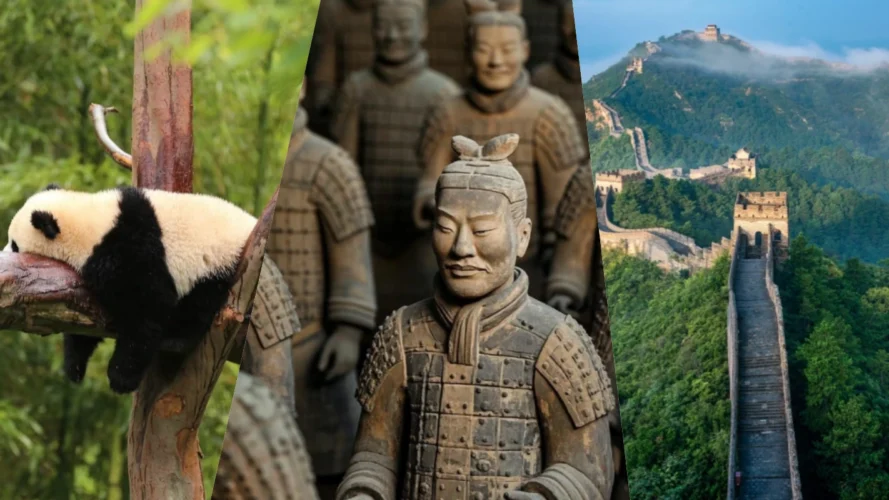
China in winter can look completely different depending on where you go.
In the northeast, temperatures can fall far below freezing. In Beijing, winter brings crisp air, fewer crowds, and a beautiful chance to walk the Great Wall. Farther south, Yunnan can offer sunny days and mild weather, while Sanya feels more like a tropical escape than winter at all.
So, what are the best places to visit in China in winter?
After years of traveling around China and planning trips for international visitors, we know that choosing the right destination is only the first step. We help you match the season with the places, experiences, travel pace, and routes that suit you best.
In this guide, we’ll share our favorite winter destinations and practical itinerary ideas to help you plan your own China winter trip.
Is China a Good Place to Visit in Winter?
Yes. Winter, usually from December to February, can be a rewarding time to travel around China, especially if you choose destinations that suit the season.
Beyond the varied experiences by region, Winter also brings its own beauty. Snow can transform the Great Wall, Huangshan, Zhangjiajie, and the mountains of Sichuan, while clear skies and winter light can make landscapes especially beautiful.
Outside the Chinese New Year holiday, many attractions are less crowded than in spring, summer, or autumn. Hotels can also offer better rates, making winter a good choice for travelers who prefer a more relaxed trip.
8 Best Places to Visit in China in Winter
1. Harbin: Best for Ice and Snow
If you want to experience a real northern winter, Harbin is the place to start.
Located in China’s far northeast, Harbin is famous for its long, cold winters and spectacular ice and snow attractions. The highlight for many visitors is Harbin Ice and Snow World, where enormous ice buildings are illuminated after dark. Central Street is another must-see, with its historic European-style architecture and winter atmosphere.
Best for: Ice festivals, snow, winter photography, and travelers who want a genuine cold-weather experience.
Recommended stay: 3–4 days.
2. Beijing: Best for the Great Wall and Winter Culture
Beijing is one of our favorite choices for travelers visiting China for the first time, and winter gives the city a completely different atmosphere.
The Forbidden City, Temple of Heaven, Summer Palace, and Beijing’s traditional hutongs are all enjoyable in the colder months. But the real winter highlight is the Great Wall.
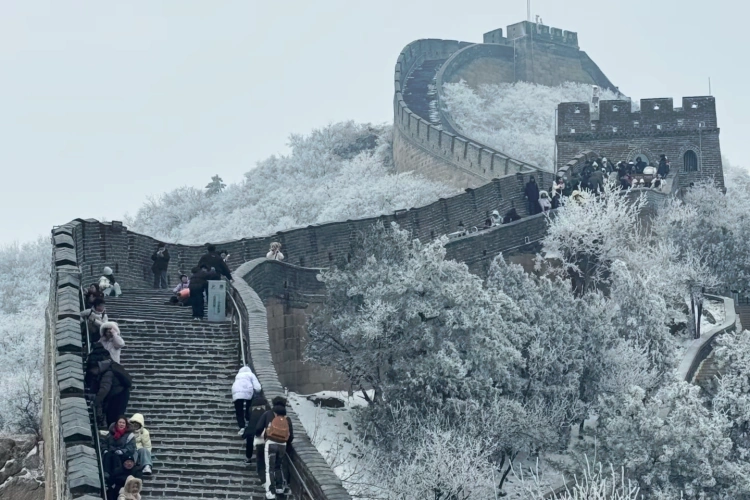
When snow falls, sections of the Great Wall can look spectacular against the surrounding mountains. Even without snow, the dry winter air often gives you clear views and a quieter experience than during the busiest travel periods.
We particularly recommend allowing enough time to explore the wall rather than treating it as a quick photo stop.
Best for: History, culture, the Great Wall, and first-time visitors to China.
Recommended stay: 3–4 days.
3. Xi’an: Best for Ancient China
Xi’an is another excellent winter destination, especially if you’re interested in China’s history.
The city was the starting point of the ancient Silk Road and served as the capital of several important Chinese dynasties. Today, the Terracotta Warriors remain its biggest attraction, but there is much more to see, such as the Ancient City Wall, Muslim Quarter, Giant Wild Goose Pagoda, and try the local biangbiang noodles and roujiamo.
Xi’an doesn’t need snow to make it worthwhile in winter. Instead, its appeal is cultural, historical, and culinary, and it fits naturally into a Beijing–Xi’an–Shanghai itinerary.
Best for: History, ancient architecture, local food, and first-time China trips.
Recommended stay: 2–3 days.
4. Yunnan: Best for Mild and Sunny Winter Weather
If the idea of a winter holiday means sunshine rather than snow, look toward Yunnan.
Yunnan’s high elevation and varied geography mean the weather differs significantly from one place to another. A popular route is Kunming → Dali → Lijiang, combining mountain scenery, historic old towns, lakes, and distinctive local cultures.
One thing we always tell travelers is not to assume that all of Yunnan is “warm.” Lijiang sits at a high elevation, so winter nights can be cold even when the daytime sun feels pleasantly warm.
Best for: Sunshine, mountains, old towns, and travelers who don’t want an extremely cold winter.
Recommended stay: 5–7 days.
5. Chengdu and Sichuan: Best for Pandas, Food and Mountains
For a winter trip that combines city life with nature, Chengdu and Sichuan are hard to beat.
Chengdu itself has a relatively mild winter compared with northern China. You can start the morning visiting the Giant Panda Base, spend the afternoon drinking tea in a traditional teahouse, and finish the day with a steaming Sichuan hotpot.
But winter is also a great time to explore beyond Chengdu.
If you have 3–5 days, we recommend staying in Chengdu and adding a day trip to Mount Emei. With around a week, you can combine Chengdu with Jiuzhaigou and Huanglong for a wonderful mix of city life and winter scenery. If you have more time, you can travel deeper into Western Sichuan, exploring places such as Siguniang Mountain for snowy peaks and highland landscapes.
Best for: Pandas, food, culture, mountains, and travelers who prefer a less conventional China
itinerary.
Recommended stay: 4–10 days, depending on how far into Sichuan you want to travel.
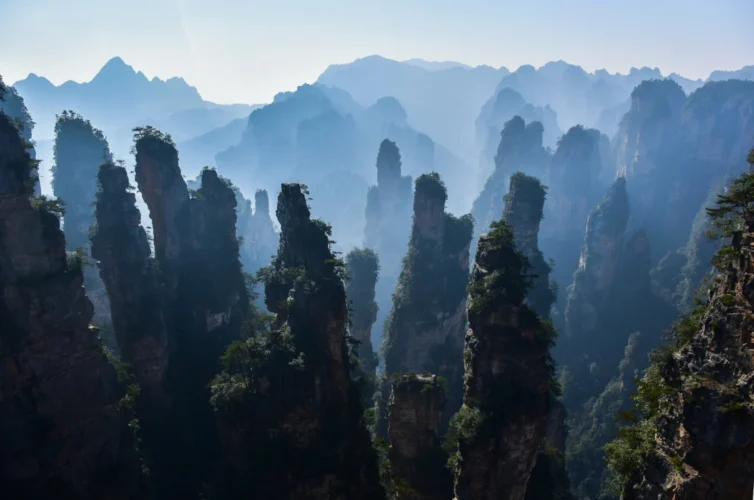
6. Zhangjiajie: Best for Misty Mountain Scenery
Zhangjiajie is famous for the towering sandstone pillars of Wulingyuan, and winter can give these mountains a completely different mood.
It’s also quieter than during peak travel periods. If you’re comfortable with cooler weather, this can make it easier to enjoy the trails and viewpoints without the crowds you might encounter during holidays.
Best for: Dramatic mountains, photography, misty scenery, and travelers who enjoy nature.
Recommended stay: 2–3 days.
7. Huangshan: Best for Snowy Mountain Landscapes
Huangshan, or Yellow Mountain, is one of China’s most famous mountain destinations, and winter is one of its most atmospheric seasons.
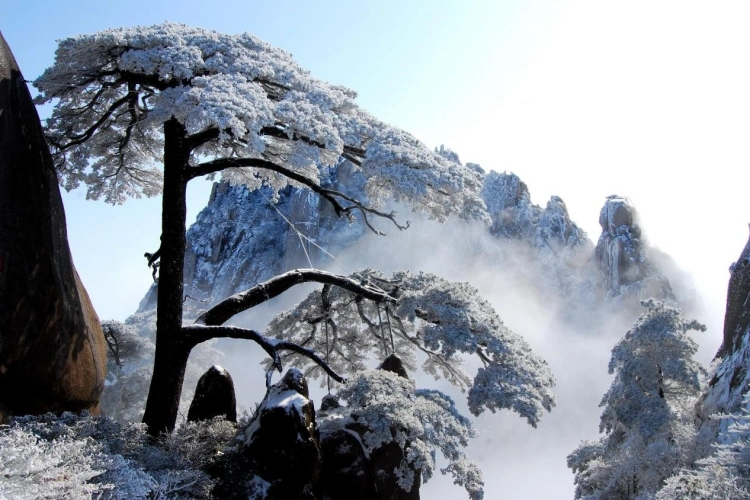
Snow can cover the granite peaks and ancient pine trees, while frost and rime create beautiful patterns on the branches. If the weather conditions are right, you may also see the famous “sea of clouds” floating below the mountain peaks.
Winter hiking does require more preparation. Trails can become icy, and some facilities may operate on a reduced schedule depending on conditions.
Best for: Snow, hiking, photography, and classic Chinese mountain scenery.
Recommended stay: 2–3 days.
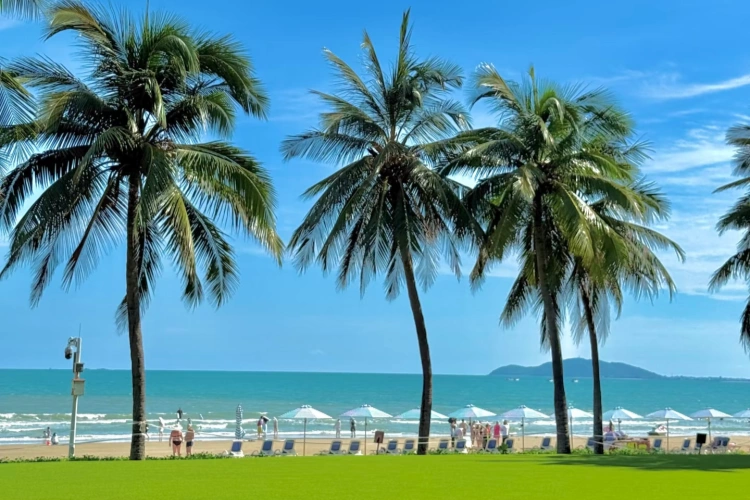
8. Sanya: Best for a Warm Winter Escape
Not everyone wants snow on a winter holiday.
For beaches, sunshine, and warm weather, Sanya on Hainan Island is one of China’s best choices.
The city has a tropical climate and is popular with travelers looking for a break from the cold northern winter. You can spend your days on the beach, explore the coastline, enjoy seafood, or simply relax at a resort.
Sanya is particularly appealing for families and couples who want a slower holiday rather than a sightseeing-heavy itinerary.
Best for: Beaches, warm weather, families, couples, and relaxation.
Recommended stay: 4–6 days.
Best China Winter Trips for Different Travelers
The best winter itinerary depends not only on where you want to go, but also on the kind of experience you want. Here are a few routes we often recommend for different types of travelers.
For first-time visitors
Beijing → Xi’an → Shanghai
A classic China route combining imperial history, the Terracotta Warriors, and modern city life. It works well in winter and gives you a good introduction to China’s culture and history.
For a true winter experience
Harbin → Snow Town / Yabuli → Changbai Mountain
Choose this route if snow is the main reason for your trip. You’ll experience ice sculptures, snowy forests, winter activities, and some of Northeast China’s most impressive landscapes.
For mild weather
Kunming → Dali → Lijiang
A great choice if you want sunshine and comfortable daytime temperatures rather than deep winter cold. The route combines mountain scenery, historic old towns, and Yunnan’s distinctive local cultures.
For pandas and mountains
Chengdu → Jiuzhaigou → Huanglong
Start with Chengdu’s pandas, food, and relaxed city atmosphere before heading north for spectacular winter scenery in Jiuzhaigou and Huanglong.
For snow and history
Beijing → Harbin
Combine China’s most iconic historical sights with a completely different northern winter experience. It’s a good option if you want both the Great Wall and Harbin’s famous ice attractions.
For warm weather
Yunnan or Sanya
If you simply want to escape the cold, southern China is your best bet. Yunnan offers mild weather and mountain scenery, while Sanya is the better choice for beaches and a tropical winter break.

Traveling in China During Chinese New Year
Chinese New Year, or Spring Festival, usually falls in late January or February, making it an important part of winter travel in China. It’s a wonderful time to experience traditional celebrations, red lanterns, family gatherings, and festive food.
However, it is also the busiest travel period of the year. Trains and flights can sell out quickly, and popular attractions may be crowded. If you plan to travel during Chinese New Year, we recommend booking trains, flights, and hotels and accommodation well in advance and keeping your itinerary a little more flexible than usual. We can also help you choose destinations and routes that make sense for the holiday period.
For a quieter winter trip, consider traveling before or after the main Spring Festival holiday, when you can still enjoy winter scenery without dealing with the busiest travel days.
Final Thoughts: Is China Worth Visiting in Winter?
Absolutely, but the key is choosing the right part of China for the kind of winter you enjoy.
China offers almost every version of winter you could ask for. You can watch enormous ice castles glow under the night sky in Harbin, walk along the Great Wall in crisp northern air, explore Chengdu over a bowl of hotpot, enjoy sunny days in Yunnan, or escape completely to the beaches of Sanya.
And if you’re not sure which route suits you, that’s where we can help. We plan private China trips around your travel style, the season, and the amount of time you have, rather than trying to fit every traveler into the same itinerary. Just send us a message below, and we will take care of the rest.
FAQ
Is China worth visiting in winter?
Yes. Winter can be an excellent time to visit China, especially if you choose destinations that match the season. You can enjoy ice and snow in Harbin, winter scenery in Beijing and Sichuan, mild weather in Yunnan, or warm beaches in Sanya. Many places are also quieter outside the Chinese New Year holiday.
Where can I see snow in China?
Harbin and Northeast China are the most reliable choices for a snowy winter experience. You can also see snow in places such as the Great Wall around Beijing, Huangshan, Zhangjiajie, and the mountains of Sichuan. Snowfall varies by location and year, so it is best not to rely on a specific snowfall date.
Where is warm in China in winter?
For warm winter weather, look toward southern China. Sanya on Hainan Island is the warmest option, with beaches and a tropical climate. Yunnan is another good choice, particularly lower-altitude areas such as Xishuangbanna, while Kunming, Dali, and Lijiang are generally mild but can be cool at night.
What should I wear in China in winter?
It depends on where you’re traveling.
For Harbin and northern China, bring thermal layers, a warm down jacket, gloves, a hat, scarf, and insulated shoes.
In Chengdu and Yunnan, layers are usually more practical because daytime temperatures can be mild while mornings and evenings are colder.
For snowy mountain areas, bring warm clothing and shoes with good grip.