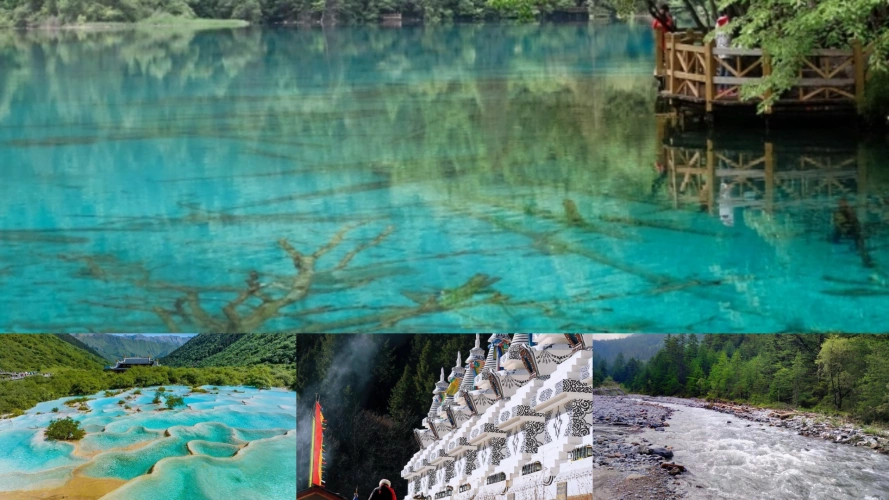
Today, Jiuzhaigou feels less like a remote nature reserve and more like a highly efficient, emerald-colored machine. The park is shaped like a giant “Y,” and the shuttle bus system is the circulatory system that keeps 41,000 daily visitors moving.
How to visit Jiuzhaigou efficiently and quietly? If you follow the flow of the tour groups, you will spend your day looking at the back of someone’s head. If you decode the bus logic, you can find 20-minute windows of absolute silence.
In this guide, I will show you how the eco buses work and how to beat the large traffic of visitors in Jiuzhaigou National Park.
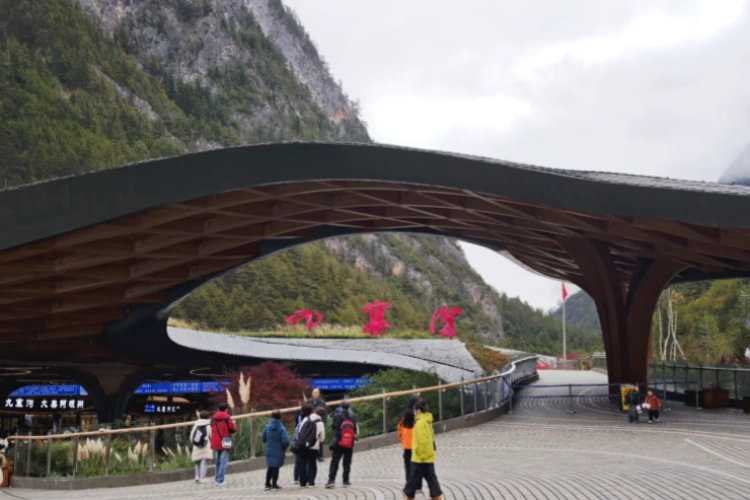
Jiuzhaigou Shuttle Bus Route
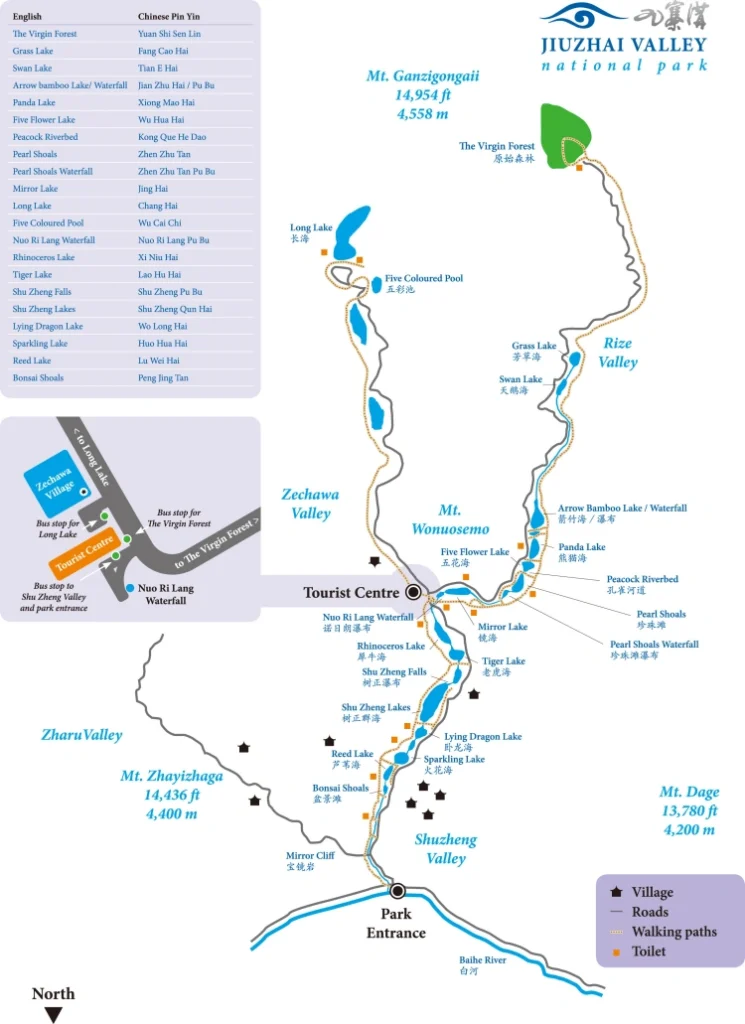
Before we get started, let’s take a look at the map of Jiuzhaigou Valley.
This park includes three valleys, shaped like a giant “Y”:
The Left Branch (Zechawa Valley): Long Lake, Five Colored Pool
The Right Branch (Rize Valley): The Primeval Forest, Arrow Bamboo Lake, Panda Lake, Five Flower Lake, Pearl Shoals, Mirror Lake, Nuorilang Waterfall, etc.
The Base (Shuzheng Valley): Shuzheng Lakes and Waterfalls, Sparkling Lake, Reed Lake, etc.
The park’s shuttle buses navigate these valleys from top to bottom, one by one. This high-to-low route ensures a smooth flow, meaning you won’t miss a single highlight as long as you follow the bus circuit.
Now, let’s see how the buses work exactly.
Left or Right, Can I Decide?
Technically, no.
You cannot choose which branch of the “Y” you visit first. This might be the most frustrating part of Jiuzhaigou for a first-timer.
When you board at the main gate between 7:00 AM and 9:00 AM, the park dispatchers randomly assign each bus to either the Rize Valley (Right branch) or the Zechawa Valley (Left branch).
Based on our experience, the first 10-15 buses of the day are sent to the Rize Valley because it is the most popular. If you want the Rize Valley, be at the gate by 7:15 AM.
QuietRoutes Tip: If your bus driver announces you are heading to Zechawa (Left), but your heart is set on the morning reflections of Mirror Lake (Right), don’t panic. Stay on the bus until the Nuorilang Central Hub. Hop off, cross the platform, and look for the buses heading to the Rize branch. You’ll lose 15 minutes, but you’ll gain the shot you wanted.
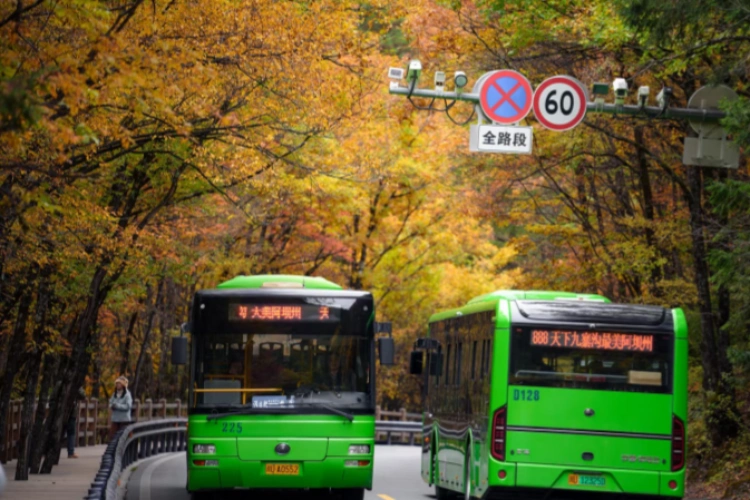
Better View in the Bus
The buses are modern, but the windows still reflect a lot of glare. So, on which side you choose to sit down really weighs a lot.
Up the Valley
If the bus is going to the Right Branch (Rize): Sit on the Right side. You’ll have a clear view of Mirror Lake and Panda Lake as you drive past, allowing you to see if the water is still or if the crowds are already thick.
If the bus is going to the Left Branch (Zechawa): Sit on the Left side. This gives you a panoramic view of the Seasonal Lakes as you climb toward Long Lake.
Down the Valley
Always sit by the window facing the river. The “Lower” Shuzheng Valley is best seen from the bus if your feet are too tired to walk the final 5km.

Nuorilang Central Hub
Every visitor, without exception, passes through the Nuorilang Central Hub between 11:30 AM and 1:30 PM. It is the only place to eat and the only place to switch valleys.
Trust me, do not switch valleys at noon.
If you are in the Rize Valley, stay there. Hike the boardwalks between Panda Lake and Five-Flower Lake while everyone else is at the Nuorilang food court.
Wait until 2:00 PM to take the shuttle to the “other” branch. By then, the morning wave has cleared out, and you’ll often find yourself on a half-empty bus heading up to the Five-Color Pond.

Top to Down: The Only Rule
Whether you’re visiting Jiuzhaig in one day or two, make sure to follow the “Top-Down” flow.
It’s simple. Just take the bus all the way to the highest point (Long Lake on the left or Primeval Forest on the right).
From there, walk the boardwalks downhill. The bus is your elevator; the boardwalk is your sanctuary.
QuietRoutes Tip: Most tour groups get off the bus, take a photo at the viewpoint, and get back on the bus. By walking the 2-3km stretches between the major bus stops, you will find 90% of the park’s “Quiet” spots.
Jiuzhaigou Shuttle Bus Timetable
Peak Season (Apr.1-Nov.15)
First Bus: 7:00 AM from the Entrance and Nuorilang Central Hub.
Last Bus from the Top: 5:00 PM.
Last Bus from Nuorilang to Exit: 6:00 PM.
Off-Season (Nov.16-Mar.31)
First Bus: 7:30-8:30 AM
Last Bus: 5:00 PM – 6:00 PM
The Price
90 RMB (Standard).
Your passport is your ticket; you don’t need a separate paper pass for the bus.

The VIP Upgrade
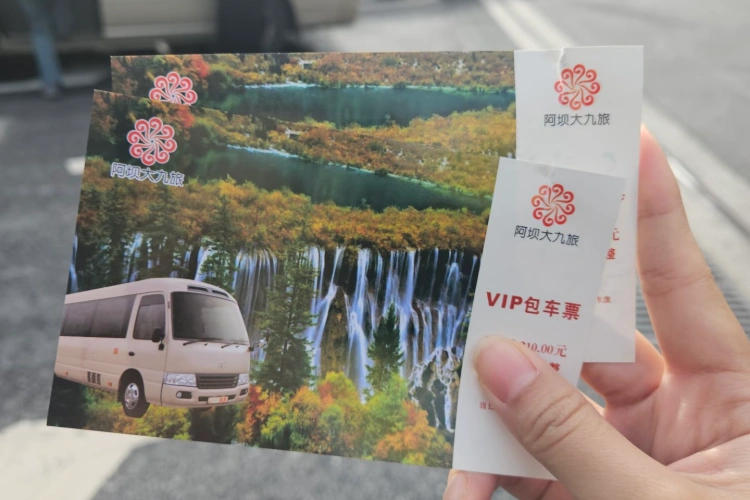
Beyond the standard shuttle, the park offers a VIP Bus, a smaller, more flexible, and more comfortable alternative. It’s become a popular splurge for travelers who want to skip the crowds and enjoy a more tailored pace.
The VIP Bus costs approximately 490 RMB (~$72 USD) per person per day (including your entry ticket in peak season).
You get a dedicated small bus (usually 15-20 seats) and a guide. More importantly, you choose the route. If you tell your driver you want to skip the crowds and go straight to the Primeval Forest, they go.
Standard Bus vs. VIP Bus: Is it Worth it?
| Feature | Standard Shuttle Bus | VIP Private/Small Bus |
|---|---|---|
| Seating | Bench seating; often standing room only during peak hours. | Guaranteed comfortable seating in a smaller, climate-controlled van. |
| Wait Times | Frequent, but you may have to wait in long queues at major hubs. | Virtually no waiting; the bus is dedicated to your group/small circle. |
| Flexibility | Follows a fixed loop; you must get off at designated stops. | Highly flexible; can often wait while you take photos or adjust the pace. |
| On-board Guide | General automated announcements (often in Chinese). | Dedicated guide who provides live commentary and logistical help. |
| Crowd Control | You move with the "masses," which can be overwhelming. | Designed to "dodge" the crowds by timing stops between large waves. |
| Lunch Logistics | You must find your own way to the Nuorilang dining center. | Often includes streamlined lunch arrangements or better timing to avoid the rush. |
| Cost | 90 RMB (Standard daily fee). | Approx. 210 RMB (Additional fee on top of the park ticket). |
Which should you choose?
Choose the Standard Bus if: You are a budget-conscious solo traveler; you are visiting during the low season (winter); or you enjoy the “energy” of a bustling national park.
Choose the VIP Bus if: You are traveling with seniors or children; you have limited time and want to see everything efficiently; or you are visiting during peak Autumn foliage when standard bus queues can exceed 30–40 minutes.
QuietRoutes Tip: If you are visiting during the October Golden Week or the peak of Autumn, the VIP bus is a mandatory quiet route investment. It saves you at least 2 hours of standing in shuttle lines throughout the day.
Final Thought
The shuttle bus isn’t just transport; it’s a tool for timing. The secret to Jiuzhaigou isn’t seeing everything. It’s being in the right place when the buses are somewhere else. Use the “Blind Box” to your advantage, skip the noon-day hub, and always, always sit on the side of the water.
FAQ
Are shuttle buses included in Jiuzhaigou tickets?
Yes. The eco-bus system is included in the Jiuzhaigou park ticket, so visitors do not need to purchase additional transportation passes.
Can you walk around Jiuzhaigou instead of taking buses?
Walking is possible between some lakes and waterfalls, but the distances between valleys are too large to explore entirely on foot. Most visitors combine walking with shuttle buses.
How often do Jiuzhaigou buses run?
Buses operate frequently throughout the day, especially during peak visiting hours. Waiting times are usually short at major stops.
What is the best route inside Jiuzhaigou?
A common strategy is to visit Zechawa Valley first, then explore Rize Valley, and finish in Shuzheng Valley. This route often helps travelers avoid the biggest crowds.