Overview
This immersive journey connects Sichuan’s cultural heart with the ancient capitals of the Silk Road. Travel by high-speed train, domestic flights, and scenic drives across Gansu and Xinjiang, exploring deserts, grottoes, grasslands, oasis towns, and Central Asian markets.
Highlights
- Get up close with giant pandas during their active morning breakfast in Chengdu.
- Cycle atop the massive Ancient City Wall of Xi'an for a bird's-eye view of the old town.
- Stand face-to-face with the silent, life-sized battalions of the Terracotta Army.
- Watch the sunrise ignite the surreal, multi-colored peaks of the Zhangye Danxia "Rainbow Mountains."
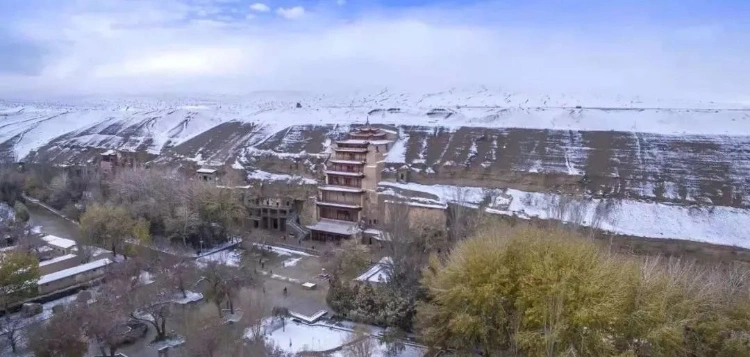
- Step into the desert’s greatest gallery at the Mogao Caves, home to a thousand years of Buddhist art.
- Go below the desert floor to see the Karez Wells, an ancient engineering marvel that turned sand into an oasis.
- Wander the haunting, wind-sculpted labyrinth of Jiaohe, the world’s largest and oldest earth city.
- Lose yourself in the sensory overload of the Erdaoqiao Market, the heartbeat of the Urumqi bazaar.
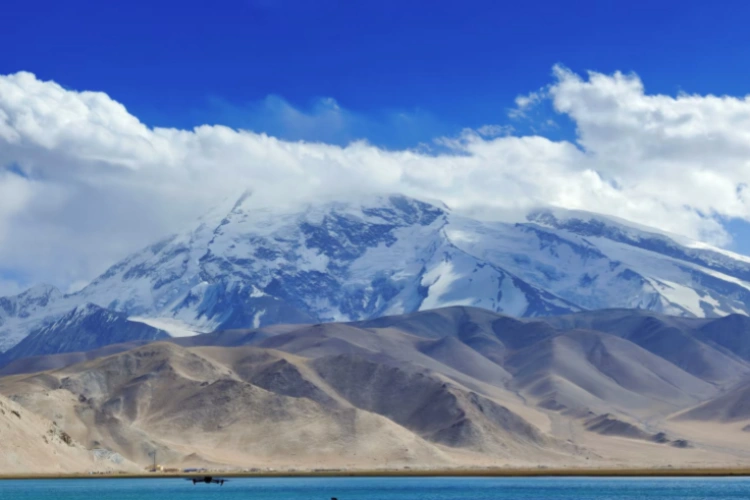
- Capture the perfect reflection of Muztagh Ata peak in the glass-like waters of alpine Karakul Lake.
Itinerary
Day 1: Chengdu Airport → Hotel
The Experience:
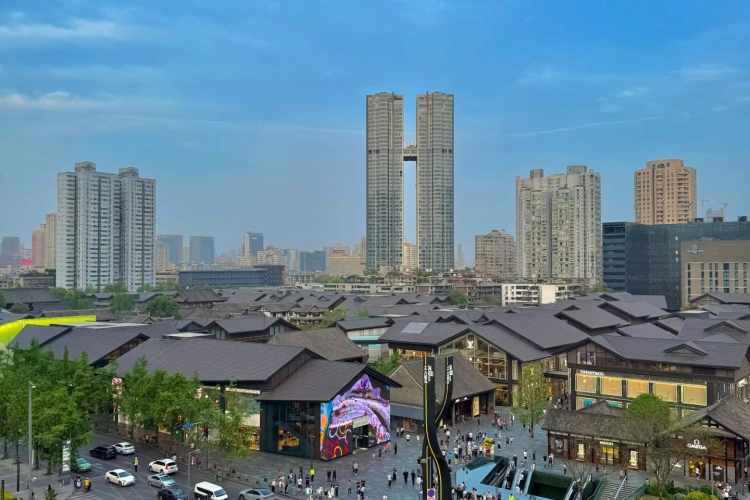
Welcome to Chengdu, a city known for its relaxed lifestyle and rich cuisine. Your driver will transfer you to the hotel in the city center (such as Chunxi Road or Taikoo Li).
Depending on your arrival time, you can rest at the hotel or enjoy a free evening exploring nearby streets like Dacisi Temple, tasting your first Sichuan dishes.
Day 2: Chengdu Panda Base → Wenshu Monastery → Kuanzhai Alley
The Experience:
After an early breakfast, we’ll head to the Chengdu Research Base of Giant Panda Breeding for the highlight of the morning. To beat the crowds and catch the bears at their liveliest, we aim to arrive by the 7:30 AM opening.
Between 7:30 AM and 10:00 AM, their breakfast time, you’ll witness them most active. They are happily climbing, tumbling, and crunching on fresh bamboo.
Later, we will transfer to Wenshu Monastery, a 1,400-year-old Buddhist temple in the heart of downtown. After exploring the ancient halls, we’ll enjoy a peaceful afternoon at a teahouse just outside the temple, soaking in the local “slow life” over a cup of jasmine tea.
BTW, the temple’s vegetarian restaurant is loved by locals. Give it a try if you’re interested.
In the evening, we’ll head to the Kuanzhai Alleys (Wide and Narrow Alleys). It’s famous for the Qing Dynasty-style courtyards and modern, trendy cafés and boutiques. It’s also well-known for its Chengdu street food, like Sandapao (sweet sticky rice balls), Tangyou Guozi (crispy, golden-fried glutinous rice balls), and Bingfen (a refreshing, chilled jelly dessert).
After a full day of culture and flavor, we’ll head back to the hotel.
Highlights:
- Close-up panda encounter
- Buddhist temple atmosphere
- Historic cultural street
Tips:
- Arrive early at Panda Base
- Comfortable walking shoes are recommended

Day 3: Chengdu → Xi'an (HSR) → Ancient City Wall
The Experience:
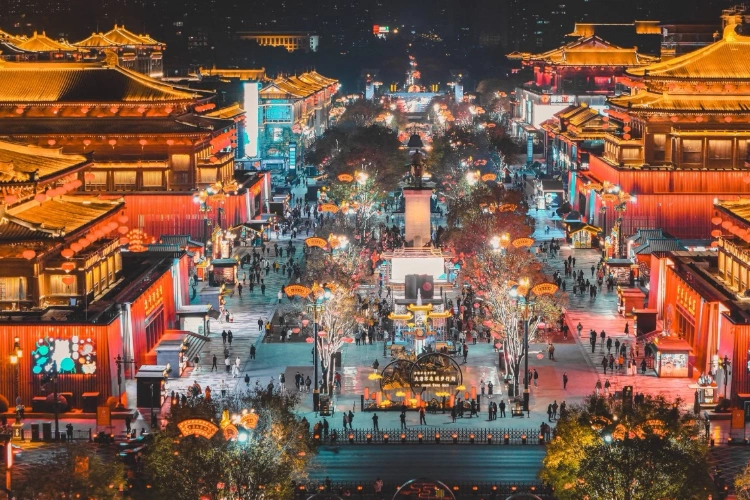
After breakfast, your driver will transfer you to Chengdu East Railway Station. Here, you’ll take a 4-hour high-speed train to Xi’an. This city has a history of over 3,000 years, and served as the imperial capital for thirteen dynasties, making it the spiritual heart of ancient China.
Upon arrival, you’ll check into your hotel in the city center.
In the afternoon, we’ll walk a scenic section of the Ancient City Wall, one of the oldest and best-preserved military systems in the world. It offers fantastic panoramic views of the city.
Optionally, you can rent a bike and cycle the full 14km loop along the city wall. It’s a classic Xi’an experience loved by locals and travelers alike.
If you want to fully immerse yourself in the atmosphere, you can also book a Hanfu (traditional costume) photoshoot on the wall, capturing timeless memories against the backdrop of the historic watchtowers.
Highlights:
- High-speed rail experience
- Xi’an Ancient City Wall cycling and sunset views
Tips:
- Bring the passport for the train
- Evening cycling is recommended

Day 4: Terracotta Army → Muslim Quarter
The Experience:
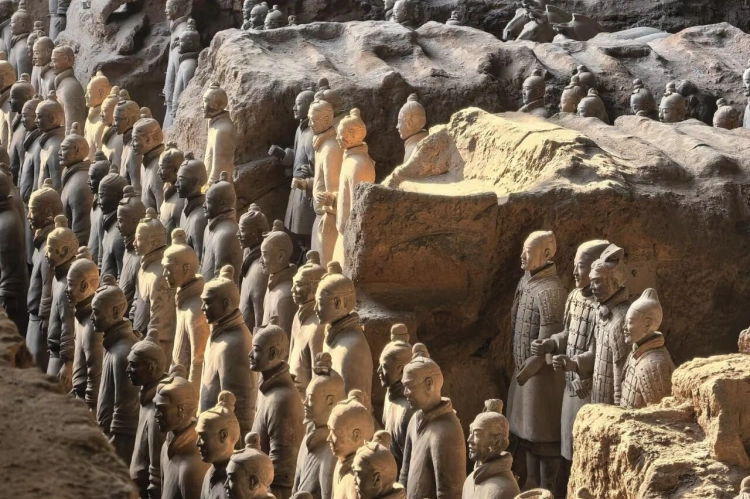
In the early morning, we will head to the world-famous Terracotta Army, the “silent battalion” that has guarded Emperor Qin’s tomb for over 2,000 years. You will witness the grandeur of three distinct pits, housing an estimated 8,000 life-sized figures.
- Pit 1: The largest and most impressive, featuring the main army in a massive battle formation.
- Pit 2: The “essence” of the site, containing complex units of cavalry, archers, and chariots.
- Pit 3: The elite command center, where high-ranking officers coordinated the underground forces.
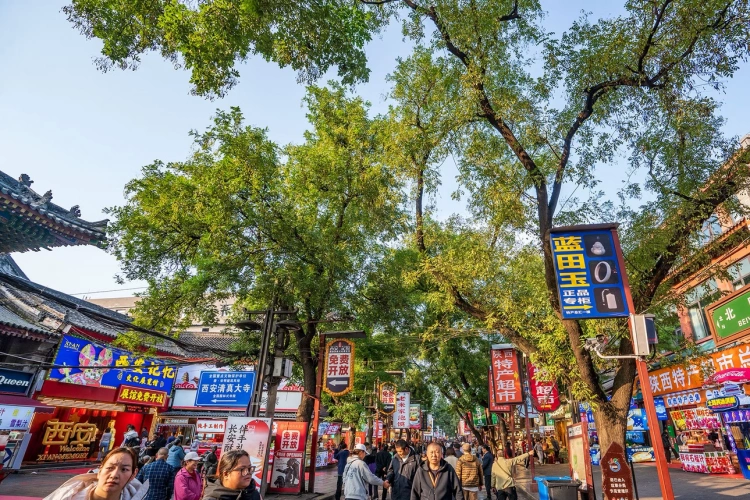
In the late afternoon, we’ll head back to the city center to explore the vibrant Muslim Quarter. The narrow, bustling streets are a foodie’s paradise. You’ll find a unique blend of Silk Road flavors and Northwest Chinese tradition. Just feel free to taste local staples like Biangbiang Noodles, Roujiamo, and Suanmeitang, etc.
Highlights:
- UNESCO archaeological wonder
- Local food paradise
Tips:
- Visit early to avoid crowds
- Try local lamb skewers
Day 5: Big Wild Goose Pagoda → Zhangye (Domestic Flight)
The Experience:
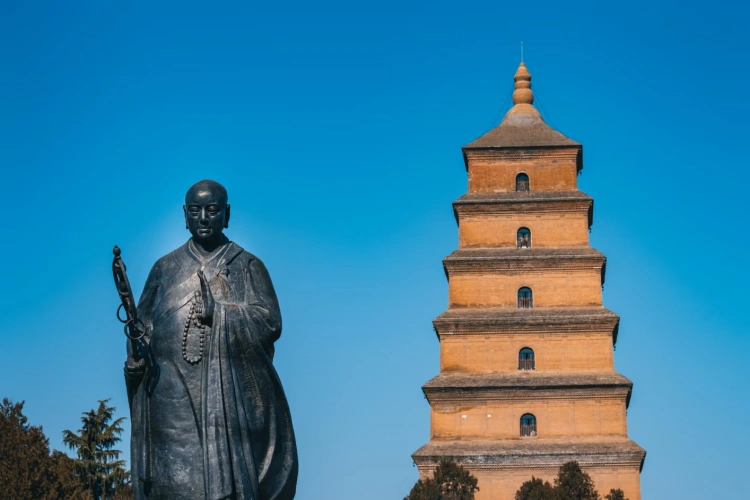
In the morning, we will visit the historic Big Wild Goose Pagoda, a towering masterpiece of Tang Dynasty architecture. It’s a definitive Silk Road landmark.
Built in 652 AD, this towering structure was specifically constructed to house the precious Buddhist scriptures and figurines brought back from India by the legendary monk Xuanzang. As you wander the grounds, you’ll learn about his epic 17-year pilgrimage, a feat of endurance that served as the real-life inspiration for the classic Chinese epic, Journey to the West.
Later, your private driver will transfer you to Xi’an Xianyang International Airport (XIY). From there, you will take a 2-hour flight to your next destination, Zhangye, the gateway to the surreal landscapes of the Hexi Corridor.
Upon arrival, your local guide will meet you and help you settle in for your upcoming desert expedition.
Highlights:
- Tang Dynasty Buddhist heritage
- Transition into the Gansu section of the Silk Road
Tips:
- Confirm the flight schedule in advance
Day 6: Zhangye Danxia National Geological Park → Wooden Pagoda Temple
The Experience:
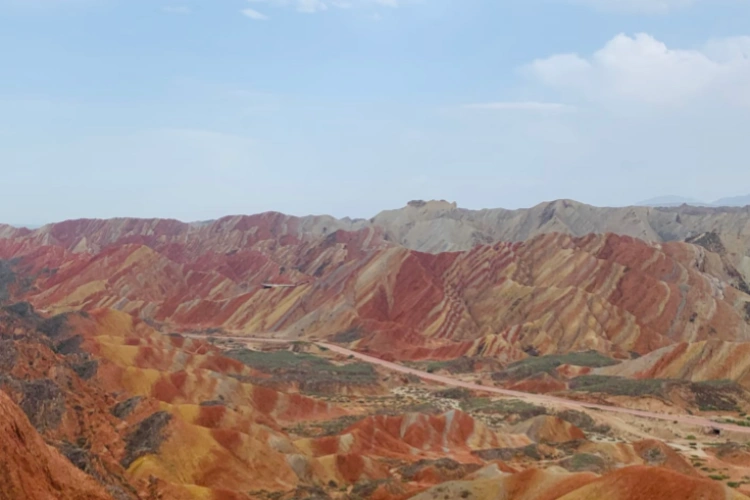
Today, we’ll venture into the surreal landscapes of Zhangye Danxia National Geological Park. It’s home to the world-famous “Rainbow Mountains.”
These vibrant, multi-colored ridges are a geological masterpiece, formed by millions of years of sandstone and mineral deposits layering into a technicolor dreamscape. We’ll time our visit to capture the light as it hits the peaks, revealing deep reds, burnt oranges, and brilliant yellows that look more like an oil painting than a natural formation.
Later, we return to the city to visit the historic Dafo Temple (Giant Buddha Temple) and its iconic Wooden Pagoda.
This architectural gem dates back nearly a thousand years to the Western Xia Dynasty. The largest indoor reclining Buddha is the temple’s centerpiece. Stand before it, and you’ll feel the deep spiritual history of the Silk Road.
Highlights:
- Unique red sandstone formations
- Stunning photography locations
Tips:
- Best lighting: early morning or sunset
- Bring sun protection
Day 7: Jiayuguan Pass → Dunhuang
The Experience:
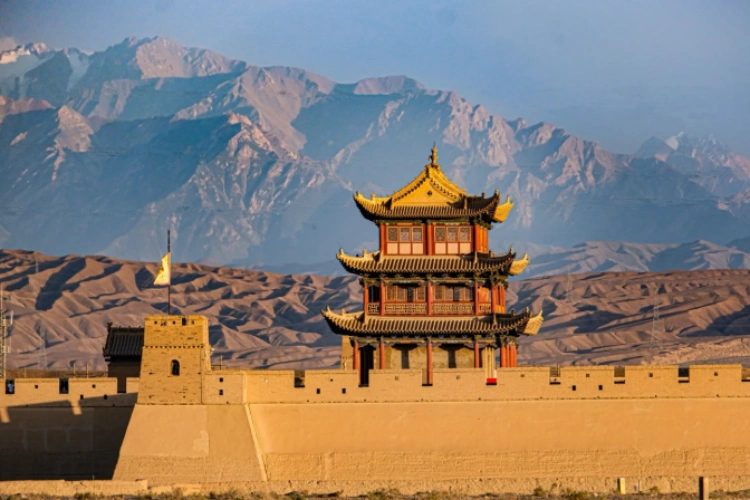
Next, we’ll stop at Jiayuguan Pass, the formidable western anchor of the Ming Dynasty Great Wall. It is known as the “First and Greatest Pass Under Heaven”. In the past, it marked the edge of the known world and guarded the narrow corridor between the Qilian Mountains and the Black Mountains.
After soaking in the frontier history, we’ll continue our journey across the vast Gobi Desert to the oasis city of Dunhuang.
Highlights:
- Western terminus of the Great Wall
- Expansive desert landscapes
Tips:
- Windproof clothing recommended
Day 8: Mogao Caves → Singing Sand Dunes Camel Ride
The Experience:
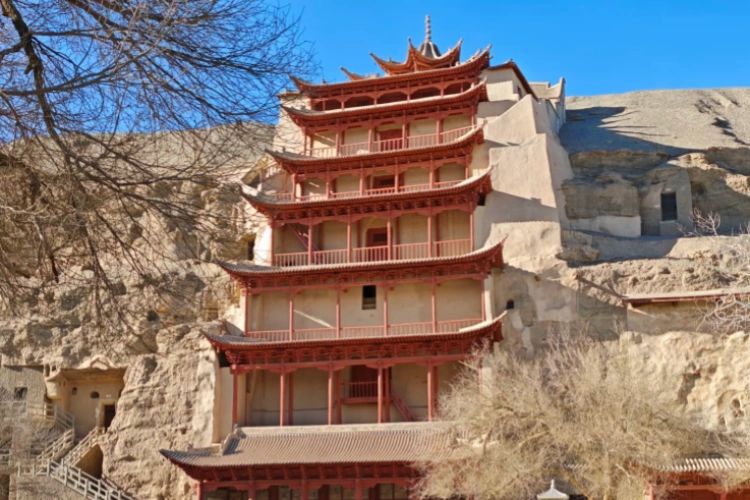
We’ll spend the morning at the Mogao Caves, a UNESCO World Heritage site and the crown jewel of Silk Road art.
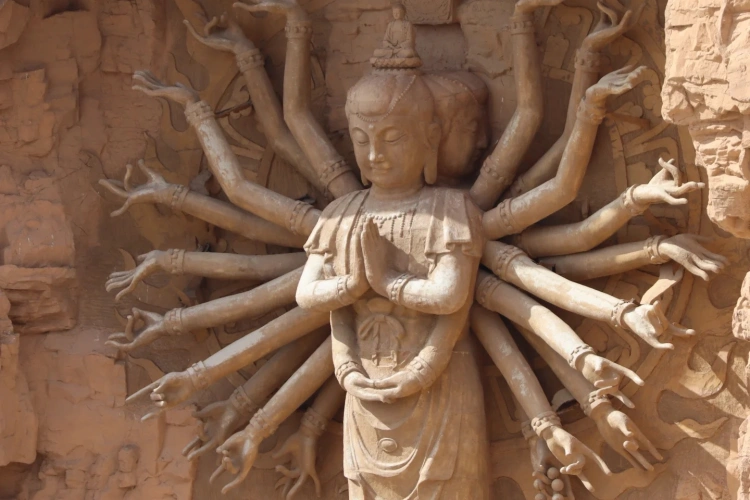
Spanning a thousand years of history, this desert sanctuary houses some of the world’s most exquisite Buddhist murals and statues. That’s why it’s often called the “Caves of the Thousand Buddhas”. As you step into the cool, dimly lit grottoes, you’ll see the vivid colors and delicate details that once inspired ancient pilgrims.
In the late afternoon, we’ll head to the towering Echoing Sand Dunes. Here, you’ll mount a camel for a slow trek across the undulating sands.
We’ll reach a vantage point just in time for sunset, watching the golden light transform the dunes into a sea of silk. The Crescent Moon Spring, a miraculous desert oasis, shimmers like a turquoise mirage.
Highlights:
- Ancient Silk Road art
- Desert sunset experience
Tips:
- Photography restrictions inside caves
- Sunglasses for desert wind
Day 9: Han Great Wall → Turpan
The Experience:
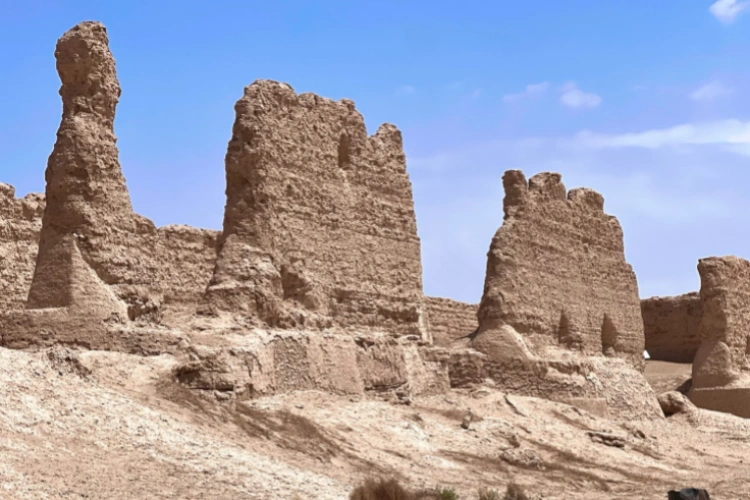
We’ll begin the day at the Han Dynasty Great Wall. Here, you’ll stand before the rugged ruins of earth and reed that have defied the desert for over 2,000 years. Unlike the stone walls of the east, these ramparts tell the raw story of the Silk Road’s earliest frontier defenses.
From here, we leave the Gansu corridor behind and travel into the Turpan Basin. On the road to Xinjiang’s “Oasis of Fire,” the landscape transforms into a dramatic tapestry of scorched red earth, lush vineyards, and ancient mud-brick villages.
Highlights:
- Desert frontier ruins
- Transition into the Uyghur region
Tips:
- Hydrate frequently
Day 10: Emin Minaret → Karez Well System → Jiaohe Ruins → Tuyugou Village
The Experience:
We’ll begin the day at the Emin Minaret. Built in 1777, its elegant Afghan-inspired design stands as a graceful sentinel over the Turpan landscape. In the morning light, it illuminates the intricate, geometric brickwork of China’s tallest Islamic minaret.
Next, we’ll head underground to explore the Karez Irrigation System. This ancient engineering marvel uses a vast network of subterranean tunnels to channel melted snow from the Tianshan Mountains, turning the scorching desert into a lush, fertile oasis.
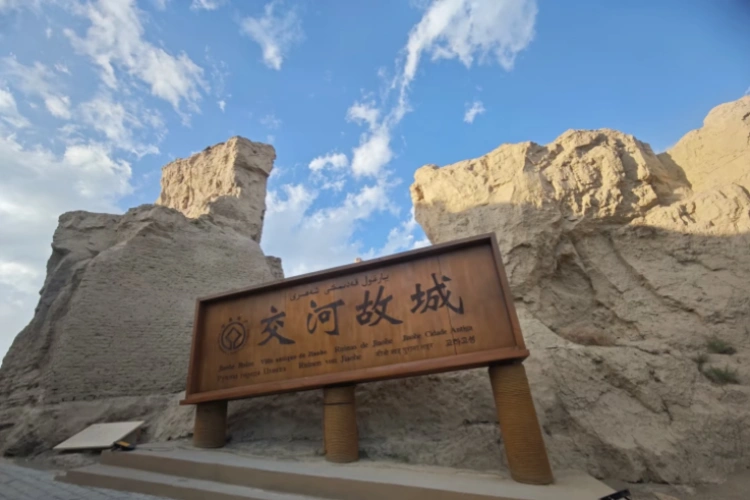
In the afternoon, we’ll wander the hauntingly beautiful ruins of Jiaohe. Unlike most cities built upward, this 2,000-year-old Silk Road capital was carved directly down into the earth of a high plateau, creating a unique “sunken” labyrinth of dwellings and temples.
Then, we’ll go past the scorched, red sandstone of the Flaming Mountains and reach Tuyugou Village. We’ll experience a way of life that has remained unchanged for centuries.
Highlights:
- Islamic architecture
- Ancient engineering system
- Ruined Silk Road city
- Uyghur village culture
Tips:
- It’s extremely hot here in summer
- Wear sun protection
Day 11: Turpan Museum → Urumqi → Erdaoqiao Market
The Experience:
In the morning, we’ll visit the Turpan Museum, where you can get an up-close look at the region’s fascinating Silk Road heritage, including remarkably preserved mummies and artifacts. They have survived for centuries in the arid desert heat.
Later, we’ll make the scenic drive to Urumqi, the bustling regional capital.
Here, we’ll explore the Erdaoqiao Market, Xinjiang’s largest and most famous bazaar. You’ll see the Central Asian culture, colorful silk atlas fabrics, hand-carved instruments, and piles of fragrant spices. The air is thick with the smell of roasting lamb and freshly baked nan bread.
Highlights:
- Silk Road relics
- Vibrant market culture
Tips:
- Try bargaining in markets
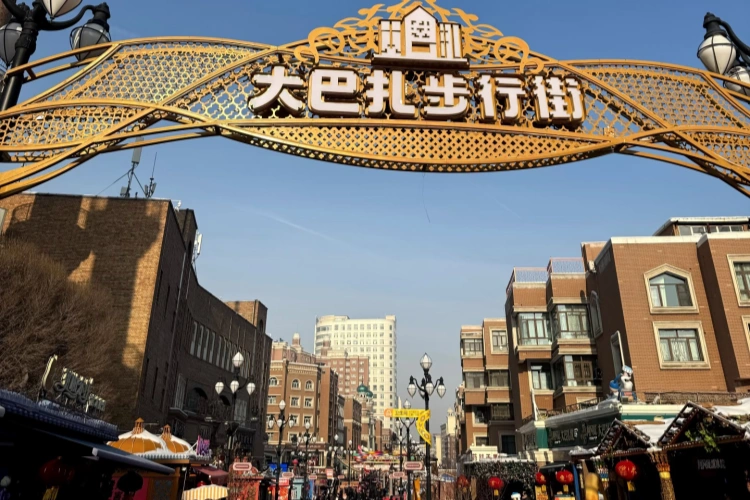
Day 12: Flight → Kashgar Old Town
The Experience:
In the morning, we’ll fly to Kashgar, the ultimate crossroads of the Silk Road.
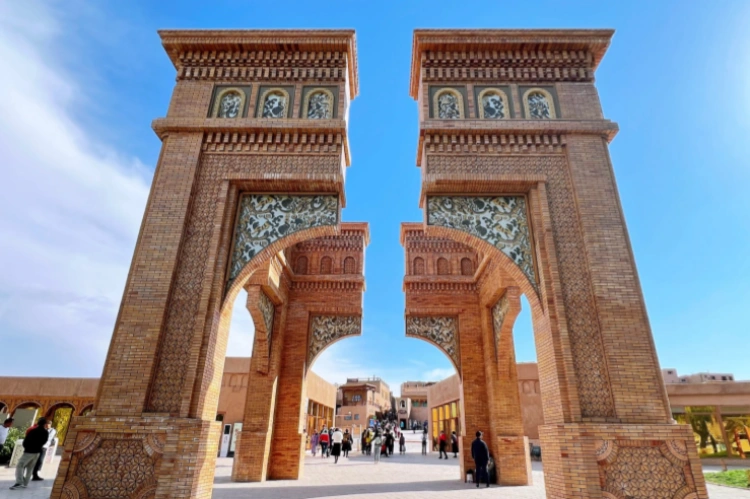
Upon arrival, we’ll dive into the labyrinthine alleys of the Old Town. It’s a 2,000-years-old town with mud-brick walls and a living museum where Central Asian soul meets Chinese heritage. You’ll see local craftsmen hammering copper, elders sharing tea, and children playing outside ornate wooden doorways.
As you wander, you’ll feel the unmistakable pulse of an ancient trading post that has welcomed caravans for millennia.
Highlights:
- Traditional Uyghur architecture
- Local artisan workshops
Tips:
- Ideal for street photography
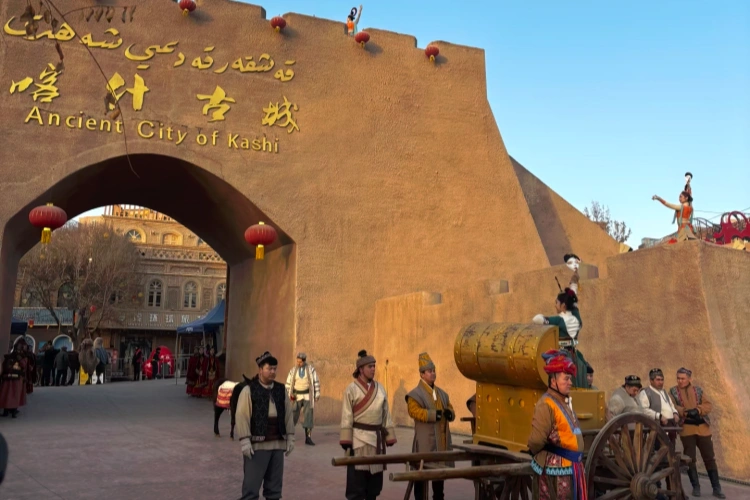
Day 13: Karakul Lake
The Experience:
Today, we’ll embark on an epic drive along the Karakoram Highway, one of the highest and most spectacular paved roads in the world. As we wind through the dramatic Pamir Mountains, the rugged desert floor gives way to the breathtaking vistas of Karakul Lake.
The lake sits at an elevation of 3,600 meters. The waters act as a mirror for the “Father of Ice Mountains,” Mount Muztagh Ata.
You’ll have a whole afternoon to explore the shoreline. You might encounter Kyrgyz nomadic settlements and grazing yaks.
Highlights:
- Alpine lake scenery
- Pamir Mountain views
Tips:
- The altitude is high here. Move slowly
- Bring a windproof jacket
Day 14: Hotel → Airport → Departure
The Experience:
Your private driver will transfer you to the airport for departure. Your Chengdu Xi’an Silk Road expedition concludes.
Accommodation
- Chengdu: 2 Nights
- Xi'an: 2 Nights
- Zhangye: 2 Nights
- Dunhuang: 2 Nights
- Turpan: 1 Night
- Tuyugou: 1 Night
- Urumqi: 1 Night
- Kashgar: 2 Nights
Hotels are typically 3–4 star standard, centrally located for comfort and convenience.
The listed price is based on basic standard hotels. We are 100% tailor-made. Hotel category, room type, and upgrade options can be fully customized according to your preference and budget.
Cost
Included
- Domestic train & flights (as listed)
- Private air-conditioned vehicle for all local transfers.
- Expert English-speaking local guide.
- All entrance fees as listed.
- 13 nights of hand-picked accommodation with breakfast.
Excluded
- International flights
- Lunches and dinners (freedom to explore local tastes).
- Personal expenses.
- Travel insurance.
- Gratuities for guide and driver.
- Chinese visa.
Transportation
- Chengdu → Xi’an: High-speed train
- Xi’an → Zhangye: Domestic flight
- Zhangye → Dunhuang → Turpan → Urumqi: Private vehicle + train/road combination
- Urumqi → Kashgar: Domestic flight
- Local sightseeing: Private vehicles
Essential Tips
- To visit Karakul Lake and the Pamir Plateau (Tashkurgan County), foreign travelers require a Border Travel Permit. Having a local guide or agency handle this in advance is highly recommended to avoid delays at the Ghez checkpoint.
- Expect frequent checkpoints along the Karakoram Highway. Always keep your original passport and permit easily accessible in your day pack, not in your checked luggage.
- You will experience extreme temperature shifts. Turpan can be scorching (over 35°C), while Karakul Lake (3,600m altitude) can be near freezing even in summer. Pack a windproof jacket, thermal layers, and sturdy walking shoes.
- Karakul Lake is at high altitude. Move slowly, stay hydrated, and avoid alcohol on your first night there.
- When visiting the Muslim Quarter in Xi'an or the Old Town in Kashgar, dress modestly (shoulders and knees covered). Always ask for permission before taking close-up photos of locals or their stalls.
- The air in the Turpan Basin and the Gobi Desert is incredibly dry. Drink more water than usual to prevent dehydration and "desert fatigue."
Gallery

FAQ
Is Xinjiang for foreign travelers?
Yes, Xinjiang is very safe in terms of crime. However, expect a higher security presence than in other parts of China. You will encounter several checkpoints on the Karakoram Highway where you’ll need to show your passport. These are routine procedures for all travelers in the region. Just stay patient and keep your documents handy.
Is the Silk Road suitable for families?
Yes. You’ll see different scenic areas and experience different culture. But expect long travel distances.
Can this tour be customized?
Yes, private customization is available. You can extend or shorten the itinerary.