If you are planning a trip to China in 2026, you’ve likely heard that Sichuan food is the “spiciest.” But as any local in Chengdu will tell you, comparing Sichuan cuisine to the rest of China is like comparing a fiery salsa to a delicate French consommé—they aren’t just different flavors; they represent entirely different philosophies of life.
While Chengdu is a UNESCO City of Gastronomy, it is just one of the “Eight Great Cuisines” of China. Understanding how Chengdu food compares to the light elegance of Canton or the salty heartiness of the North will help you navigate your Chengdu food tour with a true connoisseur’s palate.
The “Big Three” Regional Comparison
To help you navigate the vast landscape of Chinese flavors, here is a breakdown of how Chengdu’s “Mala” soul compares to the other heavyweights of Chinese cuisine.
| Cuisine Type | Primary Region | Core Flavor Profile | Key Ingredients | Signature Dish |
|---|---|---|---|---|
| Sichuan (Chuan) | Chengdu / Chongqing | Numbing & Spicy (Mala) | Sichuan peppercorn, fermented bean paste, dried chilis. | Mapo Tofu |
| Cantonese (Yue) | Guangzhou / Hong Kong | Fresh & Natural (Xian) | Fresh seafood, ginger, oyster sauce, scallions. | Dim Sum / Steamed Fish |
| Jiangnan (Su/Zhe) | Shanghai / Suzhou | Sweet & Mellow (Tian) | Black vinegar, rock sugar, Shaoxing wine, river fish. | Xiao Long Bao (Soup Dumplings) |
| Hunan (Xiang) | Changsha | Dry Spicy & Sour (Ganla) | Fresh chilis, pickled peppers, smoked meats. | Steamed Fish Head with Chilis |
| Shandong (Lu) | Qingdao / Jinan | Salty & Savory (Xian) | Sea salt, garlic, green onions, rich seafood broths. | Braised Sea Cucumber |
To simplify the vast world of Chinese cooking, food historians often group the country into three dominant “personality” types. In 2026, these regional identities are stronger than ever as cities lean into their heritage to attract “food pilgrims.”
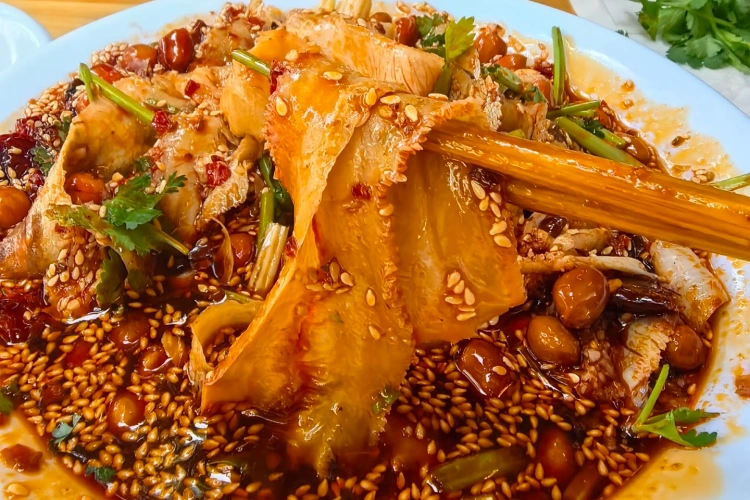
Sichuan & Chengdu: The Fiery Storyteller
Chengdu’s cuisine is about drama. It uses the “Mala” (numbing and spicy) sensation to grab your attention, but it keeps you engaged with its 24 flavor profiles. It is a cuisine that prizes “aroma” (Xiāng) above all else. Every dish tells a story of balance—where the heat of the chili is tempered by the citrusy tingle of the peppercorn.
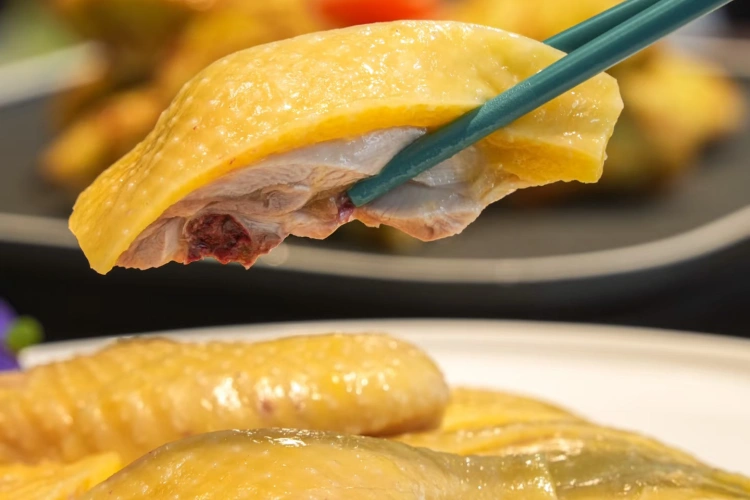
Cantonese (Guangdong): The Gentle Poet
If you travel from Chengdu to Guangzhou or Hong Kong, the flavor profile shifts 180 degrees. Cantonese food is about Xiān (freshness). The goal of a Cantonese chef is to interfere with the ingredient as little as possible. While a Chengdu chef might use 20 spices to transform a piece of pork, a Cantonese chef will steam it with nothing but ginger and scallions to highlight the pork’s natural sweetness.
Jiangnan (Shanghai/Suzhou): The Refined Scholar
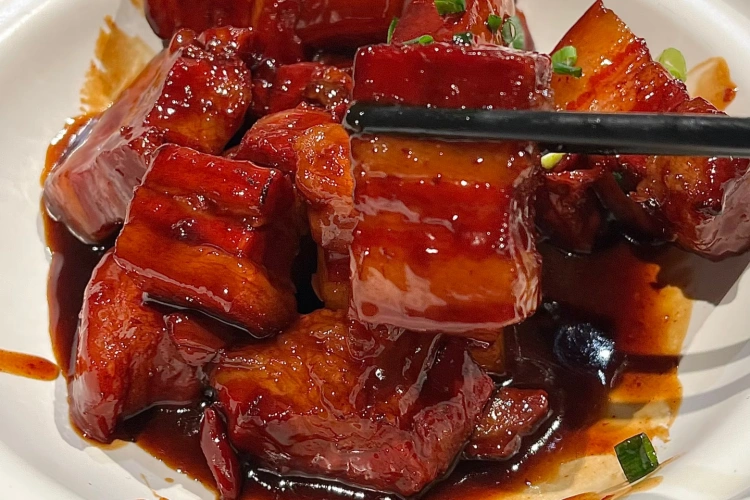
This region is the home of “Red Braising” (Hóngshāo). The food here is famously sweet, mellow, and visually artistic. While is Chengdu food very spicy is the common question for the West, in Shanghai, the question is “How much sugar is in this?” It is a refined, sophisticated cuisine that favors soy sauce, rock sugar, and Shaoxing wine.
Sichuan vs. Hunan: The Battle of the Heat
A common mistake travelers make is assuming all “spicy” Chinese food is the same. The most frequent debate is between Sichuan (Chengdu) and Hunan (Xiang) cuisines.
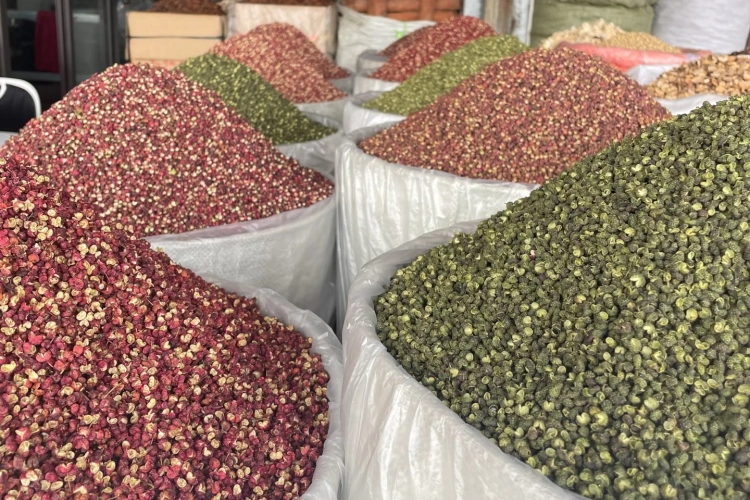
Sichuan (Mala): The heat is “numbing.” Because of the Sichuan peppercorn, the spiciness feels like an electric tingle. It is oily, aromatic, and complex.
Hunan (Ganla): This is “dry heat.” Hunanese food rarely uses the numbing peppercorn. Instead, they use fresh, raw chilis and pickled peppers.
The Verdict: Hunan food is often objectively “hotter” and sharper, whereas Chengdu food is “wider” and more fragrant. As you explore the famous food in Chengdu, you’ll notice that the oil acts as a carrier for flavor, making the spice feel more like a warm hug than a sharp jab.
Wheat vs. Rice: The Great North-South Divide
Geography dictates the “staple” of each region. Chengdu sits in a unique position where both wheat and rice are celebrated, but the comparison to the North is striking.
The Noodle War
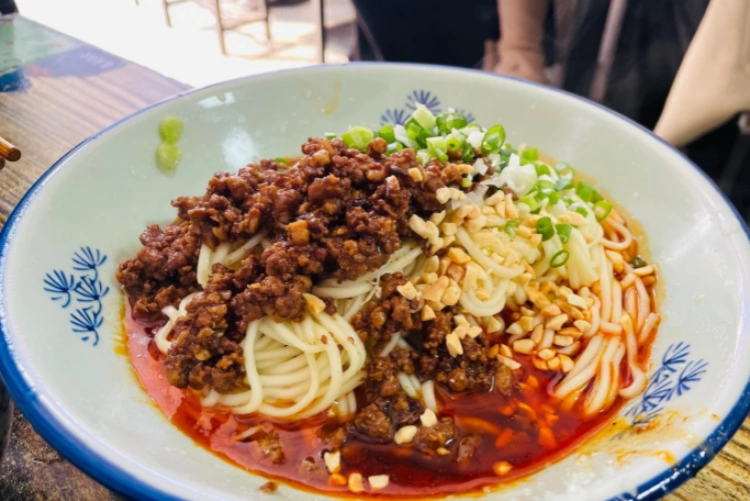
In Northern cities like Xi’an or Beijing, noodles are thick, chewy, and “hand-ripped.” They are the star of the show. In Chengdu, noodles like Dan Dan Mian are thinner and silkier. Here, the noodle is merely a vehicle for the complex sauce. On a Chengdu street food walk, you’ll find that the “topping” or “topping sauce” (sào zi) is where the artistry lies.
The Vinegar Factor
Northerners love their mature, smoky vinegars. In Chengdu, the preference is for Baoning Vinegar—a medicinal, herbal black vinegar that provides a tartness that cuts through the heavy rapeseed oil used in local frying.
Health & Science: The 2026 Perspective
One of the most surprising trends in 2026 is the scientific “rehabilitation” of Sichuan food. For years, people thought the oil and spice were “unhealthy.”
However, recent studies in the Journal of Ethnic Foods have highlighted that the capsaicin in Sichuan chilis and the antioxidants in Sichuan peppercorns act as powerful anti-inflammatories. Furthermore, the Sichuan “Dampness” Theory—the idea that spicy food helps the body cope with humid climates—is now being studied as a legitimate form of “bioclimatic nutrition.”
Compared to the sugar-heavy sauces of Shanghai or the high-sodium preserved meats of the North, a balanced meal in Chengdu (which includes plenty of steamed greens and fermented probiotics) is increasingly seen as a longevity diet.

Which Cuisine is Right for Your 2026 Trip?
If you only have limited time in China, choosing a home base for food is difficult. Here is how they stack up:
Choose Chengdu if: You love bold flavors, complex aromatics, and a “Slow Life” atmosphere. It is the best city for those who want to see how locals eat in a relaxed, non-commercial way.
Choose Guangzhou if: You have a sensitive stomach or prefer delicate, seafood-centric meals.
Choose Xi’an if: You want a “Silk Road” experience with heavy cumin, lamb, and bready textures.
Choose Shanghai if: You want fine dining, beautiful presentation, and a sweeter palate.
The “Benchmarking” Experience
There is a reason why a Chengdu food tour is worth it as your first stop in China. Because Sichuan food uses so many different flavor profiles, it “trains” your palate to recognize the individual components of Chinese cooking—the soy, the ginger, the garlic, and the fermentation.
Many travelers find that after spending a morning on a Chengdu panda tour and an evening in the food markets, they are better equipped to enjoy the subtler flavors of other regions later in their trip.
Final Thoughts: The Best of All Worlds
Chengdu doesn’t try to be like the rest of China. It is a city that is proud of its “funk,” its fire, and its fermented soul. In 2026, it remains the most vibrant, exciting, and varied food destination in the country.
Ready to taste the difference? Whether you are a chili-lover or a spice-skeptic, our guided Chengdu food tour will show you exactly how this region’s flavors have conquered the world. Join us and discover why Chengdu is the benchmark for all Chinese cuisine.