In China, a wedding is more than a celebration between two people. It is a deeply symbolic union of two families, shaped by centuries of tradition, belief, and cultural meaning. Even in today’s fast-moving cities, traces of ancient customs still appear in modern ceremonies, quietly connecting the present to the past.
For travelers, encountering a Chinese wedding, whether by invitation or by chance, can feel both fascinating and unfamiliar. Why is everything red? What is the significance of tea? Why are there so many rituals before the actual ceremony?
This guide walks you through traditional Chinese wedding customs in a way that is easy to understand, culturally accurate, and meaningful, so you’re not just observing, but truly appreciating what you see.
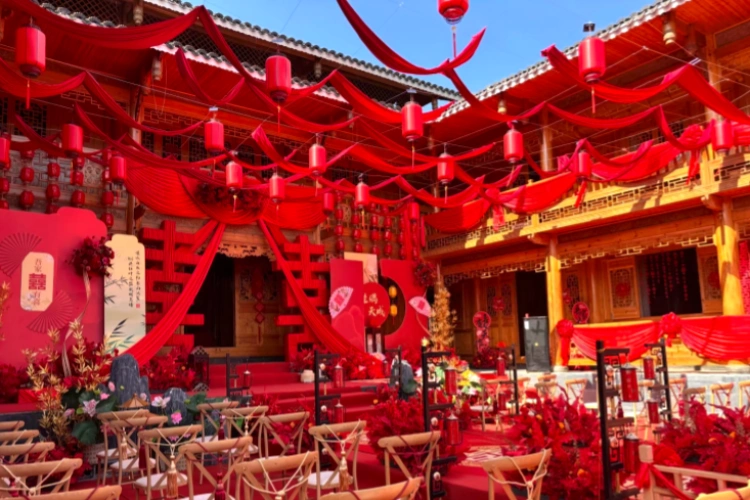
What Defines a Traditional Chinese Wedding?
To understand a Chinese wedding, you must first set aside the Western notion of “the couple’s big day.”
In the traditional sense, a wedding is a family-centered contract. It is the formal merging of two ancestral lines, a public declaration of filial piety, and a complex web of symbolism designed to “buy” as much luck, fertility, and wealth as possible for the new union.
The ceremony is rarely about a religious “I do” in a temple. Instead, it is rooted in Confucian values: respect for elders, the importance of lineage, and the maintenance of social harmony.
Every orange on the table, every hairpin in the bride’s hair, and every red envelope exchanged is a deliberate prayer for a prosperous future.
The Full Wedding Journey: A Step-by-Step Guide
A Chinese wedding is not a single day; it is a marathon of rituals that can span months.
Step 1: The Proposal & The Guo Da Li (Betrothal)
Historically, weddings were arranged by a Meiren (matchmaker). While modern couples choose for love, the Guo Da Li remains the formal announcement of intent.
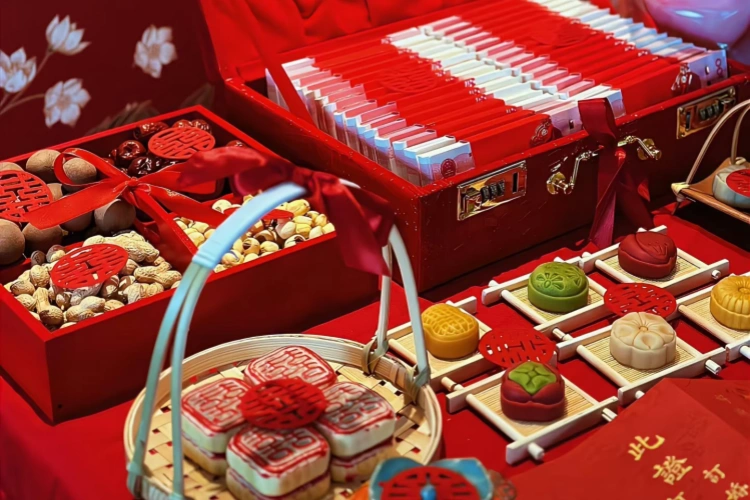
About two to four weeks before the wedding, the groom’s family visits the bride’s home bearing gifts that symbolize prosperity. This isn’t just a gesture; it’s a show of the groom’s ability to provide.
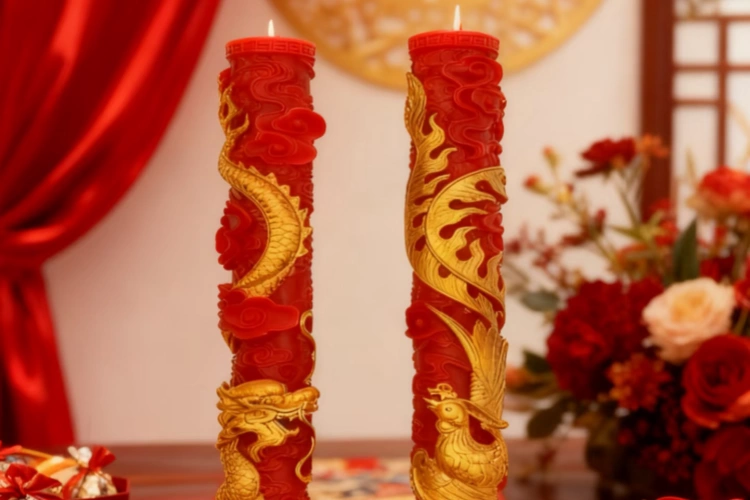
You’ll see “Dragon and Phoenix” candles, wine, and tea leaves. The most important element is the Pin Jin (the bride price), tucked into red envelopes. The bride’s family, in a show of modesty and reciprocal respect, usually returns a portion of the gifts to signify that they are not “selling” their daughter, but welcoming a new son.
Step 2: Picking the “Auspicious” Date
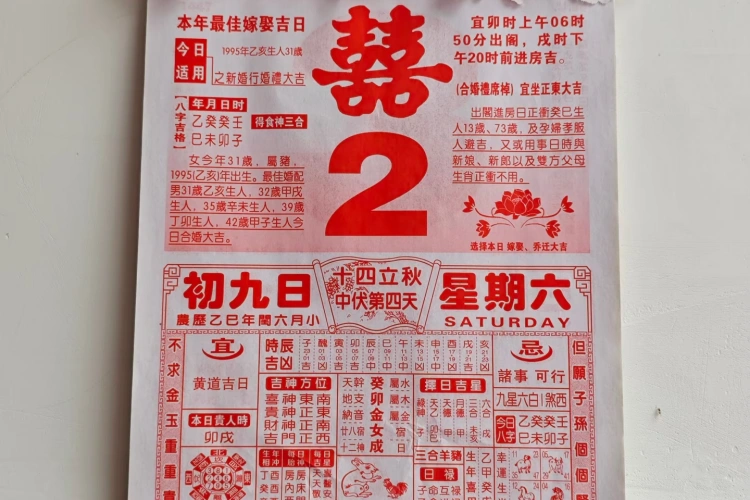
You won’t find many Chinese weddings on a random Tuesday. Couples consult the Tong Shu (the Chinese Almanac) or a feng shui master to find a date where the stars, the moon, and the couple’s zodiac signs are in harmony. Dates with the number 8 (Ba, which sounds like “wealth”) are prized, while the number 4 (Si, sounding like “death”) is strictly avoided.
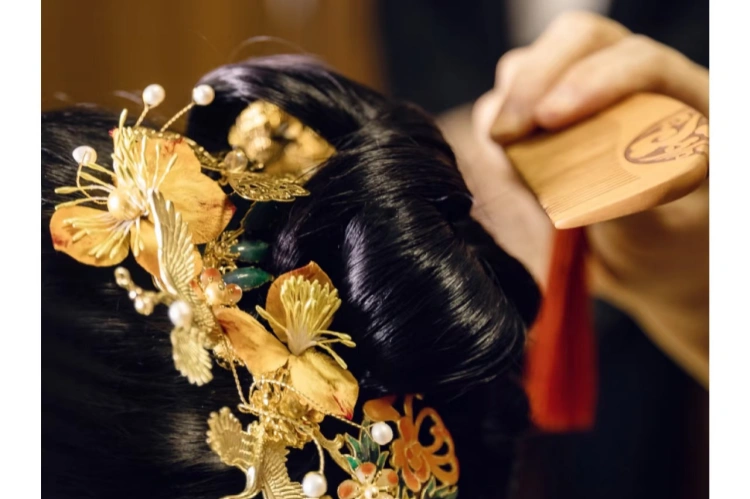
Step 3: The Hair Combing Ceremony (Shang Tou)
On the night before the wedding, a beautiful, quiet ritual takes place in the respective homes of the bride and groom. A “Woman of Good Fortune”, someone with a living husband, children, and grandchildren, combs the hair of the bride (or groom) four times while reciting blessings:
May you be together from beginning to end.
May you have a harmonious marriage until old age.
May you have many children and grandchildren.
May you enjoy wealth and longevity.
Step 4: The Big Day: Door Games and The “Fetch”
On the wedding morning, the groom must “earn” his bride. He arrives at her home with his groomsmen, only to be blocked by the bridesmaids. This is the Chuangmen (Door Games).
The groom is subjected to hilarious challenges: eating spicy/sour foods to represent the “bitterness” of life, performing dances, or singing songs. To pass through each door, he must negotiate and slide Hongbao (money packets) under the door.
It’s a lighthearted way to show that the bride is precious and won’t be given away easily.
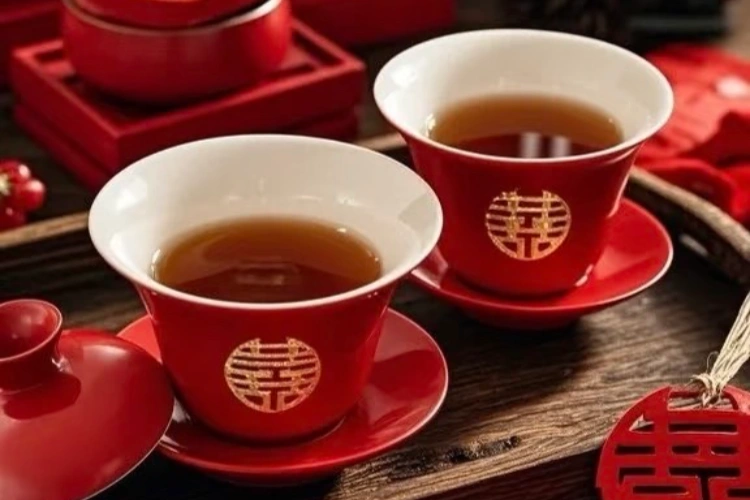
Step 5: The Tea Ceremony (Jing Cha): The Soul of the Event
If you only witness one ritual, let it be this. The Tea Ceremony is the moment the couple is officially incorporated into the other’s family.
The couple kneels before their parents and elder relatives, offering tea with both hands. This is an act of supreme gratitude for years of upbringing.
In return, the elders sip the tea and present the couple with red envelopes or gold jewelry (often “Dragon and Phoenix” bangles). The tea itself is symbolic: it usually contains lotus seeds and red dates, which phonetically suggest “bringing children into the world early.”
Step 6: The Banquet
The day culminates in a massive feast. Unlike Western weddings, where the ceremony is the focus, in China, the Banquet is the main event. It is a loud, joyous, and often extravagant affair with at least eight to twelve courses.
The Change of Clothes: Expect the bride to change outfits at least three times: starting with a red Qun Kua, moving to a white wedding gown, and ending in a sleek Cheongsam (Qipao) for toasts.
The Ganbei: The couple will move from table to table, “toasting” every single guest. It’s a test of endurance and hospitality.
The Language of Symbols
Why is everything red? Why are there pictures of mythical birds everywhere? Here is the “cheat sheet” to Chinese wedding symbolism:
The Color Red: Represents fire, success, and loyalty. It is believed to scare away evil spirits.
Double Happiness (囍 – Shuāngxǐ): You will see this character on everything from napkins to walls. It represents the union of two people and two families.
Dragon and Phoenix: The Dragon (Emperor/Male) and Phoenix (Empress/Female) together represent the perfect balance of Yin and Yang.
Gold Jewelry: Specifically “Four Pieces of Gold” (Si Dian Jin). It represents the groom’s family’s promise that the bride will always have a roof over her head and food to eat.
Firecrackers: Used to announce the arrival of the groom and to clear the path of negative energy.
Traditional vs. Modern
Today, the “Standard” Chinese wedding is a hybrid. In Tier-1 cities like Shenzhen or Guangzhou, you’ll see “Quiet Luxury” weddings: minimalist, elegant, but still retaining the Tea Ceremony.
However, in rural provinces like Guizhou or Yunnan, weddings remain deeply traditional, sometimes lasting three days with the entire village invited. We are also seeing a resurgence in “Hanfu Weddings,” where young couples ditch the Western tuxedo entirely to wear historically accurate robes from the Ming or Tang dynasties.
What Travelers Should Know: Practical Etiquette
If you find yourself lucky enough to be invited to a Chinese wedding, follow these “Golden Rules” to show respect:
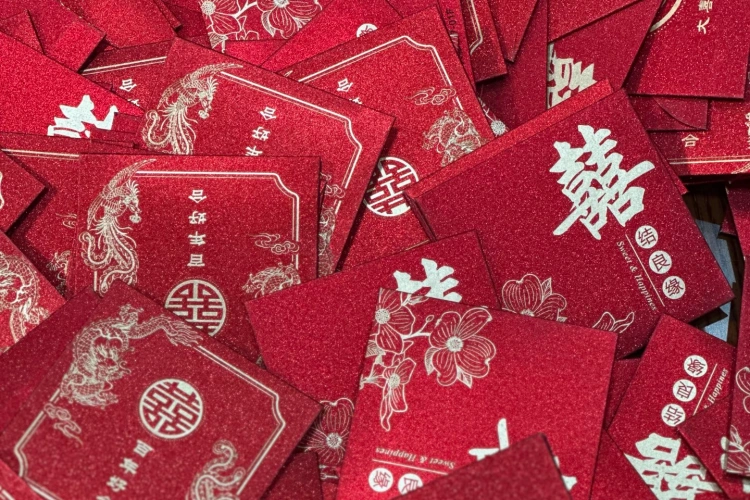
The Red Envelope (Hongbao)
Do not bring a physical gift (like a toaster). Money is the only acceptable gift.
How much? Usually, the amount should cover the cost of your seat at the banquet plus a bit more.
Note that the amount should never include the number 4. Aim for numbers ending in 8 or 9 (representing “long-lasting”). Use crisp, new bills.
What to Wear
Avoid all-black (mourning) or all-white (funeral colors). Also, avoid all-red (you don’t want to upstage the bride).
The best choice is bright, cheerful colors like pink, purple, or blue.
The Tea Ceremony Behavior
If you are an observer, stay quiet and keep your distance during the tea ceremony. It is a deeply emotional time for the parents. If you are a guest, don’t start eating until the elders at your table have picked up their chopsticks.
Where to Experience This
While private weddings are best, travelers can see “staged” but culturally accurate ceremonies in:
Wuzhen or Zhouzhuang Water Towns: They often perform “Water Wedding” processions on boats.
The Forbidden City (Surrounding Areas): You’ll often see couples doing high-end pre-wedding photo shoots in full traditional regalia.
Local Parks: On auspicious dates, parks in Xi’an or Chengdu are often filled with wedding parties taking photos.
Conclusion: More Than Just a Party
A Chinese wedding is a living bridge. It connects the ancestral past to the technological future. By observing these rituals, you aren’t just seeing a celebration; you are seeing how a billion people define loyalty, family, and hope.
In a world that is moving faster than ever, the persistence of the Tea Ceremony and the Red Envelope proves that some threads are too strong to break.
For those moved by these timeless rituals, experiencing the romance of a Chinese wedding firsthand, perhaps through a curated China honeymoon tour, offers a way to weave your own story into this ancient landscape, from the misty peaks of Guilin to the historic courtyards of Beijing.
FAQ
Are Chinese weddings still arranged?
Rarely. Modern weddings are for love, but family approval remains a massive factor in the “success” of the union.
Can a foreigner attend?
Yes! Chinese families are often very proud to have international guests. Just remember your Hongbao and a few words of congratulations (Gongxi!).
Why do they eat a whole pig?
A roast pig represents the bride’s purity and the groom’s family’s wealth.