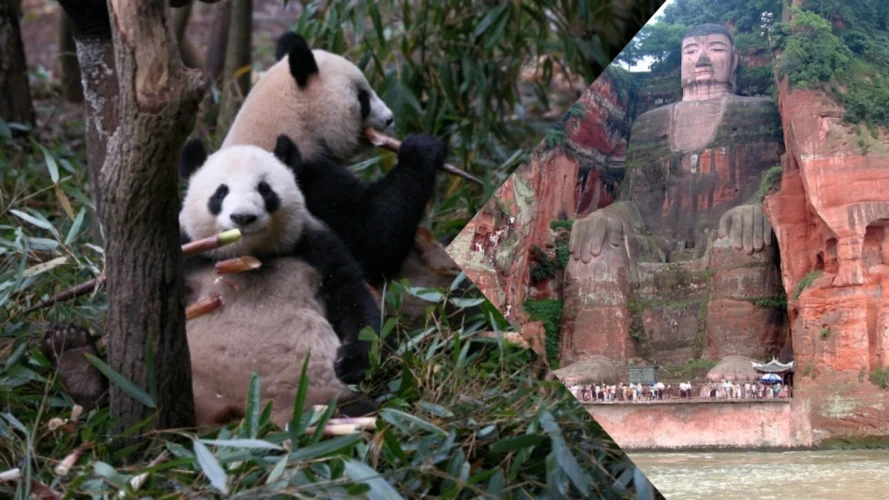
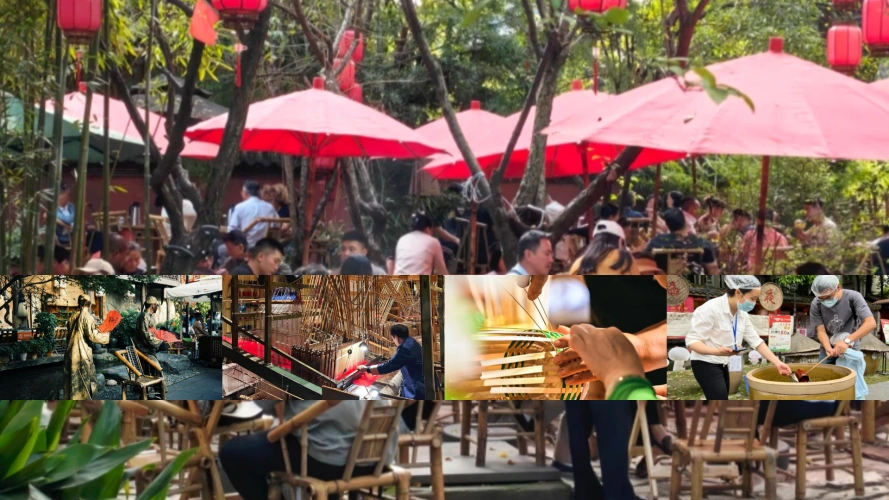
If People’s Park is where Chengdu goes to drink tea, and Yulin is where it goes to be hip, then the Wenshu Monastery (文殊院 – Wénshū Yuàn) neighborhood is where the city connects with its spiritual—and culinary—roots.
This district remains a fascinating contradiction. Inside the monastery walls, you’ll find the peaceful, clean flavors of Buddhist temple food. Just outside the gates, the air is thick with the scent of “Fly Restaurants” serving some of the punchiest, spiciest snacks in the city. To eat here is to experience the full spectrum of the Sichuan palate.
Whether you are seeking a zen-like vegetarian buffet or the world’s best Sweet Water Noodles, this guide will lead you through the smoky incense and the spicy steam of Wenshu.
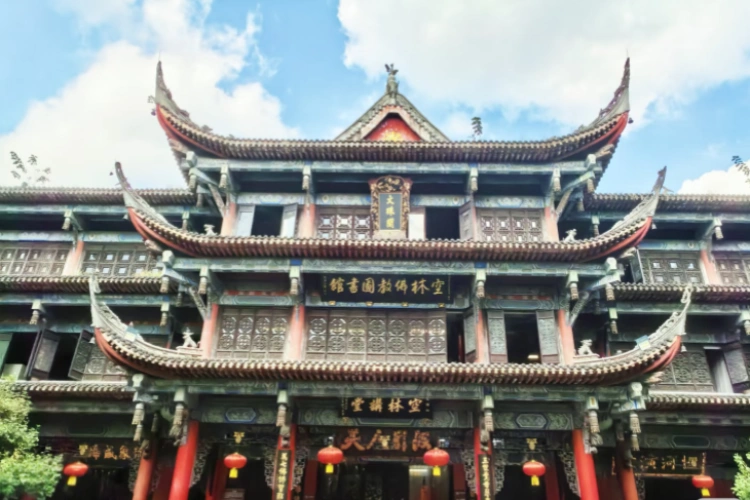
The Temple Experience: Clean Flavors & Zen Dining
The monastery itself is a major culinary destination. Buddhist vegetarian cuisine is trending as a healthy “detox” for locals and travelers alike. The philosophy here is simple: respect the ingredient, avoid the “five pungent spices” (onions, garlic, etc.), and create harmony.
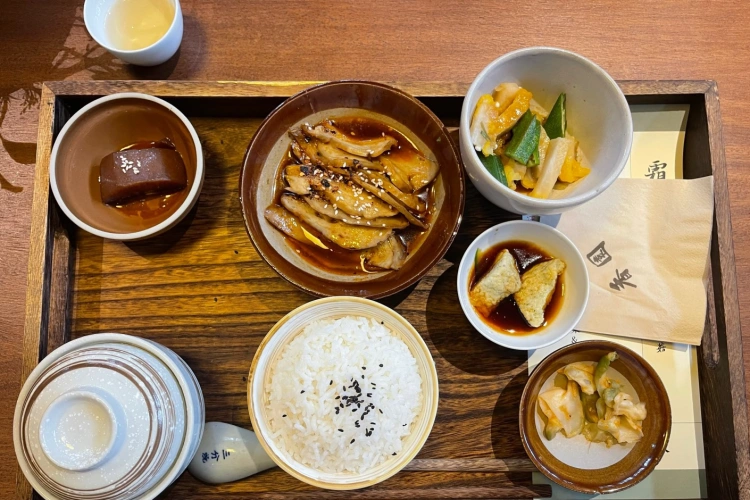
Wenshu Monastery Vegetarian Buffet (香园 – Xiāngyuán)
Located in the back of the temple complex, this is perhaps the most famous vegetarian spot in all of China.
The Concept: For around 30–35 RMB, you get unlimited access to dozens of plant-based Sichuan dishes.
The Food: Don’t expect “fake meats” designed to look like drumsticks. Instead, expect high-level vegetable artistry. The Vegetarian Mapo Tofu uses finely chopped mushrooms to replicate the texture of beef, and the Braised Bamboo Shoots are so tender they melt like butter.
The Ritual: It is self-service and communal. In the spirit of the temple, you are expected to clear your own tray and waste no food. It is a mindful, quiet dining experience that offers a rare break from the city’s noise.
Xiangyuan Teahouse: The Ginkgo Sanctuary
Adjacent to the dining hall, this open-air teahouse is shaded by ancient ginkgo trees that turn a brilliant gold in the autumn.
The Order: A Gaiwan of Jasmine tea and a plate of Sunflower Seeds.
The Vibe: While People’s Park is loud with mahjong, Wenshu’s teahouse is contemplative. You’ll see monks in grey robes chatting with locals, and it remains one of the few places where you can hear traditional chanting drifting over the walls while you sip.
The “Holy Trinity” of Wenshu Street Food
Once you step outside the monastery’s red walls, the “zen” ends and the flavor war begins. There are three spots that have achieved legendary status among Chengdu locals.
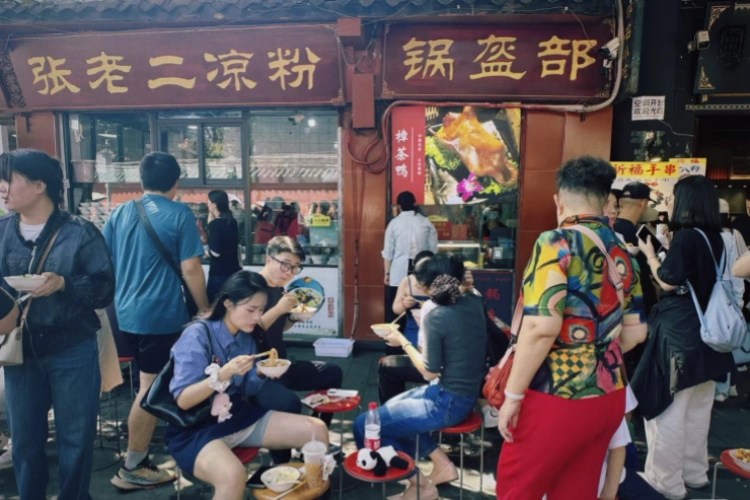
A. Dongzikou Zhang Lao’er Liangfen (洞子口张老二凉粉)
This is the definition of a “Fly Restaurant”—basic, crowded, and incredibly delicious. The queue still snakes out the door for one specific dish that has been perfected over decades.
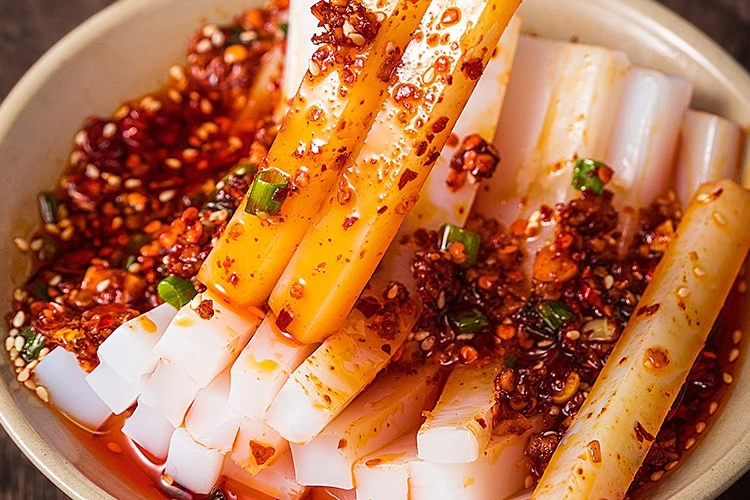
The Star: Sweet Water Noodles (甜水面 – Tiánshuǐ Miàn). These are arguably the most famous noodles in Chengdu. They are thick, hand-pulled, and served in a small bowl with a sauce that hits every part of your tongue: sweet from the dark soy reduction, salty from the preserved vegetables, and numbing from the fresh peppercorns.
The Texture: The noodles are incredibly “bouncy” (Q-elastic). You only get about 4 or 5 noodles per bowl, but they are so thick that they feel like a substantial snack.
The Pro Move: Order a side of Yellow Jelly (Huáng Liángfèn). The savory, spicy contrast to the sweet noodles is the ultimate Chengdu pairing.
B. Yan Taipo Guokui (严太婆锅魁)
Located right outside Exit K of the Wenshu Monastery Subway, this stall is a local landmark.

The Order: Beef Guokui. This is a flaky, tandoori-style flatbread that is split open and stuffed with cold, spicy, shredded beef and a mountain of fresh cilantro.
The Technique: The bread is baked in a cylindrical clay oven until the exterior is as shattered and crispy as a croissant, while the inside remains soft enough to soak up the chili oil from the beef.
The Trend: If you’ve already had your spice fix, try the Brown Sugar Guokui. It’s a dessert version where the sugar turns into a molten lava center.
C. Gongting Pastry Shop (宫廷糕点铺)
You don’t even need a map to find this shop; just look for the longest line of locals carrying giant white paper bags. This bakery specializes in traditional “palace-style” snacks.
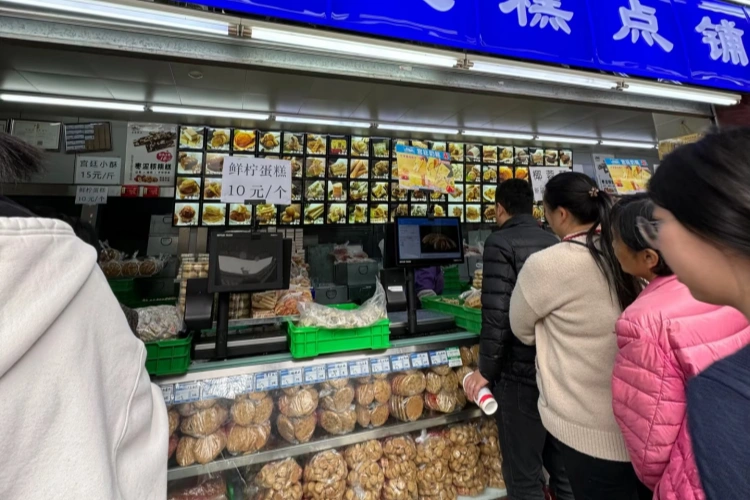
The Must-Buy: Salt and Pepper Pastries (Jiāoyán Sū). These are crumbly, savory-sweet cookies that incorporate the tingle of Sichuan pepper.
The Souvenir: These are the most popular edible souvenirs to bring back from Chengdu. They stay fresh for weeks and offer a taste of the city’s unique “Strange Flavor” (Guàiwèi) profile.
The Modern Side: Wenshu Fang
If the “Fly Restaurants” feel a bit too chaotic, walk a few steps into Wenshu Fang. This is a recently renovated cultural street that combines traditional architecture with amenities.
Heritage Brands: Many of Chengdu’s most famous brands have flagship stores here. It’s a great place to find Sichuan snacks you can’t find outside China in a clean, air-conditioned setting.
Tea Culture 2.0: You’ll find modern tea houses that serve “Tea Cocktails” alongside traditional Gongfu tea, reflecting the city’s evolving youth culture.
Tips for the Wenshu Food Hunter
The “Subway Exit” Strategy: Most people get lost looking for the food. Take Subway Line 1 to Wenshu Monastery Station and head straight for Exit K. Yan Taipo Guokui is right there.
Avoid the Noon Rush: The famous snack stalls are at their busiest between 12:00 PM and 1:30 PM. Go at 10:30 AM for a “brunch” snack to beat the 45-minute lines.
The “Two-Shop” Strategy: The locals’ secret? Buy your Guokui bread from Grandma Yan and take it across the street to Zhang Liangfen. Order your noodles, sit on a tiny stool, and eat your bread while you wait. It’s the unofficial Wenshu “combo meal.”
Vegetarian vs. Vegan: While the temple buffet is vegetarian, it’s not always strictly vegan (some pastries use lard or egg). If you are strictly vegan, look for the “Buddhist Clean” signs or stick to the steamed vegetable dishes.
Planning Your Spiritual & Culinary Day
Morning (9:00 AM): Enter the Wenshu Monastery. Walk through the gardens, watch the turtles in the pond, and soak in the incense.
Lunch (11:30 AM): Choose your path—the Vegetary Buffet for peace, or Zhang Liangfen for the Sweet Water Noodle fire.
Afternoon (2:00 PM): Relax at the Xiangyuan Teahouse. This is the perfect time to reflect on your trip or write your postcards.
Snack (4:00 PM): Grab a Guokui for the road and line up for Gongting Pastries to take back to your hotel.
Final Thoughts: A Tale of Two Palates
The Wenshu Monastery neighborhood is the only place in Chengdu where you can spend your morning in silent meditation and your afternoon in a loud, spicy noodle-slurping frenzy. It is the perfect microcosm of the city’s ability to balance tradition with indulgence.
Want to navigate the lines like a pro? Our private Chengdu food tours include a curated “Wenshu Walk.” We’ll skip the tourist traps, find you a seat at the hidden teahouses, and make sure you get the freshest batch of Guokui without the hour-long wait. Ready to experience the soul of Chengdu? Just send us a message.