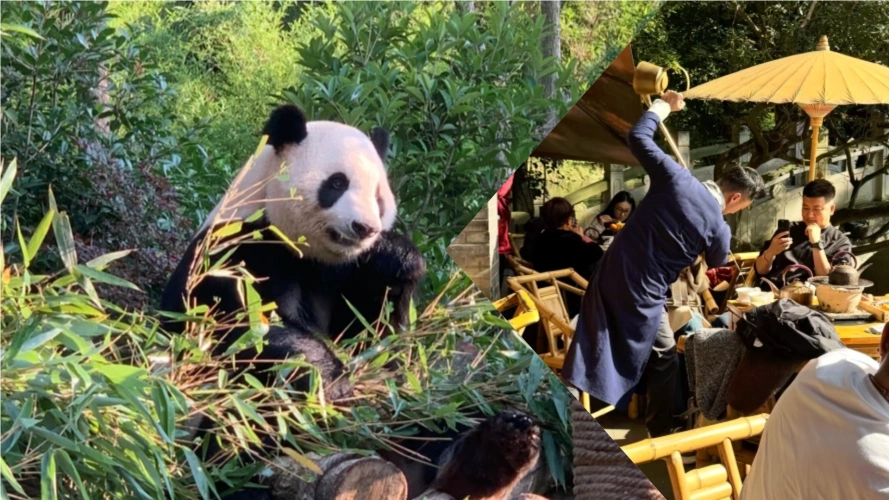
When people think of Sichuan food abroad, they think of the “Greatest Hits”: Kung Pao Chicken, Mapo Tofu, and perhaps a spicy hotpot. But in the back alleys of Chengdu and the morning markets of Leshan, there exists a world of Xiao Chi (small eats) that rarely—if ever—crosses the border.
In 2026, as global logistics have made ingredients like Pixian Doubanjiang easier to find, these specific snacks remain stubbornly local. They often rely on hyper-seasonal produce, “weird” textures that challenge Western palates, or preparation methods that don’t survive a 12-hour flight.
If you want to experience the true diversity of the “Land of Abundance,” these are the snacks you need to hunt for on your next Chengdu food tour.
The “Invisible” Cuisine: Why Snacks Stay Local
Chengdu was the first city in Asia to be named a UNESCO City of Gastronomy, and the reason isn’t the fancy banquets—it’s the hundreds of street-side snacks that have been perfected over centuries.
Many of these items don’t travel because they are part of a “freshness” culture. A Ye’erba rice cake is meant to be eaten while the leaf it was wrapped in is still steaming; a Sweet Water Noodle loses its specific “bounce” (Q-texture) the moment it is refrigerated for export. In 2026, while you can find “instant” Sichuan noodles in London or New York, they are a shadow of the handmade versions found in a Chengdu “Fly Restaurant.”
The Texture Treasures: Soft, Chewy, and Leaf-Wrapped
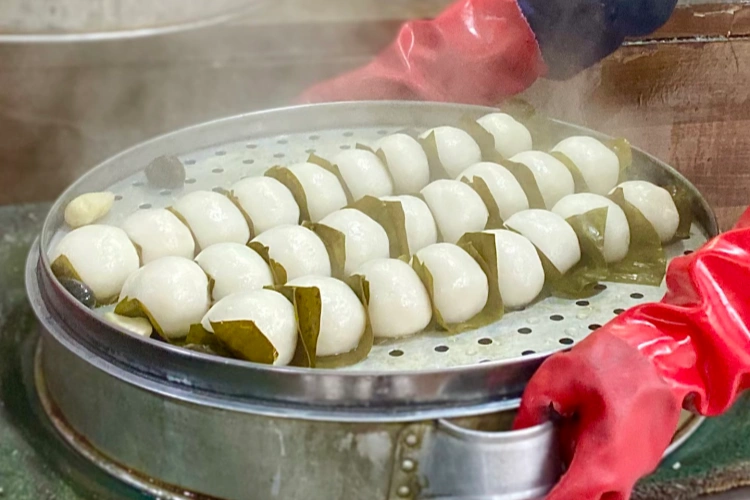
Ye’erba (叶儿粑)
This is the “hidden” gem of the Sichuan snack world. Imagine a soft, pillowy dumpling made of glutinous rice flour, wrapped in a citrusy big-leaf (usually from a Phoebe tree).
The Surprise: When you bite in, you aren’t met with sweet bean paste (though that version exists), but a savory, fatty explosion of minced pork, preserved mustard greens, and just enough Sichuan pepper to make your tongue hum. It is the ultimate comfort food that you will almost never find in a Western Chinese restaurant.
Sweet Water Noodles (甜水面 – Tián Shuǐ Miàn)
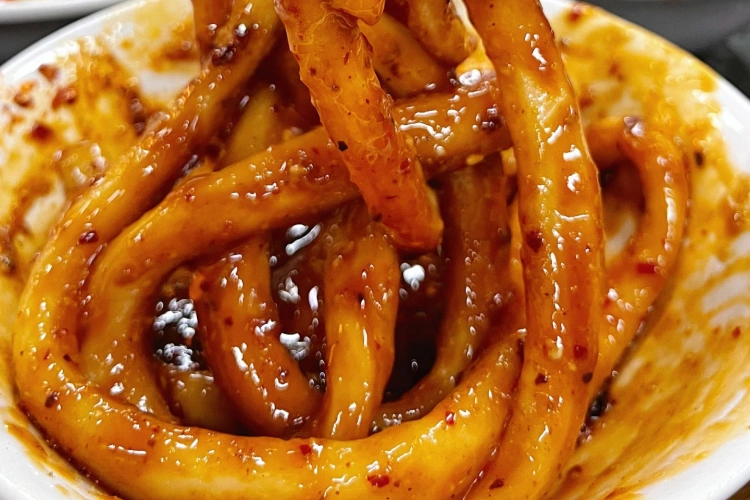
Don’t let the name fool you. While they are “sweet,” they are also salty, garlicky, and numbing. These are perhaps the thickest noodles in China—roughly the diameter of a chopstick and cut into square edges.
Why It Stays in China: The magic is in the texture. They are incredibly chewy, almost like a savory al dente pasta. Because the noodle is so thick, it requires a specific type of high-gluten flour and a “sweet soy” reduction that takes hours to simmer. It’s a “snack” that eats like a meal.
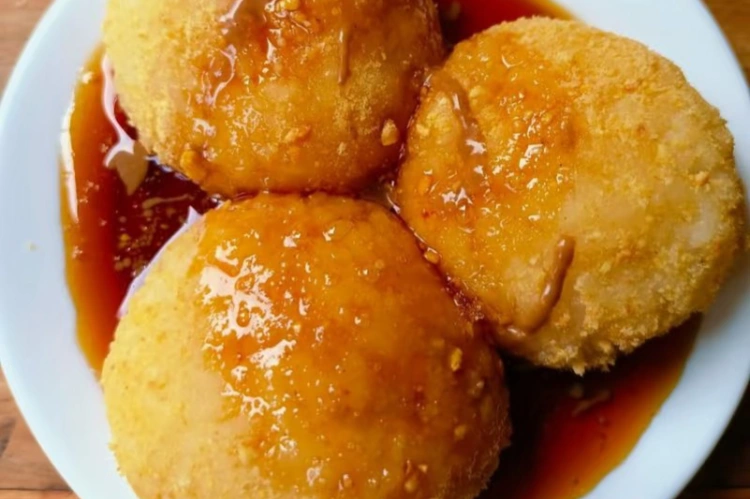
San Da Pao (三大炮)
Literally translated as “Three Cannons,” this is as much a performance as it is a dessert. A vendor throws three balls of glutinous rice at a metal plate, making three distinct bangs before they land in a bowl of roasted soybean powder.
The Flavor: Drizzled with fresh brown sugar syrup, they are the Sichuan ancestor of Japanese Mochi, but warmer, softer, and much louder.
The “Adventurous” Delicacies (For the Brave)
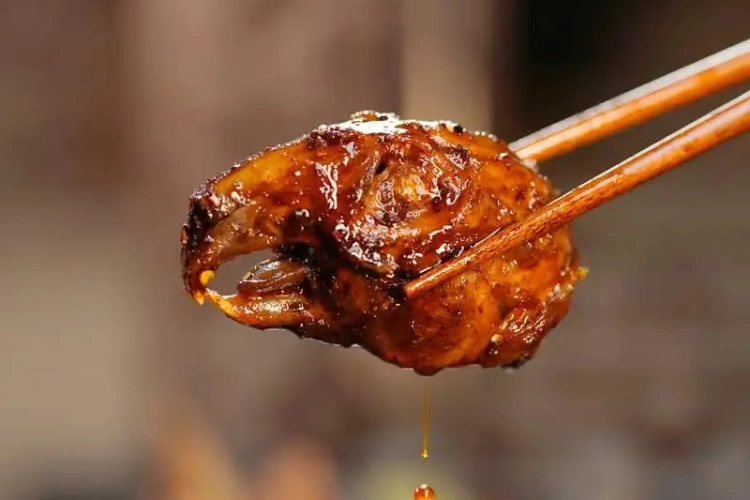
Chengdu Rabbit Heads (兔头 – Tù Tóu)
If you want to eat like a true local in 2026, you have to try a rabbit head. In Chengdu, “gnawing” (Kěn) on a rabbit head is a social activity, much like eating chicken wings in the West.
The Experience: They are braised for hours in a “master stock” of 30+ spices or tossed in a fiery “Five Spice” dry rub. Locals don’t eat them for the volume of meat, but for the flavor hidden in the crevices. It is the ultimate beer snack, and because of Western cultural taboos regarding rabbits, it is a flavor profile that effectively stops at the Chinese border.
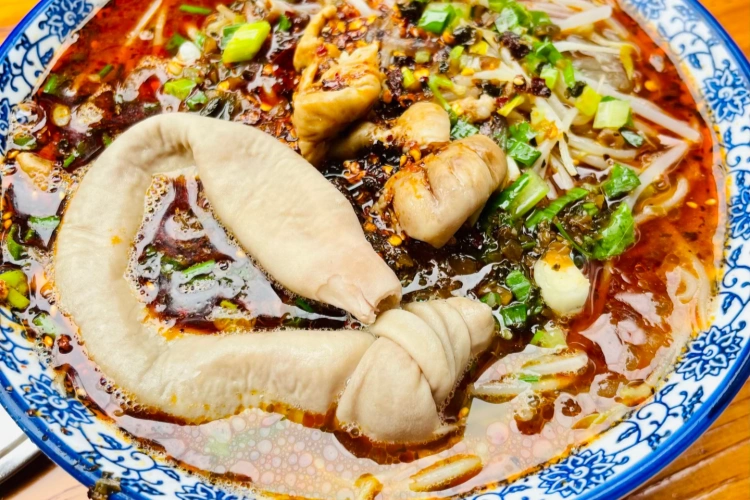
Fatty Intestine Noodles (肥肠粉 – Féicháng Fěn)
The “funk” of offal is a polarizing topic, but in Sichuan, it is elevated to an art form. These sweet potato glass noodles are served in a broth made from pork bones and lard.
The Secret: The intestines are cleaned meticulously and braised until they are “fatty-tender.” When you order them, the vendor will ask if you want an extra Jiézi (a knotted section of intestine). It is rich, funky, and incredibly satisfying—a dish that Western restaurants usually sanitize right out of existence.
The Morning Ritual: Egg Pancakes (Dàn Hóng Gāo)
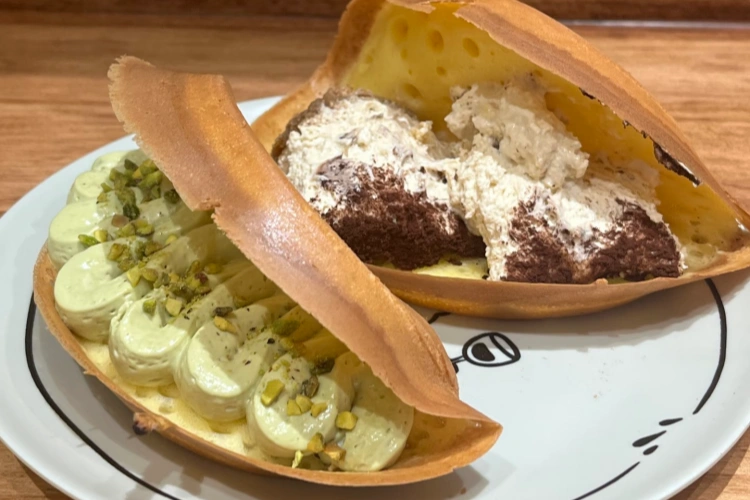
If Chengdu had a “taco,” it would be the Dan Hong Gao. These are small, fluffy pancakes cooked on a miniature copper griddle.
The Customization: The beauty is in the fillings. You can go sweet (sesame and sugar) or savory (pickled radish and minced pork). In 2026, “fusion” fillings like cheese or spicy potato shreds have become popular with the younger generation.
Why You Can’t Find It Abroad: The batter is fermented with a specific type of local “old dough” starter that gives the pancake a slightly sour, crumpet-like interior that is impossible to replicate with baking powder.
Where to Find These Gems in 2026
If you’re following a Chengdu street food guide, make sure these neighborhoods are on your list:
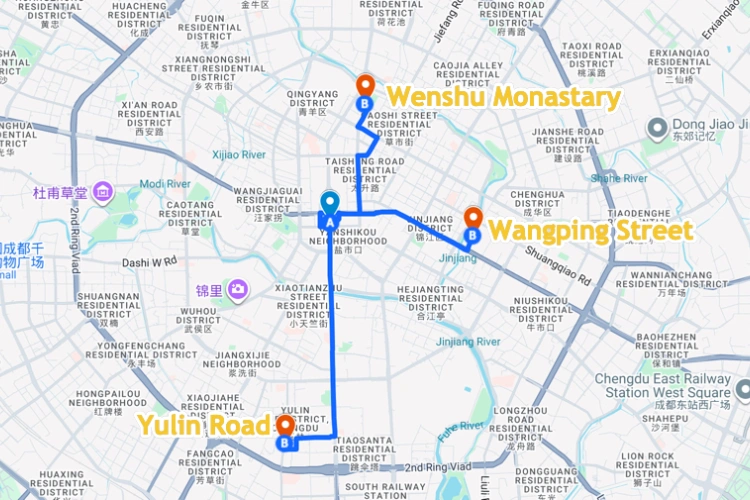
Wangping Street: Recently renovated, this area is a mix of trendy cafes and old-school snack masters. It’s the best place to find Ye’erba and Sweet Water Noodles in a clean, accessible environment.
Yulin Market: The spiritual home of the “Fly Restaurant.” Come here for the best Intestine Noodles and to watch locals gnawing on Rabbit Heads under neon lights.
Wenshu Monastery: The area around the temple is famous for traditional vegan snacks and the best San Da Pao performances.
Tips for the Rare Snack Hunter
Order “Yi Liang”: Most snacks are sold by weight. Ordering “Yi Liang” (roughly 50g) allows you to try five different things without getting full.
Look for the “Old Brand” (Lǎo Zìhào): In 2026, look for shops with a gold plaque. These are government-vetted shops that have been making the same snack for at least 50 years.
Embrace the “Strange Flavor”: Many of these snacks fall under the “Guai Wei” (Strange Flavor) profile—a mix of sweet, sour, salty, and spicy. It might be confusing for the first three bites, but by the fifth, you’ll be hooked.
Final Thoughts: The Soul of the Basin
The “Big Dishes” like Hotpot are the face of Sichuan, but these small snacks are its soul. They are the flavors that locals miss most when they travel abroad. To taste a Dan Hong Gao or a Sweet Water Noodle is to taste a version of China that refuses to be globalized.
Ready to find the “Un-Exportable”? Our private Chengdu food tours focus specifically on these rare finds. We’ll take you to the stalls that don’t have English signs and haven’t changed their recipes since the 1950s. Let’s go hunting for the real flavors of Chengdu!