
13-Day Sichuan & Yunnan Explorer
- Sichuan, Yunnan
- 13D / 12N
From $3,680 p.p
Overview
- 13D / 12N
- Flight, Private Vehicle
- Private
- Custom
Pandas, Sacred Mountains, Ancient Towns and Tibetan Culture across Southwest China
This comprehensive 13-day route explores two of China’s most diverse provinces.
You begin in the misty, lush basin of Sichuan, home to the Giant Panda and the towering spiritual landmarks of Leshan and Mt. Emei. Mid-way through, you leap across the mountains via domestic flight to the Yunnan Plateau. Here, the air thins and the culture shifts as you follow the Ancient Tea-Horse Road through the ethereally blue lakes of Dali and the cobblestone alleys of Lijiang, culminating in the heart of Tibetan culture in Shangri-La.
Highlights



Itinerary
Day 1:
Chengdu | Arrival → Kuanzhai Alleys
The Experience
Welcome to Chengdu, the capital of Sichuan Province.
Upon arrival, your driver will meet you at the airport or train station and take you to your hotel.
After checking in, you can take an easy walk through Kuanzhai Alleys. It's a historic neighborhood made up of three parallel lanes lined with traditional-style courtyards, teahouses, small shops, and local snack stalls.
Highlights
- Explore Chengdu’s historic Kuanzhai Alleys.
- Get your first taste of Sichuan snacks and teahouse culture.
Tips
- Allow time to rest after a long international journey.
Chengdu
None
Kuanzhai Alleys
Day 2:
Chengdu Panda Base → Wuhou Shrine → Jinli Street
The Experience
We’ll start early with a private transfer to the Chengdu Research Base of Giant Panda Breeding.
Pandas are generally more active in the cooler morning hours. You may see them eating bamboo, climbing, or wandering around their enclosures.
After returning to the city, we’ll visit Wuhou Shrine, a historic temple complex dedicated to Zhuge Liang, the celebrated strategist of the Three Kingdoms period, and associated with Liu Bei and the Shu Han kingdom. The shaded courtyards, old cypress trees, and traditional buildings offer a glimpse into one of the most influential periods in Chinese history.
Jinli Street is located next to Wuhou Shrine. It is a lively pedestrian lane with traditional-style architecture and a good place to sample Chengdu street food and experience the city’s evening atmosphere.
We’ll return to your hotel after the visit.
Highlights
- See giant pandas at Chengdu Panda Base.
- Discover Three Kingdoms history at Wuhou Shrine.
- Sample Sichuan snacks along Jinli Street.
Tips
- Arrive at the Panda Base early, especially during weekends and holidays.
- Wear comfortable walking shoes, as the Panda Base involves considerable walking.
Chengdu
Breakfast
Chengdu Research Base of Giant Panda Breeding, Wuhou Shrine, Jinli Street
Day 3:
Chengdu → Leshan Giant Buddha → Mount Emei
The Experience
After breakfast, we’ll leave Chengdu by private vehicle for Leshan, a journey of roughly two hours.
Our main stop is the Leshan Giant Buddha, a UNESCO World Heritage Site carved into a cliff at the meeting point of three rivers. Completed in the Tang Dynasty, the 71-meter-tall statue was created to watch over the river and, according to historical accounts, help protect boats from dangerous currents.
There are two main ways to see the Giant Buddha. If you choose to explore on foot, we’ll enter the scenic area and follow the paths and stairways down alongside the statue, allowing you to appreciate its enormous head, shoulders, and feet up close. The steps can be steep and narrow, and queues may be long during busy periods.
Alternatively, you can take a sightseeing boat on the river for a panoramic view of the entire statue from the water. This option involves less walking and offers a wonderful perspective of its impressive scale.
Leshan is also famous for its local specialties, especially Leshan bobo chicken, sweet-skinned roast duck, and spicy tofu pudding. We can have lunch here and try some of these local favorites.
Then, we’ll continue to Mount Emei, one of China’s Four Sacred Buddhist Mountains. We’ll check into your hotel near the mountain entrance.
Highlights
- See the monumental Leshan Giant Buddha up close.
- Try local food.
Tips
- The Buddha’s stairway involves many steps and can be slippery in wet weather.
Emei
Breakfast
Leshan Giant Buddha
Day 4:
Mount Emei → Chengdu
The Experience
We’ll start early to explore Mount Emei, a sacred Buddhist mountain with a long history of pilgrimage, temples, and mountain worship.
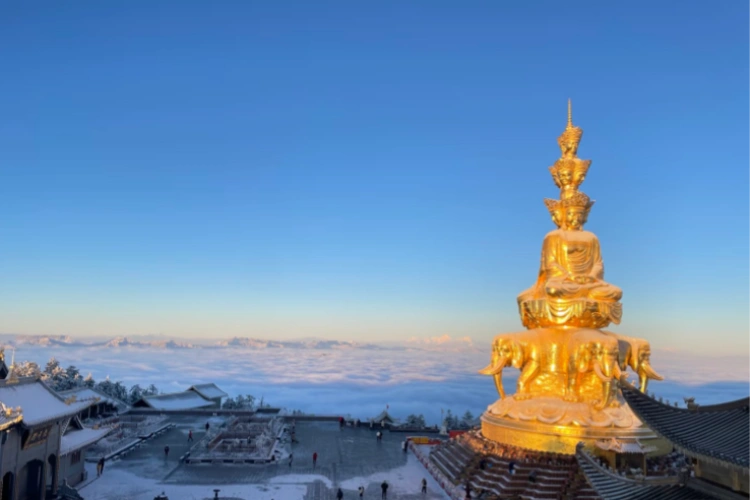
We will take the sightseeing bus toward Leidongping, the main access point for the upper mountain. From there, we'll start walking and climbing. To save energy, we can also take the cable car to the summit - the Golden Summit. On a clear day, the high-altitude landscape can be especially impressive.
Then, we will take the cable car and sightseeing bus back down the mountain. The return journey to Chengdu usually takes around two to three hours.
Highlights
- Ride the cable car to Mount Emei’s Golden Summit.
- Explore one of China’s most important Buddhist mountain landscapes.
Tips
- Bring warm layers, even in warmer months, as the summit can be cold and windy.
- Mountain transport and cable car queues can take time, so an early start is important.
Chengdu
Breakfast
Mount Emei
Day 5:
Chengdu → Dali by Air → Erhai Lake
The Experience
After breakfast, we’ll transfer to the Chengdu airport for your flight to Dali in Yunnan Province. On arrival, your local driver will meet you and take you to your hotel in Dali.
Dali sits between Cangshan Mountain and Erhai Lake. It is known for its lakeside scenery and Bai ethnic culture.
The rest of the day is free to settle in and enjoy Dali’s slower pace. You might like to try Yunnan rice noodles or a Bai-style dish at a local restaurant.
Highlights
- Enjoy your first views of Erhai Lake and the Cangshan mountain range.
Tips
- Dali can be sunny during the day but cool after sunset; bring a light jacket.
Dali
Breakfast
Dali, Erhai
Day 6:
Dali Old Town → Three Pagodas → Xizhou Village
The Experience
We’ll begin in Dali Old Town.
It is known for its stone lanes, traditional Bai-style buildings, small courtyards, and local shops, from which you can see the area’s long history as a regional trading center.
Next, we’ll visit the Three Pagodas of Chongsheng Temple, another one of Dali’s most recognizable landmarks.
The three brick pagodas date back to the Nanzhao and Dali kingdoms, when this region was an important center of Buddhism. Their distinctive forms stand against the backdrop of Cangshan Mountain, and the temple grounds provide a closer look at the area’s religious and architectural heritage.
In the afternoon, we’ll drive to Xizhou, a historic Bai village known for its traditional courtyard houses, carved wooden details, and distinctive local architecture. We can walk through the village lanes, see how old residences are arranged around courtyards, and stop to try a local specialty such as xizhou baba, a savory or sweet flatbread.
We’ll return to your hotel in Dali afterward.
Highlights
- Explore Dali Old Town and its historic streets.
- See the ancient Three Pagodas.
- Discover Bai architecture and local food in Xizhou Village.
Tips
- Wear comfortable shoes for walking on stone streets and temple grounds.
- Ask before photographing residents or entering private courtyards in Xizhou.
Dali
Breakfast
Dali Old Town, Three Pagodas, Xizhou Village
Day 7:
Dali Cangshan Mountain → Sunset Lake Cruise
The Experience
After breakfast, we’ll travel to the Cangshan Mountain area.
Cangshan is known for its forested slopes, mountain streams, and changing views over the lake and surrounding villages. On a clear day, the contrast between the green mountains, white clouds, and blue water can be striking.
We can take a cable car partway up the mountain and enjoy a walk along one of the accessible trails.
Later, we’ll head toward Erhai Lake for a boat trip. The cruise route and departure time depend on local services and weather.
Afterward, we’ll return to your hotel for dinner or an evening stroll.
Highlights
- Enjoy mountain scenery and views over Dali from Cangshan.
- See Erhai Lake from the water on a late-day cruise.
Tips
- Mountain weather can change quickly, so bring a light waterproof layer.
- Sunset cruises are weather- and schedule-dependent; we’ll confirm availability in advance.
Dali
Breakfast
Cangshan Mountain, Sunset Lake Cruise
Day 8:
Dali → Shaxi Ancient Town → Lijiang
The Experience
After breakfast, we’ll leave Dali and drive toward Shaxi Ancient Town.
Shaxi was once an important stop on the Tea Horse Road, the historic trade network that connected Yunnan and Tibet with other parts of Asia. It remains smaller and generally quieter, making it a good place to appreciate the region’s trading history without the same level of commercial activity.
We’ll explore Sideng Street, the old market square, and the historic stage and temple buildings. The traditional shops and courtyards offer a glimpse of how the town served merchants, travelers, and local communities.
We’ll also have lunch at a small local restaurant or café before continuing to Lijiang.
After checking into your hotel in Lijiang, you can take a first walk through Lijiang Old Town if you still have energy.
We’ll keep the evening flexible so you can enjoy dinner and explore at your own pace.
Highlights
- Discover Shaxi, a historic Tea Horse Road trading town.
- Enjoy a first glimpse of Lijiang’s old streets and canals.
Tips
- Wear comfortable shoes for Shaxi’s stone-paved lanes.
Lijiang
Breakfast
Shaxi Ancient Town, Lijiang
Day 9:
Lijiang Old Town → Black Dragon Pool
The Experience
Lijiang is a historic town closely associated with the Naxi people and their distinctive culture.
After breakfast, we’ll walk through Lijiang Old Town, a UNESCO-listed historic area known for its stone lanes, small canals, wooden houses, and traditional courtyards.
We'll learn about Naxi traditions and the town’s role in regional trade. You can also wander through small craft shops, stop for a drink in a courtyard café, or experience the traditional Zharan.
Later, we’ll transfer to Black Dragon Pool Park, a traditional garden with ponds, bridges, and pavilions.
The rest of the day is free for shopping, photography, or a relaxed dinner.
Highlights
- Explore the canals and historic architecture of Lijiang Old Town.
- Visit Black Dragon Pool for traditional gardens and mountain views.
Tips
- Visit Black Dragon Pool when the weather is clear for the best chance of seeing Jade Dragon Snow Mountain.
Lijiang
Breakfast
Lijiang Old Town, Black Dragon Pool
Day 10:
Lijiang | Naxi Villages → Zhiyun Monastery
The Experience
After breakfast, we’ll take a walk through Naxi villages and the surrounding countryside.
Naxi culture has its own language, customs, and artistic traditions, including the Dongba religious tradition. Along the way, you may see traditional houses, small fields, and local residents going about their daily routines. We’ll keep the experience respectful and unhurried, with time to observe village life rather than treating the communities as attractions.
Later, we’ll visit Zhiyun Monastery, a Tibetan Buddhist monastery in the Lijiang area.
After the walk and monastery visit, we’ll return to Lijiang and have a rest.
Highlights
- Walk through the countryside and traditional Naxi villages.
- Visit Zhiyun Monastery and learn about local Buddhist traditions.
Tips
- Village walks may involve uneven paths and some uphill sections; tell us your preferred walking distance in advance.
Lijiang
Naxi Villages, Zhiyun Monastery
Day 11:
Lijiang → Tiger Leaping Gorge → Shangri-La
The Experience
After breakfast, we’ll leave Lijiang and travel toward Shangri-La.
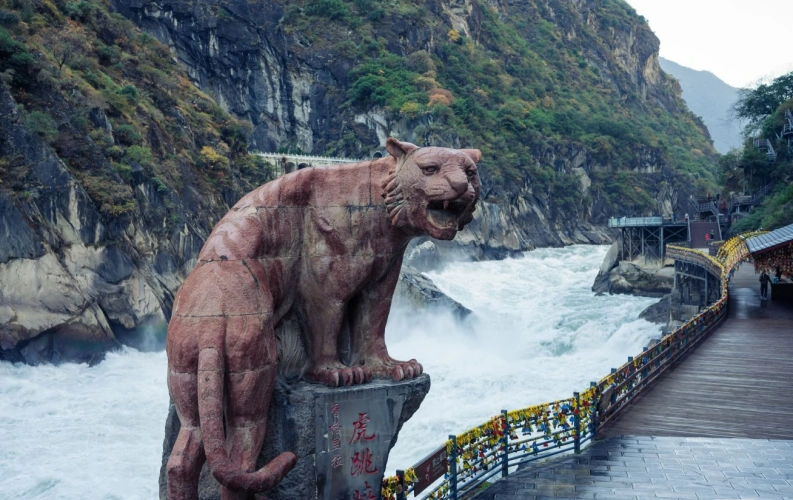
We will stop at Tiger Leaping Gorge, one of the deepest river gorges in the world. Here, the Jinsha River surges between the steep slopes of Jade Dragon Snow Mountain and Haba Snow Mountain.
After the visit, we’ll continue north toward Shangri-La. As we approach the Tibetan-influenced region of northwest Yunnan, you’ll notice changes in architecture, prayer flags, and the surrounding scenery.
We’ll check into your hotel on arrival and keep the evening relaxed to allow time to adjust to the higher altitude.
Highlights
- See the dramatic cliffs and rushing waters of Tiger Leaping Gorge.
- Travel into the highlands around Shangri-La.
Tips
- Stay behind barriers at gorge viewpoints and follow local safety instructions.
- Shangri-La sits at high altitude; take it easy on arrival and drink plenty of water.
Shangri-La
Breakfast
Lijiang, Tiger Leaping Gorge, Shangri-La
Day 12:
Shangri-La | Songzanlin Monastery → Napa Lake → Dukezong
The Experience
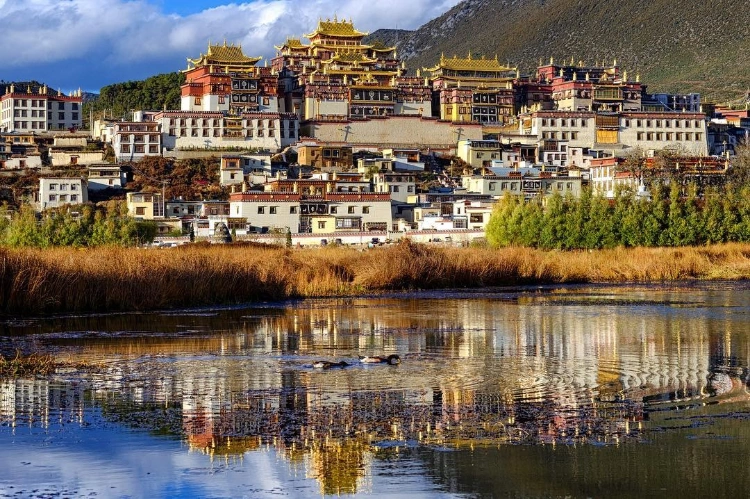
We’ll begin with Songzanlin Monastery, the largest Tibetan Buddhist monastery in Yunnan.
Built in the 17th century, it is often called the “Little Potala Palace” because of its hillside setting and layered golden-roofed buildings. Inside the complex, you’ll find prayer halls, religious artwork, and a living monastic community. We’ll explore respectfully, following local rules on photography and access, and learn about Tibetan Buddhist traditions and the monastery’s role in the region.
Next, we’ll travel to Napa Lake, a seasonal wetland and grassland area outside Shangri-La. Depending on the time of year, water levels and scenery can vary considerably.
Later, we’ll return to Dukezong Ancient Town, where traditional Tibetan-style buildings line narrow streets around the old town center. This is a good place to observe the blend of everyday life, pilgrimage traditions, and tourism in Shangri-La.
Highlights
- Visit the impressive Songzanlin Monastery.
- Explore Napa Lake’s seasonal grassland and wetland scenery.
- Walk through Dukezong Ancient Town and its Tibetan-style streets.
Tips
- Dress modestly at the monastery and follow instructions about photography.
- Bring sun protection and warm layers; the high-altitude weather can change quickly.
Shangri-La
Breakfast
Songzanlin Monastery, Napa Lake, Dukezong
Day 13:
Shangri-La → Chengdu → Departure
The Experience
After breakfast, we’ll transfer to Shangri-La Airport for your flight to Chengdu, then connect with your onward departure flight or continue your travels in China.
Highlights
- Finish a varied trip through the landscapes and cultures of southwest China.
Tips
- Keep passports, flight details, and essential items easily accessible during transfers.
None
Breakfast
Chengdu
Accommodation
- Chengdu: 3 Nights
- Mount Emei: 1 Night
- Dali: 3 Nights
- Shaxi: 1 Night
- Lijiang: 2 Nights
- Shangri-La: 2 Nights
We choose comfortable, well-located hotels with convenient access to major attractions, local restaurants, and old towns. A practical choice for travelers who want a good balance of comfort and value.
Besides, we can tailor the accommodation to your preferences and upgrade selected nights if you wish.
Cost
Included
- 12 nights of handpicked accommodation with breakfast.
- Domestic flights (Chengdu–Dali and Shangri-La–Chengdu).
- Private air-conditioned transportation throughout the trip.
- Cable cars where noted (Emei, Cangshan).
- Professional English-speaking local guides.
- Entrance fees for all attractions listed in the itinerary.
Excluded
- International airfare.
- Personal expenses.
- Lunches and dinners.
- Tips for guides and drivers.
- Optional activities not mentioned in the itinerary.
Transportation
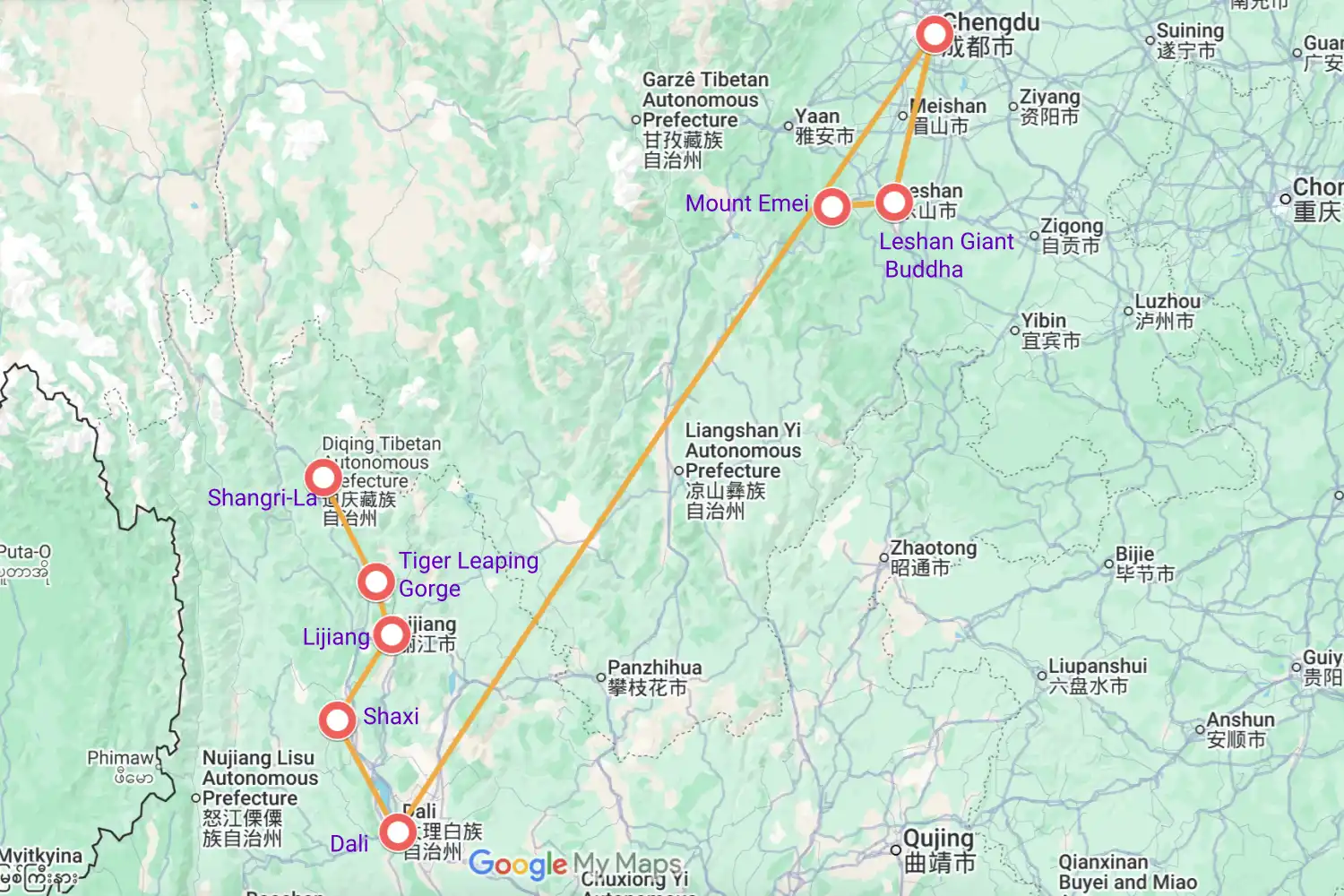
This Sichuan and Yunnan tour combines private vehicle transfers and domestic flights.
Domestic flights:
- Chengdu to Dali
- Shangri-La to Chengdu
Private transfers:
- Chengdu–Leshan–Mount Emei
- Dali–Shaxi–Lijiang–Tiger Leaping Gorge–Shangri-La
Essential Tips
- Spring and autumn are generally pleasant for exploring Sichuan and Yunnan, with comfortable temperatures and good conditions for walking. Summer brings greener landscapes but also more rain, while winter can be cold at Mount Emei and Shangri-La.
- Take it easy when you reach higher elevations, especially in Shangri-La, and stay hydrated.
- Temperatures can vary considerably between the cities, mountain areas, and highlands. Bring comfortable walking shoes, a warm jacket, sun protection, and a lightweight raincoat.
- When visiting Buddhist temples and monasteries, dress modestly, speak quietly, and follow photography rules. In Naxi, Bai, and Tibetan communities, ask permission before photographing residents.
Route Designer Notes
Jack Chen
The pace is fairly active, but it rewards you with a wide variety of scenery and local life in southwest China in a limited time.

Like This Route, But Want It Your Way?
Whether you’re taking the whole journey or just need a few services, we’ll help make it work.
FAQ
Yes. It balances iconic attractions with leisure time and avoids overly strenuous hiking.
The standard "Upper Gorge" visit involves some stairs but is manageable for most fitness levels. We can adjust the intensity based on your preference.
Yes, we utilize the cable car to ensure you reach the summit to see the 48-meter tall golden statue of Samantabhadra.
While Sichuan is famous for its numbing spice (peppercorns), Yunnan cuisine is more diverse, expect fresh mushrooms, goat cheese, and floral-infused dishes.
Moderate. Most days involve walking and some elevation (Emei/Cangshan), but cable cars reduce difficulty.
Absolutely. All QuietRoutes tours are fully customizable. We can customize accommodation, transportation, itinerary, attractions, and anything else according to your preferences.
From $3,680
price per person, based on a group of 2
We Handle
- Private transportation
- Accommodation
- Train & flight tickets
- Attraction tickets
- Airport & station transfers
- Experienced local guides
- Any other arrangements you need
- Free itinerary customization within 24 hours
You May Also Like
Explore More Destinations

Why Travel with Us
10+ Years
Proven experience planning journeys across China.
Local Experts
China travel knowledge from people who live here.
100% Tailor-Made
Journeys designed around your interests and pace.
Authentic Trips
Local places and experiences beyond the usual routes.
98%+ Happy Guests
Trusted by travelers from around the world.
Always Supported
Our team is here whenever you need us.

How to Book Your Private Journey
Submit Your Inquiry
Customize Your Trip
Secure Your Booking
Enjoy Your Journey
Start Planning Your China Journey
Tell us a few details about your trip, and our local experts will design a personalized itinerary tailored to your travel style, pace, and interests.